Chinese Travel to South Korea Set to Get Easier; Jeju Air Price Target Raised to 10,000 Won
- Input
- 2026-11-19 08:25:12
- Updated
- 2026-11-19 08:25:12
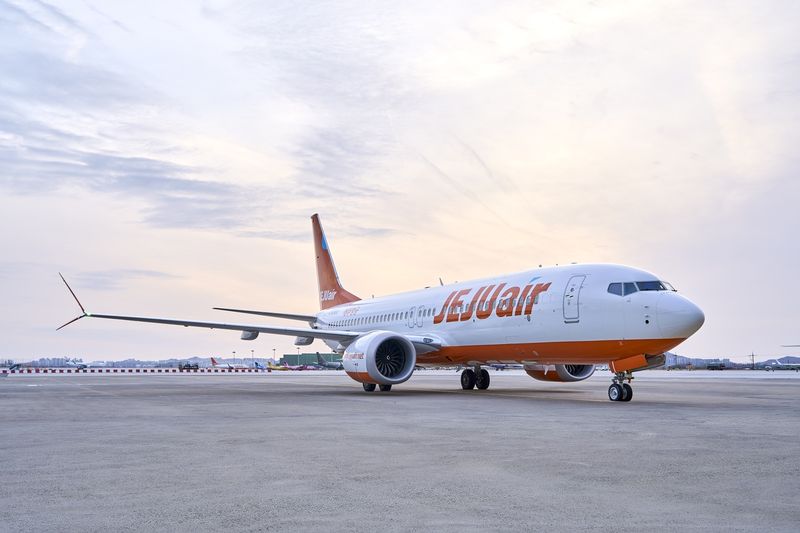
[Financial News] With the services and investment follow-up negotiations under the Korea-China Free Trade Agreement (FTA) effectively concluded, expectations have emerged that Jeju Air will benefit from an increase in Chinese tourists.
As South Korean travel agencies are now able to enter China’s outbound tourism industry, demand among Chinese travelers for trips to South Korea is expected to grow, potentially lifting load factors and fares at domestic low-cost carriers (LCCs) that hold traffic rights.
On the 19th, Hana Securities maintained its ‘Buy (BUY)’ rating on Jeju Air and raised its target price from 7,500 won to 10,000 won. That implies around 33% upside from the previous day’s closing price of 7,500 won.
Hana Securities researcher Dohyun Ahn said, “Travel agencies in China can now operate outbound tourism businesses in 23 regions, including Beijing and Shanghai, arranging overseas trips for Chinese travelers,” adding, “We expect this to have a positive impact on domestic LCCs as well.”
The key outcome of the negotiations is that South Korean travel agencies now have a way to directly attract Chinese demand for overseas travel in China. Since traffic rights are required to operate air routes between South Korea and China, supply expansion is limited; Ahn believes that increased demand could therefore lift both load factors and fares.
Jeju Air holds the most traffic rights for China routes among South Korean LCCs. Revenue from mainland China routes also accounts for 8% of its total, the highest share among major airlines. The airline plans to launch service on a Beijing route for which it recently received traffic rights for seven flights a week, and its China routes are therefore expected to contribute more to revenue.
Steady demand for Japan routes, as well as China routes, is another positive factor. Japan is a key market, accounting for about 40% of Jeju Air’s revenue. With the yen remaining weak, events that could stimulate related demand are also emerging, including permission to bring obesity treatments into Japan. Analysts say demand for Japan routes is likely to remain solid despite high fares.
Ahn forecast that the decline in average international fares next year would be limited. Although lower fuel surcharges could put downward pressure on fares, increases in base fares and adjustments to the route mix could offset this, he said. Hana Securities estimated that average international fares in 2027 would fall by just 6% year on year.
The outlook for improved results is also a reason for the higher target price. Singapore jet fuel prices have recently fallen significantly to around $150 a barrel, and Hana Securities assumed that the unit price of jet fuel next year would be 15% lower year on year. It said that if demand continues to grow, particularly on Japan and China routes, the airline could see both lower costs and higher revenue.
Hana Securities forecast Jeju Air’s 2027 revenue at 2.017 trillion won and operating profit at 140 billion won. It estimated that operating profit would rise 40% year on year and the operating margin would reach 7.0%.
[email protected] Kang Jung-mo Reporter