A Last-Ditch Gambit for North Korea-U.S. Talks? U.S. Abstains From UN Resolution on North Korean Human Rights for First Time, Causing a Stir
- Input
- 2026-11-19 07:44:32
- Updated
- 2026-11-19 07:44:32
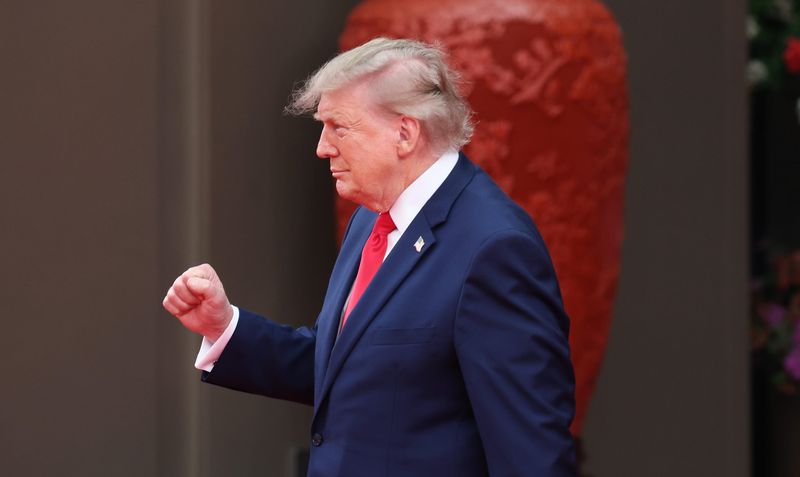
The move is being seen as an effort to placate North Korea as President Donald Trump, who is visiting China, pursues talks with North Korean leader Kim Jong Un. North Korea has long opposed the UN resolution on North Korean human rights.
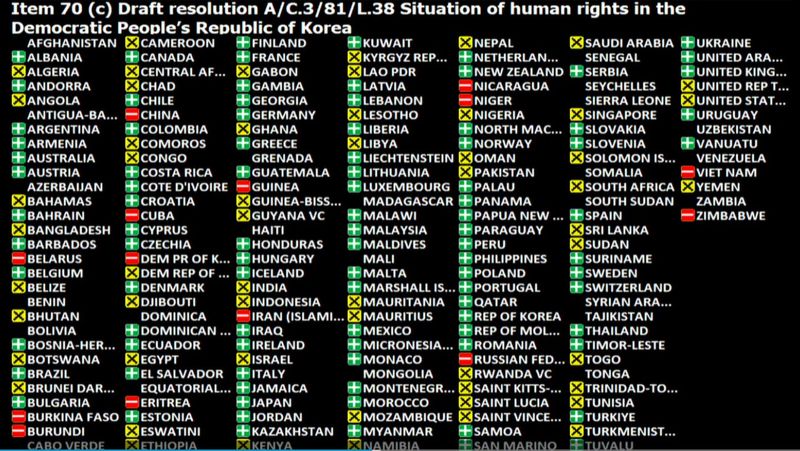
The Third Committee of the United Nations General Assembly (UNGA) held a plenary meeting at United Nations Headquarters in New York on the 18th (local time) and adopted the resolution on North Korean human rights, with 95 votes in favor, 14 against and 58 abstentions. South Korea, Japan, the United Kingdom, France and Canada voted in favor, while China, Russia, Iran and Cuba voted against. The United States abstained.
North Korea's representative to the UN was reportedly also surprised by the unexpected development. Kim Song, North Korea's ambassador to the UN, took the floor and directly asked which country had requested a vote. Kim had previously denounced the resolution as a political conspiracy pursued by the United States and countries following its lead under the pretext of protecting human rights, and as interference in North Korea's internal affairs.
In the resolution, the UNGA's Third Committee cited a comprehensive assessment report by the UN High Commissioner for Human Rights from September 2025, acknowledging that North Korea's human rights situation had generally remained unchanged—or had even worsened—over the past decade. It also expressed new concern about digital surveillance and technology-based repression.
The resolution also incorporated South Korean proposals, including emphasizing the importance of dialogue and engagement with North Korea, including inter-Korean dialogue; calling for progress on humanitarian issues such as abductees, detainees, South Korean prisoners of war and separated families; and encouraging North Korea's engagement with the UN on human rights.
From 2016 through last year, the resolution on North Korean human rights was adopted by consensus among member states without a separate vote. This year, the United States not only dropped out as a co-sponsor of the resolution but also requested a recorded vote for the first time in 10 years.
The wording reportedly challenged by the United States was a provision stating that the UN Security Council could consider referring the situation in North Korea to the International Criminal Court (ICC) to establish accountability for human rights violations.
Since the ICC issued arrest warrants for Israeli Prime Minister Benjamin Netanyahu and others, the Trump administration has questioned the court's political impartiality and jurisdiction and stepped up sanctions against its judges and officials. The United States also abstained that day from a resolution on human rights in Myanmar, citing language related to the ICC.
Whenever the UN adopts a resolution on North Korean human rights, North Korea has consistently rejected it outright as a “violation of sovereignty and political provocation.” Attention is now focused on what position it will take in response to the United States' unexpected abstention.
The UNGA has adopted a resolution on North Korean human rights every year since 2005, and this year's resolution will be submitted to the plenary next month. South Korea's Ministry of Foreign Affairs said, “We will continue to work with the international community so that the human rights of North Koreans can be genuinely improved.”
[email protected] Kim Kyung-soo Reporter