US Fed Governor Waller Reiterates Call for a Half-Point Hike: 'Shock Therapy May Be Necessary'
- Input
- 2026-11-19 03:38:38
- Updated
- 2026-11-19 03:38:38
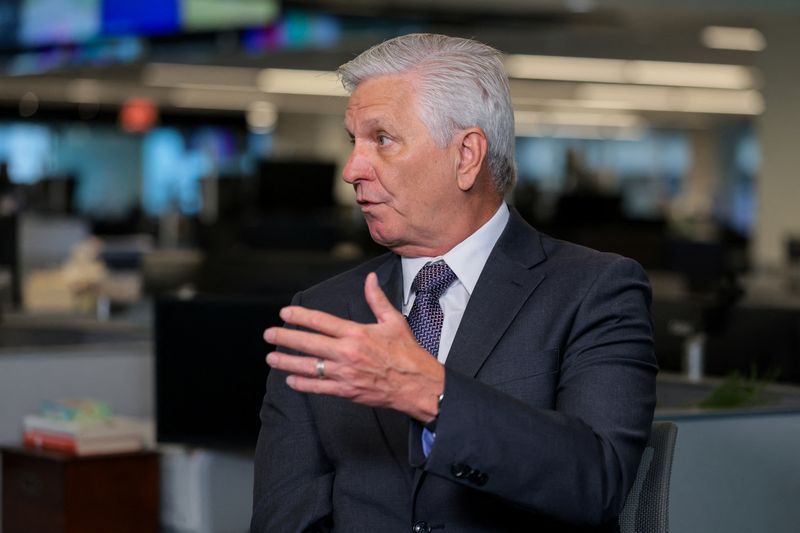
Christopher J. Waller, who is considered a moderate within the Fed, again stressed on the 18th (local time) the need for a 0.5-percentage-point rate hike, or a so-called half-point hike. He said a shock therapy may be necessary because the usual 0.25-percentage-point increase would not be enough to achieve the Fed’s monetary policy goals.
However, opinions within the Fed remain divided over further rate hikes.
A Half-Point Hike Is Unavoidable
In an interview with CNBC that day, Waller said an aggressive response was needed to rein in inflation (rising prices), and that, with price increases continuing at a faster pace than expected, it was necessary to “surprise people.”
Waller had previously argued at a monetary policy conference hosted by the Bank of England (BoE) in London on the 10th that the Fed might need to take “stronger action” than usual. That was an argument for a half-point hike.
The Fed is scheduled to hold this year’s final Federal Open Market Committee (FOMC) meeting on the 8th and 9th of next month. Markets view a 0.25-percentage-point hike as almost certain, but Waller argues that a stronger increase—one large enough to overturn those expectations, at 0.5 percentage points—may be necessary.
He said the Fed needed to reverse the three 0.25-percentage-point rate cuts it made last year. The Fed had previously raised its benchmark interest rate by 0.25 percentage points at its October FOMC meeting.
Waller said he was “very, very concerned about inflation” and that “it’s spreading in a somewhat troubling direction.” He added, “If we really want to bring this [inflation] down, we need to start taking more aggressive action,” and said, “Something like shocking people may be necessary.”
According to the CME Group’s FedWatch Tool, the interest rate futures market puts the odds of a 0.25-percentage-point hike next month at 94.7% and those of a 0.5-percentage-point hike at 5.3%. While a rate hike is viewed as certain, the prevailing mood is that the Fed will almost certainly take a baby step rather than a half-point step this time as well.
Markets also expect a 0.25-percentage-point rate hike in January next year, followed by at least one more hike before year-end.
Waller also qualified his position, saying a half-point hike might be unnecessary as long as the Fed raises rates by 0.25 percentage points in December and signals another increase in January next year. However, Chair Kevin Warsh has said since taking office that he opposes providing rate projections.
Waller appears to be arguing for a half-point hike because it is difficult to clearly signal further rate increases.
He stressed, “Unless such signals are clearly sent to the market, a 0.5-percentage-point hike in December will be unavoidable.”
Divisions Within the Fed
However, opinions within the Fed are divided.
Alberto Musalem, president of the Federal Reserve Bank of St. Louis, said on the 17th that up to four rate hikes would be needed by next spring.
By contrast, some senior Fed officials, including presidents Beth Hammack (Cleveland) and Lorie K. Logan (Dallas), favor a more gradual pace of rate hikes.
In particular, John Williams, president of the Federal Reserve Bank of New York, which serves as the Fed’s conduit to financial markets, opposed a half-point hike in an interview with Axios on the 17th, saying, “I don’t think we’re in a situation that requires a dramatic response.” Williams said, “The actions of the past several months ... are working well,” and emphasized, “We continue to gather data, analyze it, and reach conclusions through discussion.”
[email protected] Song Kyung-jae Reporter