South Korea's Strategy for Taking On a Big, Fast China... Jo Pyeong-gyu's 'Understanding China' [New Book]
- Input
- 2026-11-19 07:00:00
- Updated
- 2026-11-19 07:00:05
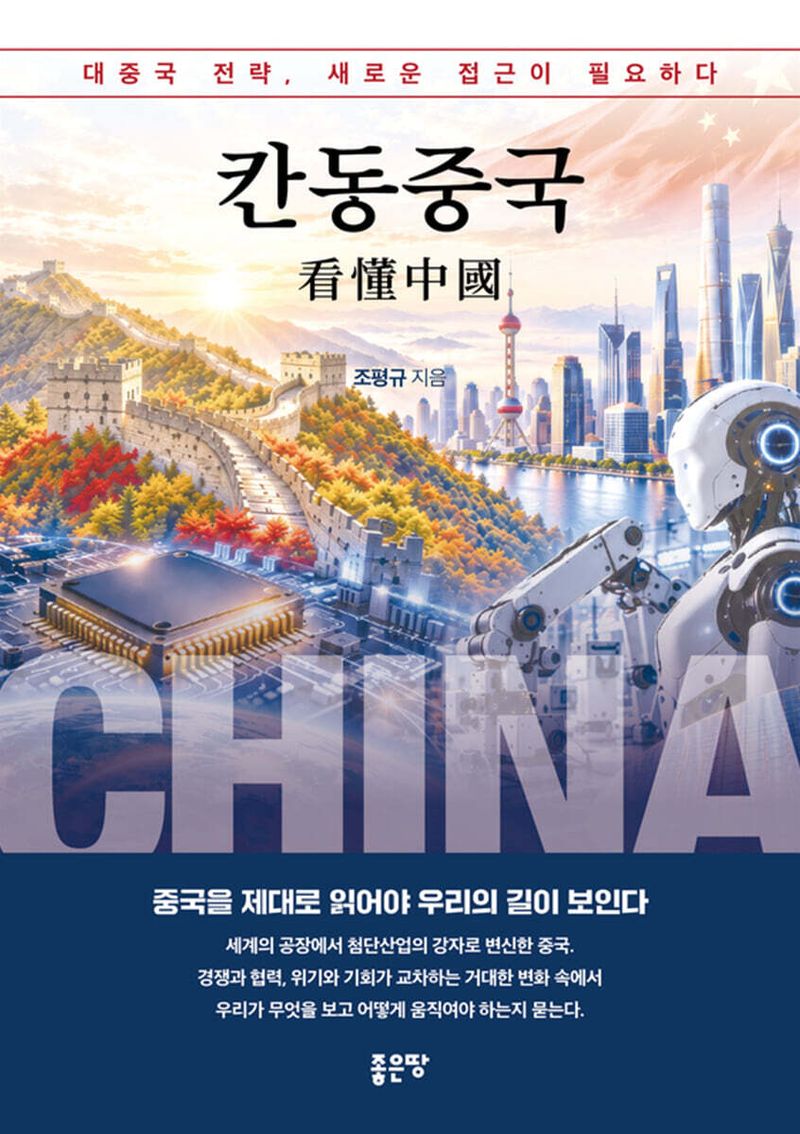
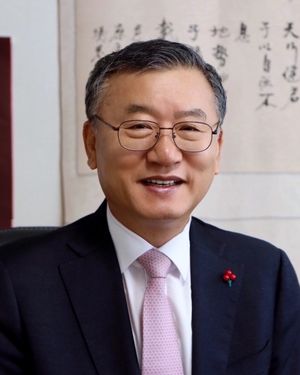
This is the point made in his latest book, Understanding China, by Dr. Jo Pyeong-gyu, who worked at Korea Commercial Bank (now Woori Bank) after graduating from university, moved to China and did business in Beijing for 25 years, eventually becoming senior vice chairman of the Yanda Group.
The author argues that we should avoid either unconditionally marveling at China's rapid development and transformation or reflexively viewing it with suspicion, and instead engage with China with clear-eyed reason. He writes that we must see through not only China's strengths but also its weaknesses, opportunities and risks, and sharpen our response accordingly. Here is the author's analysis:“China has an advantage in rapid, hardware-centered expansion, but is relatively weak in advanced industrial software and engineering services. If we build competitiveness in areas such as smart factories, automated control systems and B2B solutions, and compete by moving beyond simple manufacturing to providing solutions, we seem to have a chance of winning.” (p. 130)
The point is that South Korea can sustain its own competitiveness not by competing with China on scale and price, but by establishing a model for making “expensive but essential products” in areas defined by ultra-precision, high reliability and high added value.
The author recently assessed China, saying, “It is rapidly building competitiveness in fields such as semiconductors, artificial intelligence and electric vehicles, reshaping the world's industrial order and supply chains, while at the same time the risks within China—including the real estate slump, demographic problems and a state-centered system of control—are becoming more apparent.”“The Chinese government is supplying liquidity to the market by pursuing value-up policies to invigorate the stock market alongside monetary and fiscal policies, but the likelihood of share prices rising does not seem high. (...) The failure of real estate, a core pillar of China's economic development model, to emerge from its slump despite various government stimulus measures is becoming the source of all the ills afflicting the Chinese economy.” (p. 219)
Looking beyond broad economic trends to examine business practices, the Chinese way of thinking and business culture, the book offers a multidimensional look at the realities of China, which are difficult to grasp through statistics and theory alone.
Consider one of the examples in the book. The author sees Liu Bei, who founded the state of Shu, as a major shareholder, and his key adviser Zhuge Liang as a professional manager. He notes that “for major shareholders and professional managers doing business with China, taking time to reflect on themselves while reading Zhuge Liang's Memorial on the Dispatch of Troops would be time well spent” (p. 62). He also advises, “If you are thinking about how to select and use talent, learn from Cao Cao, ruler of Wei” (pp. 65–67).
The book's title, Understanding China, was chosen to convey that our strategy begins with properly understanding China. What is the winning move for South Korea's survival that the author emphasizes? Let's hear directly from him.
“The most important thing for us is to firmly establish the philosophy and ideology that will allow us to go toe-to-toe with China, so to speak, and to build our national strength. We are a country with liberal democracy and a market economy, as well as the ‘software’ of peace, human rights and culture, which China does not have.We can sustain our survival only by building national competitiveness while also strengthening our identity through universal human values and a national stature that sets us apart from China.” (p. 202)
[email protected] Jang In-seo Reporter