A Central Coordinating Body Needed to Oversee State-Accredited Exams ... Alongside Tougher Penalties [AI Cheating That Threatens Fairness, Part 3 (Final)]
- Input
- 2026-11-18 18:30:12
- Updated
- 2026-11-18 18:30:12
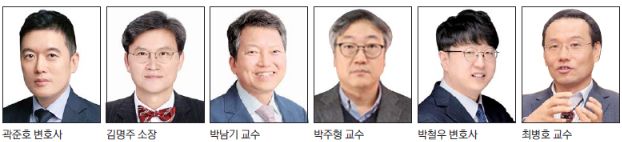
Experts who spoke with Financial News on the 18th agreed that exam management methods must change in step with advances in AI technology. Myung-joo Kim, director of the Artificial Intelligence Safety Institute, said, “It is important to identify what tools can be used to cheat on exams—not just AI glasses, but also cameras, earphones and other devices—and to learn exactly what they look like. Since proctors are not experts, training for them is the most urgent priority.”
Some also said specific guidelines should be established so that the quality of exam management does not vary according to individual proctors’ capabilities. Kim said, “From the examinees’ perspective, the quality of exam supervision should not differ depending on a proctor’s capabilities,” adding, “Specific guidelines should be established so that anyone can carry out the procedures according to the manual.” He continued, “Unexpected situations can arise even when measures are taken in accordance with the manual, so criteria for exempting proctors from liability are also needed to protect those who faithfully follow the prescribed procedures.”
Some have proposed changing the exam environment itself, rather than stopping at detecting advanced devices. Byung-Ho Choi, a research professor at Korea University’s Human-Inspired AI Research Institute, said, “Procedures can be established to detect devices such as AI glasses and miniature cameras before an exam, and additional checks can be conducted after people enter the exam room, using visual inspections or video analysis technology.”
Park Cheol-woo, managing attorney at Seorae Law Firm, said, “One option to consider is applying technical measures to exam papers so that AI cannot properly recognize their contents even if they are photographed with a camera, or using QR codes.”
Some have also called for a central coordinating body to oversee and integrate the management of state-accredited exams. Park Ju-hyung, a professor in the Department of Education at Gyeongin National University of Education, said, “The exam supervision system should be strengthened to account for new devices such as AI glasses, and dual procedures should be established for bringing in and screening electronic devices that could be used to cheat.” He added, “A central coordinating body is needed to oversee the management systems of the institutions that administer various state-accredited exams.”
Some have also said penalties for cheating should be strengthened. Kwak Jun-ho, a lawyer at Cheong Law Firm, said, “Conventional miniature cameras had limitations in making use of the information they captured. Now, however, AI can analyze captured information in real time and provide answers, changing the nature of cheating,” adding, “Existing penalties alone may not be enough to deter it.” Park Nam-gi, an emeritus professor at Gwangju National University of Education, also stressed, “A tough system of penalties should be established to deter attempts to undermine exam systems.”
Some have argued that exam and education systems should be improved over the long term to assess the capabilities needed in the age of AI. Research professor Choi proposed a “two-track” approach that assesses foundational and applied competencies separately. He said, “Foundational competencies are areas people should be able to perform on their own without AI, so they should be assessed in an environment where devices and communications are blocked.” He added, “For applied competencies, it would be desirable to assess the ability to actively use AI to produce results.” Park, the emeritus professor, also advised, “A system should be established to assess, across multiple stages, people’s ability to perform actual work.”
[email protected] Seo Ji-yoon, Choi Seung-han Reporter