Despite Ranking Second Worldwide in Investment, Profits Remain Flat... Telecom Carriers’ Coffers Run Dry [Solutions for Upgrading Telecom Infrastructure in the AI Era]
- Input
- 2026-11-22 16:37:45
- Updated
- 2026-11-22 16:37:45
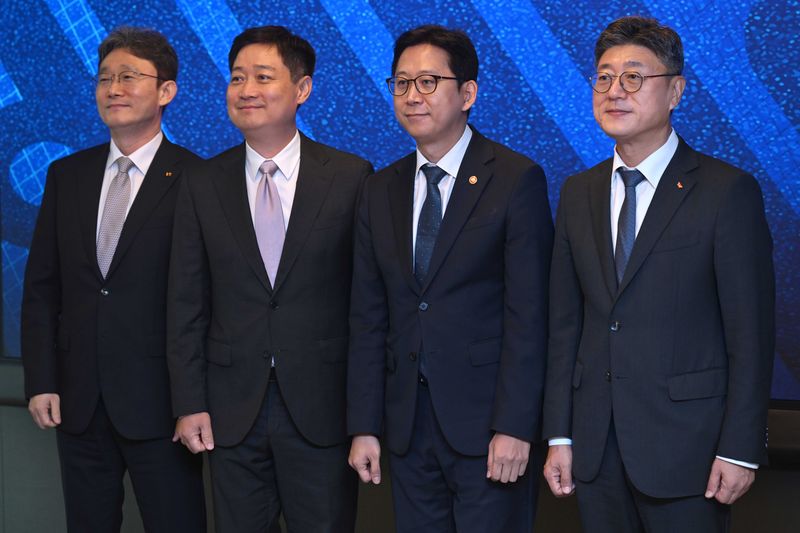
[Financial News] South Korea’s mobile network investment ranks second in the world, but concerns are growing that stagnant telecom carrier profitability is weakening their capacity to invest in next-generation networks. The AI era calls for massive investment in upgrading telecom networks, including the transition to 5G standalone (SA), yet revenue per subscriber has essentially remained flat. There are calls for policy support to ease the carriers’ investment burden and create stable conditions for investment.
According to the ‘5G Observatory 2026’ report released on the 22nd by the European Commission, South Korea’s per-capita mobile network investment last year was 68.71 euros (about 101,430 won), ranking second in the world after the United States at 87.21 euros (about 128,750 won). Japan ranked third at 68.20 euros, followed by Australia at 50.47 euros.
However, SA base stations accounted for 26.2% of South Korea’s 5G base stations, ranking fourth behind the United States (36.2%), China (34.8%) and Japan (26.3%). Despite the high level of investment, further investment is needed to transition to the next-generation networks required in the AI era.
The problem is stagnant revenue at telecom carriers. The arithmetic mean of the average revenue per user (ARPU) reported by SKT, KT and LG Uplus Corp. for the third quarter of this year was 33,152 won, up just 0.2% from the same period in 2024. Consumer prices rose by about 4.9% over the same period, meaning the real value of revenue per subscriber actually declined.
With pricing structures centered on flat-rate plans, revenue does not rise in proportion to increases in data usage. Meanwhile, as services requiring real-time data processing, such as AI agents and autonomous driving, expand, the burden of increasing network capacity and replacing equipment is growing. This is why concerns are mounting that stagnant revenue from existing telecom businesses could lead to a long-term contraction in investment in next-generation networks.
The European Commission also emphasized the importance of improving the investment environment, including sustained investment in upgrading telecom networks, ensuring predictability in spectrum policy and streamlining base-station installation procedures.
The government and the three telecom carriers are discussing measures to promote investment, including criteria for calculating spectrum costs and conditions for allowing new services, in a public-private consultative body formed last August. They plan to announce improvement measures as early as the end of this year or early next year.
[email protected] Yoon Hong-jip Reporter