Shinan Construction Industry Opens Path to Recovery ... Court: 'Hybrid Restructuring' Scores First Success
- Input
- 2026-11-18 17:24:54
- Updated
- 2026-11-18 17:24:54
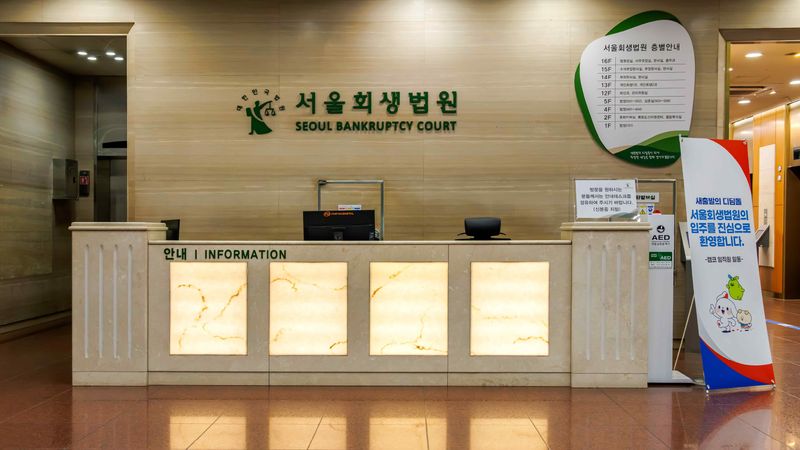
[Financial News] The 'hybrid restructuring' system, which combines court-led corporate rehabilitation proceedings with creditors' workouts (corporate restructuring), has produced its first successful case one year and seven months after its introduction.
The first panel of the Seoul Bankruptcy Court (Chief Judge Hyun Koo Kang) said on the 18th that it had approved the withdrawal of an application to commence rehabilitation proceedings filed by housing construction company Shinan Construction Industry Co., Ltd. This is the first case in which a company has laid the groundwork for an actual business recovery through the hybrid restructuring model introduced by the Seoul Bankruptcy Court in April last year, combining the advantages of the two systems, and stepped back from the brink of court receivership.
Hybrid restructuring combines court-led autonomous restructuring (ARS) rehabilitation proceedings with workouts led by creditor financial institutions. While a company that has applied for rehabilitation proceedings continues normal operations, with compulsory enforcement blocked by measures such as the court's comprehensive stay order, the system supports negotiations with creditors by deferring a decision to commence rehabilitation for up to three months (with an extension possible in special circumstances). If negotiations succeed and a corporate improvement plan is approved, the company withdraws its rehabilitation application. If they fail, the company can quickly transition to rehabilitation proceedings through a prepackaged plan (P-plan) or other means.
According to the court, Shinan Construction Industry, a construction company ranked 177th in this year's construction capability assessment, faced a liquidity crisis amid a slump in the construction market and tighter lending restrictions. In particular, during construction of its flagship project, the 336-unit public-supported private rental apartment complex 'Icheon Shinan Silk Valley Phase 2' in Baeksa-myeon, Icheon City, Gyeonggi Province, the company relied entirely on external borrowing for the initial construction costs. The resulting rise in interest expenses coincided with unpaid construction costs. The apartments' move-in, originally scheduled for May, was delayed, while partner companies continued to exercise lien rights. Facing the risk of defaulting on electronic promissory notes, the company applied to the Seoul Bankruptcy Court for rehabilitation proceedings on May 29.
On the day the application was filed, the court issued a preservation order and a comprehensive stay order to block creditors from taking enforcement action. On June 5, it formed a creditors' committee with Woori Bank as lead creditor. After two rounds of questioning of representatives, the court decided to apply the hybrid restructuring method sought by Shinan Construction Industry and, on June 25, deferred its decision on whether to commence rehabilitation proceedings.
Shinan Construction Industry subsequently applied for a workout and secured approval to begin one from the council of financial creditors. The court also granted blanket authorization for the company to continue operating and, on the 11th of this month, approved new borrowing (DIP financing). The new loan is to be repaid with lease deposits collected after the project is completed. The creditors also gave final approval to a corporate improvement plan that included self-rescue measures and other steps.
Shinan Construction Industry applied to withdraw its application to commence rehabilitation proceedings on the 17th, and the process concluded when the court approved the request on the 18th.
A Seoul Bankruptcy Court official said, "This is a case in which the company applied for rehabilitation proceedings to prevent a default on promissory notes while also pursuing a workout to adjust financial claims and secure new funding," adding, "It is an exemplary case in which a company generated synergies by combining various recovery measures under the court's procedural protection."
[email protected] Chang-hoon Lee Reporter