KOSPI 200 and KOSDAQ 150 Undergo Periodic Rebalancing... Doosan Fuel Cell, LivsMed and Others Added
- Input
- 2026-11-18 16:53:11
- Updated
- 2026-11-18 16:53:11
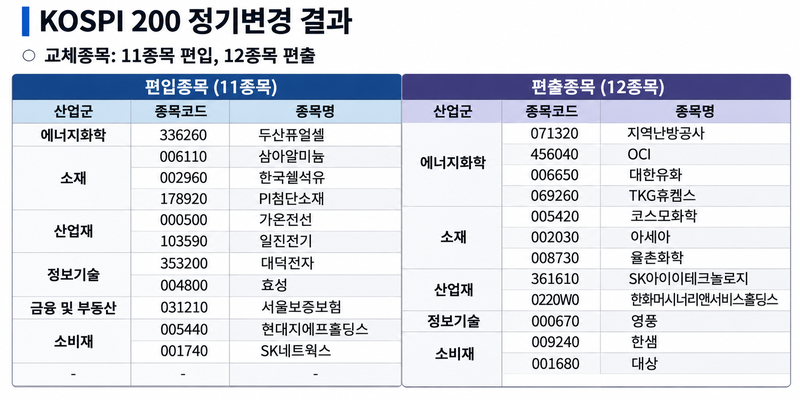
[Financial News] The Korea Exchange will periodically revise the constituents of major benchmark indices, including the KOSPI 200, KOSDAQ 150 and KRX 300.
Doosan Fuel Cell, Seoul Guarantee Insurance, Hyosung and others will be added to the KOSPI 200, while biotech and healthcare companies including Algenomics, LivsMed and AprilBio will join the KOSDAQ 150.
As constituents are replaced across a range of industries, including AI- and semiconductor-related companies, changes are also expected in the portfolios of major indices.
The Korea Exchange said on the 18th that its Index Management Committee met on the 17th and reviewed regular changes to the constituents of the KOSPI 200, KOSDAQ 150 and KRX 300. The changes are set to take effect on December 11.
The KOSPI 200 will add 11 constituents and remove 12. The additions are Doosan Fuel Cell, Sam-A Aluminum, Korea Shell Petroleum, PI Advanced Materials, Gaon Cable, Iljin Electric, Daeduck Electronics, Hyosung, Seoul Guarantee Insurance, Hyundai GF Holdings and SK Networks.
Meanwhile, Korea District Heating Corp., OCI, Korea Petrochemical Ind., Huchems, TKG Cosmo Chemical, Asia Holdings, Yulchon Chemical, ITM Technology, SK IE Technology, Hanwha Machinery & Service Holdings, Young Poong, Hanssem and Daesang are among those slated for removal.
After the changes, the market capitalization of KOSPI 200 constituents is expected to account for 96.9% of the total market capitalization of the main board. The index is expected to retain its role as a representative benchmark covering the domestic main board as a whole.
The KOSDAQ 150 will add 16 constituents and remove 16 existing ones. The additions include ENF Technology, Taihan Fiberoptics, Sphere, SAMT, GST, SEMCNS, CMTX, TLB, Aju IB Investment, JS Link, Seers, LivsMed, Algenomics, Dongkook Pharmaceutical, Qurient and AprilBio.
New additions were particularly prominent in biotech and healthcare. LivsMed, Algenomics, Dongkook Pharmaceutical, Qurient and AprilBio are among the companies joining the index. Semiconductor and information technology (IT) companies including GST, SEMCNS, CMTX and TLB are also set to be added.
Meanwhile, Dongwha Enterprise, Yujin Robot, ENCHEM, i3system, Gaonchips, Neosem, INNOX Advanced Materials, NEXTIN, Cafe24, Hancom, Synopex, C&C International, GI Innovation, GemVax, Curexo and Devsisters will be removed from the KOSDAQ 150.
After the changes, the market capitalization of KOSDAQ 150 constituents is expected to account for 62.8% of the total market capitalization of the KOSDAQ market.
The KRX 300, which covers the main board and the KOSDAQ market, will add 28 constituents and remove 29.
The additions include Foosung, JNTC, Gaon Cable, S1, Taihan Fiberoptics, SK IE Technology, Daewon Cable, TSE, VM, KC Tech, Gigavis, Samwha Capacitor, Haesung DS and SAMT.
In finance and real estate, K Bank, NHN and Yuanta Securities will be added. In consumer goods, Hyundai GF Holdings, SK Networks, DoubleUGames, Lotte Wellfood, Cosmecca Korea and Kyungdong Navien will join the index.
In healthcare, AimedBio, JS Link, LivsMed, Algenomics and Dongkook Pharmaceutical will be added.
Meanwhile, Duksan Neolux, SK Chemicals, HS Hyosung Advanced Materials, Lotte Corporation, Daehan Shipbuilding, CJ Logistics, Youil Robotics, PNT, CLOBOT and Sejin Heavy Industries are slated for removal. In addition, SK IE Technology, ENCHEM, Philoptics, Young Poong, Shinyoung Securities, Dongwon Industries, HiteJinro, Lotte Chilsung Beverage, Lunit, AprilBio, G2G Bio, ROKIT Healthcare, GI Innovation, AbClon, GemVax, Ildong Pharmaceutical, CJ ENM, YG Entertainment and Studio Dragon will also be excluded.
After the changes, the market capitalization of KRX 300 constituents is expected to reach 97.5% of the total market capitalization of the main board and KOSDAQ market combined.
The changes will take effect on December 11. The revisions to the major indices’ constituents are also expected to prompt portfolio adjustments by exchange-traded funds (ETFs) and index funds that track them.
[email protected] Kang Jung-mo Reporter