CFC, ROK JCS Hold C5ISRT Senior-Level Meeting; US Next-Generation CJADC2 Command System to Be Integrated Into Combined Operations on the Korean Peninsula
- Input
- 2026-11-18 16:57:37
- Updated
- 2026-11-18 17:13:29
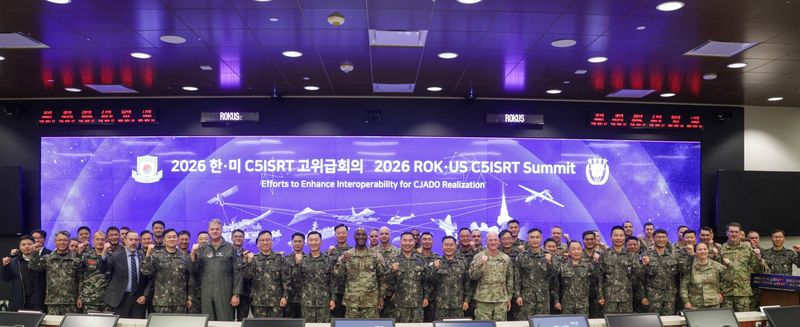
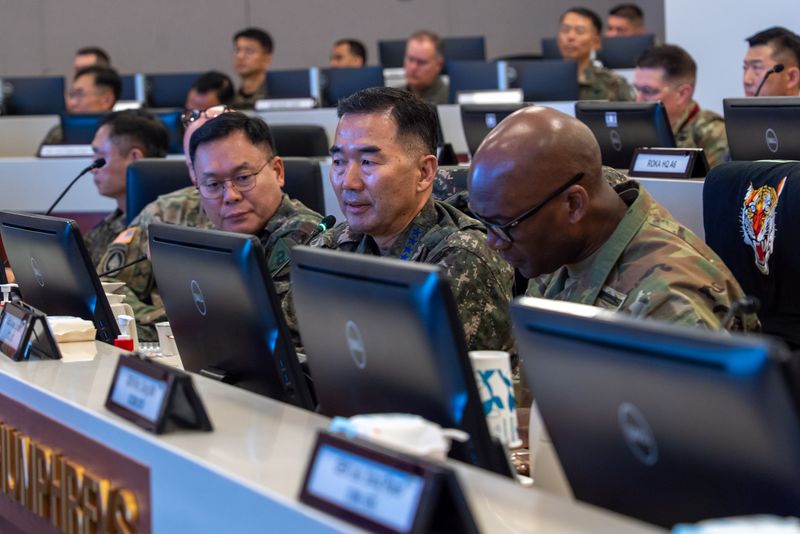
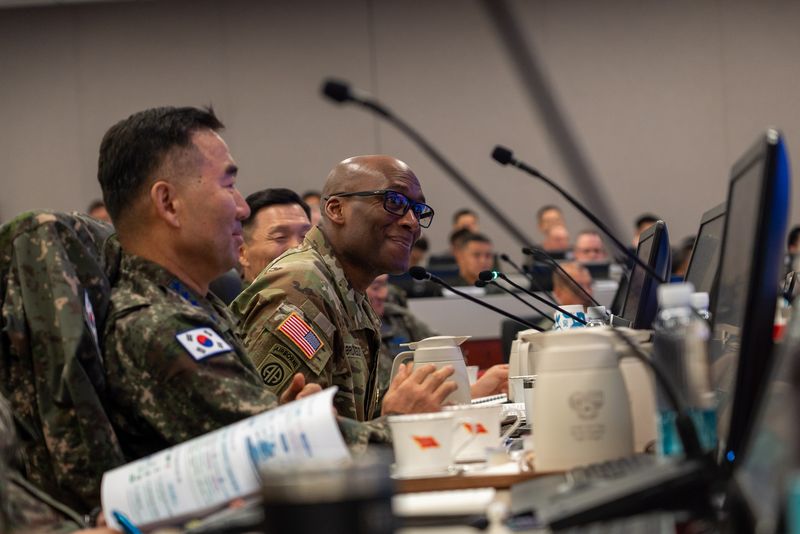
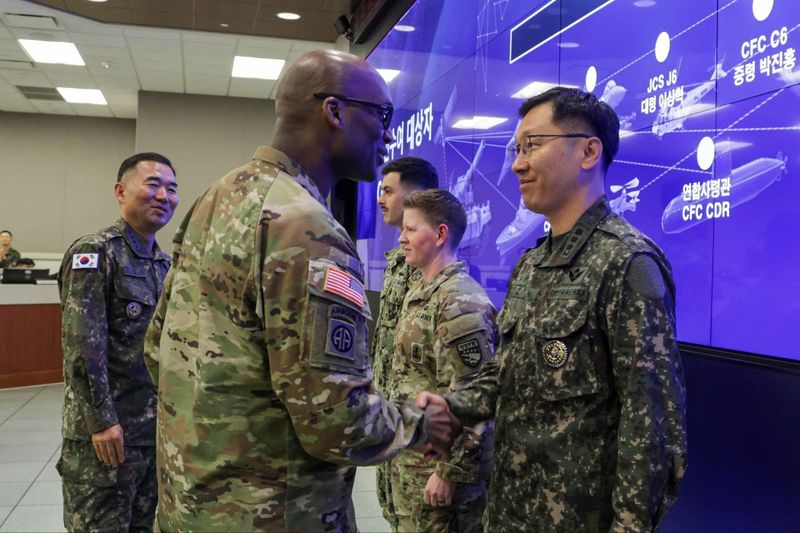
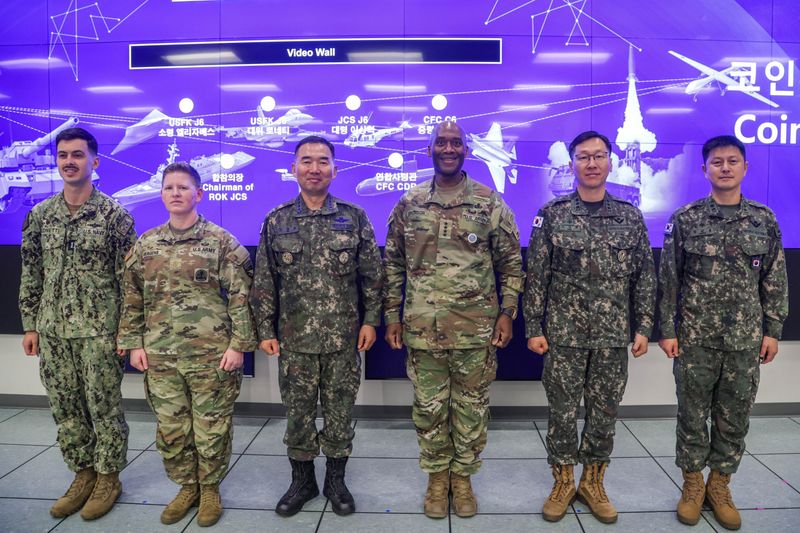
The ROK/US Combined Forces Command (CFC) and the Republic of Korea Joint Chiefs of Staff (ROK JCS) announced that they held the “2026 ROK-US C5ISRT Senior-Level Meeting” on the 18th at Camp Humphreys in Pyeongtaek, Gyeonggi Province. It was co-chaired by CFC Commander Gen. Xavier T. Brunson and ROK JCS Chairman Gen. Jin Young-seung. Around 340 key personnel from the CFC, ROK JCS, United States Forces Korea (USFK) and each of the component commands attended.■The “detection-decision-strike” hyperconnected neural network: discussions on implementing CJADC2 on the Korean PeninsulaIn short, C5ISRT refers to an integrated command-and-control system for the battlefield that incorporates cutting-edge concepts. More specifically, it combines Command, Control, Communications and Computers with Cyber, Intelligence, Surveillance, Reconnaissance and Targeting. It has continued to evolve from the earlier C4I (Command, Control, Communications, Computers, and Intelligence) concept. Established in 2012 as the “ROK-US C4I Senior-Level Meeting,” this forum was elevated to the current C5ISRT format in 2021 as modern warfare expanded into space and cyberspace, and has since coordinated the allies’ annual efforts to advance information flows and command and control.
This year’s meeting was held under the theme “Efforts to Ensure Interoperability for Combined Joint All-Domain Operations (CJADO).” The CFC’s communications and electronics staff, which delivered the first presentation, shared an update on efforts to develop a detailed framework for CJADC2 (Combined Joint All-Domain Command and Control). CJADC2 is a next-generation warfighting system that dramatically reduces operational decision-making time by fusing all detection assets—including high-altitude unmanned drones around the world, military satellites and ground-based radars—and strike assets across the land, sea, air and space domains through an AI cloud network, without tying them to a single platform. The US Pacific Command and the ROK JCS then each presented their respective national road maps for developing combined C4I systems and plans to ensure interoperability between South Korea and the US, followed by in-depth discussions.
■“Speed is key”: attribute-based access control as a solution to the information-sharing and security dilemmaThe South Korean and US military leaders jointly emphasized “data-driven, rapid decision-making” and “AI-based command and control” that day.
CFC Commander Brunson identified the “speed” of information flow and “sophisticated security controls” as key factors in determining the outcome. “Speed is the key factor that makes the difference on the Korean Peninsula,” he said. “We must continue to advance attribute-based access control (ABAC) so that data reaches the right place at the right time.”
ROK JCS Chairman Jin Young-seung said, “We must rapidly share all information collected across every domain of the modern battlefield to ensure faster decision-making than the enemy, and commit overwhelming combined forces to secure victory.” He emphasized, “Through close coordination between South Korea and the US, we will ensure interoperability while continuing to develop command-and-control systems based on AI and advanced science and technology.”
Because every network is linked in a hyperconnected battlefield, even a breach of a single node can threaten the entire system, creating a critical cybersecurity dilemma. Attribute-based access control is a next-generation security technology that moves beyond the traditional approach of imposing blanket restrictions based on a user’s identity or overall security classification. Instead, AI assesses detailed attributes—such as the nature of the data, the mission and the operational situation—in real time and assigns access permissions with precision. It is regarded as key infrastructure for immediately routing high-level target data captured by US military reconnaissance assets to South Korean military strike systems without concerns about security leaks.
CFC Deputy Commander Kim Seong-min also stressed that “ensuring interoperability is essential to maintaining the CFC’s full ‘Fight Tonight’ readiness and implementing Combined Joint All-Domain Operations.” He added, “Let us make a joint effort to build a shared South Korea-US data-driven environment and introduce AI-based decision-support systems.”
Observers in and outside the military believe that if the “Korean-style JADC2” infrastructure being developed by South Korea’s Army by combining a 5G tactical mobile communications network with low-Earth-orbit satellites, and the ROK JCS’s Korean Joint Command and Control System (KJCCS), are seamlessly integrated with the US military’s CJADC2, it could mark a turning point by dramatically shortening the time needed to execute the Kill Chain—from detecting North Korea’s mobile launchers (TELs) through interception and strike.
[email protected] Lee Jong-yoon Reporter