China–South Korea FTA to Expand Co-Production to TV Dramas and Variety Shows... Korean Travel Agencies Allowed to Recruit Tourists Directly in 23 Chinese Regions
- Input
- 2026-11-18 16:39:06
- Updated
- 2026-11-18 16:39:06
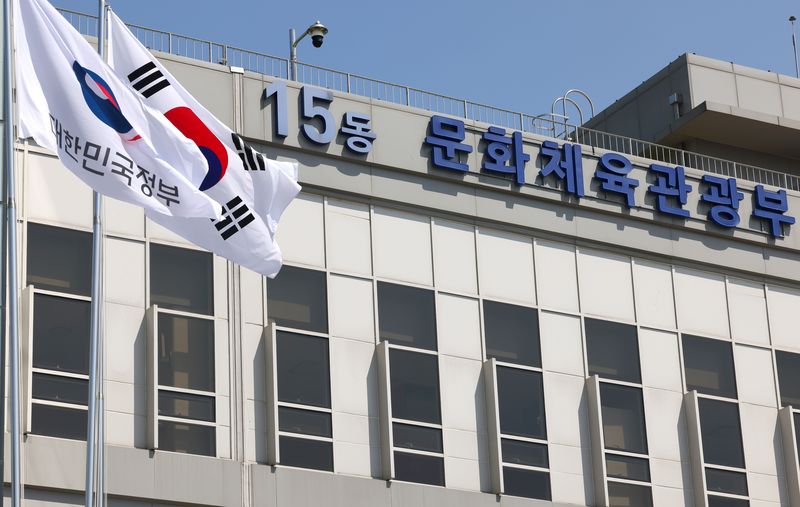
On the 18th, according to the Ministry of Culture, Sports and Tourism and the Ministry of Trade, Industry and Energy, the two countries declared that they had reached a substantive conclusion to follow-up negotiations on services and investment under the China–South Korea Free Trade Agreement at a bilateral summit held on the occasion of the Asia-Pacific Economic Cooperation (APEC) summit. The negotiations have been concluded, and some technical wording will be finalized in working-level consultations.
China pledged to provide ‘most-favored-nation treatment,’ agreeing not to treat Korean content less favorably than content from third countries in areas such as films and games. It also agreed to apply the principle of non-discrimination to pre-screening procedures for online games and films. This is the first time such provisions have been included in a Chinese trade agreement. South Korea also incorporated into this agreement its current regulations on film exhibition services, which were not addressed in the original agreement.
Under the Film Co-Production Agreement concluded by the two countries in July 2014, China–South Korea co-production films approved as co-productions are recognized as domestic films in China and excluded from the import quota for foreign films. The China–South Korea FTA, which took effect the following year, granted approved co-productions the same benefits as domestic films and encouraged co-productions of TV dramas, documentaries and animation for broadcast. This time, the two countries agreed on an ‘Annex on Audiovisual Program Co-Production,’ adding TV dramas and variety shows to the types of works eligible for co-production.
In the tourism sector, the agreement includes a commitment allowing Korean travel agencies established in China to operate ‘outbound tourism’ businesses by arranging overseas trips for Chinese nationals and foreign residents living there. The areas covered are 11 pilot zones, including Beijing, Shanghai, Chongqing and Hainan, and free trade pilot zones in 12 regions, including Guangdong, Henan, Hubei and Sichuan.
The government expects Korean travel agencies established in these areas to be able to directly plan and sell packages to South Korea featuring K-pop, beauty, food or the distinctive attractions of different regions of the country, and to expand their business to travel to third countries such as Japan and Southeast Asian countries. Last year, 5.48 million Chinese visitors came to South Korea, accounting for 28.9% of all inbound visitors—the largest share by nationality. Chinese visitors spent an average of $1,504 per person, 13% more than the overall average.
Meanwhile, these follow-up negotiations began in March 2018 to raise the level of market opening in services and investment under the China–South Korea FTA, which took effect in December 2015, and reached a substantive conclusion after eight years and eight months. The two countries agreed to expand market access in the legal, distribution, construction and financial sectors and strengthen investor protection. Market opening will be the rule, with only exceptions specified in a reservations list. Following a legal review of the agreement text, the countries plan to proceed with formal signing and entry-into-force procedures.
[email protected] Jang In-seo Reporter