With Two Days to Go Until the CSAT, 700 General Civil Servants Urgently Mobilized... Union Warns of Confusion at Test Sites
- Input
- 2026-11-18 16:33:28
- Updated
- 2026-11-18 16:33:28
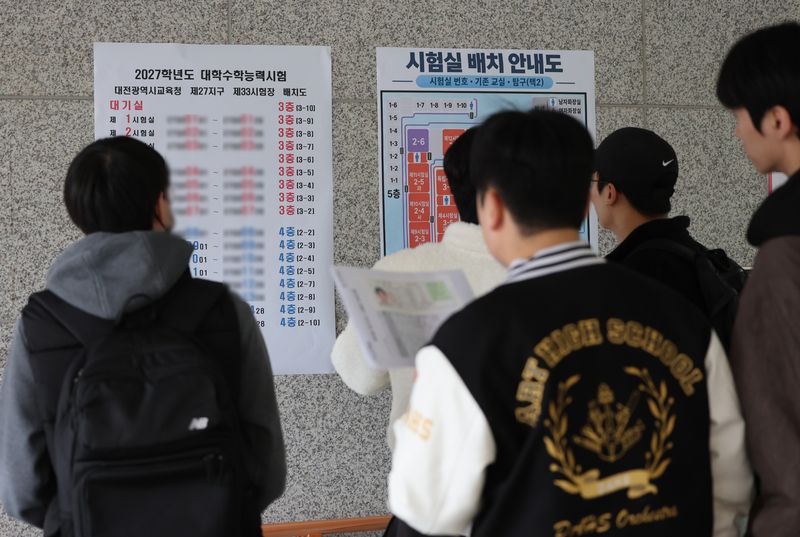
[Financial News] The Korean Government Employees Union has voiced concern over SMOE’s urgent mobilization of around 700 people, including general civil servants, to prevent cheating on the CSAT using artificial intelligence (AI) devices. With just two days until the exam, additional staff with little proctoring experience are being deployed, and their advance training will last only 1–2 hours. This has prompted calls for clear procedures and accountability for responding to suspected cheating.
According to Financial News’ reporting on the 18th, the Korean Government Employees Union expressed concern over SMOE’s sudden mobilization of proctors, saying civil servants with little proctoring experience were being sent to test sites without adequate preparation. The union was particularly concerned about the possibility of placing unnecessary psychological burdens on examinees while detecting cheating, or of confusion at test sites arising from unclear divisions of responsibilities with existing proctors.
A Korean Government Employees Union representative said, “Civil servants assigned to proctor exams are bound to feel considerable pressure,” adding, “A cautious approach is needed, as students must not be subjected to unnecessary burdens or psychological pressure during proctoring.”
On the 17th, SMOE sent a notice calling for around 700 additional personnel, including education administration civil servants at Grade 6 or below and education supervisors, from its main office and affiliated agencies. The measure is intended to prevent cheating using artificial intelligence (AI) devices and other equipment during the 2027 College Scholastic Ability Test (CSAT), which will be held on the 19th. The Gyeonggi Provincial Office of Education is also reportedly adding proctors.
CSAT proctors are generally assigned after receiving advance training, with current teachers making up the bulk of them. This time, however, general civil servants with little proctoring experience also have to learn the relevant duties in a short period. The additional personnel will be assigned to hallway duty outside exam rooms and may also be sent inside if an unexpected situation arises, such as suspected cheating.
The issue is that advance training will last only 1–2 hours. Since AI devices differ from ordinary electronic devices in appearance and how they are used, it can be difficult to determine whether cheating is involved. Questions have therefore been raised about whether such brief training will enable an effective response.
There are also concerns that if hallway proctors are sent inside exam rooms, the division of responsibilities with existing proctors could become unclear. Critics say specific duties and accountability must be clarified to prevent confusion in detecting and reporting cheating and in making on-site decisions.
SMOE maintains that the additional personnel will handle hallway supervision, so their impact on the existing system for proctoring inside exam rooms will be limited.
An SMOE representative said, “Proctors are already assigned inside the exam rooms, so bringing in additional personnel could increase examinees’ anxiety,” adding, “In line with the government’s policy not to hold proctors responsible, the education office will apply the same principle.”
[email protected] Lee Dong-hyeok Reporter