“AI Agents, Too, Must Be Managed Like People”... Okta Unveils Integrated Security Strategy
- Input
- 2026-11-18 16:19:55
- Updated
- 2026-11-18 16:19:55
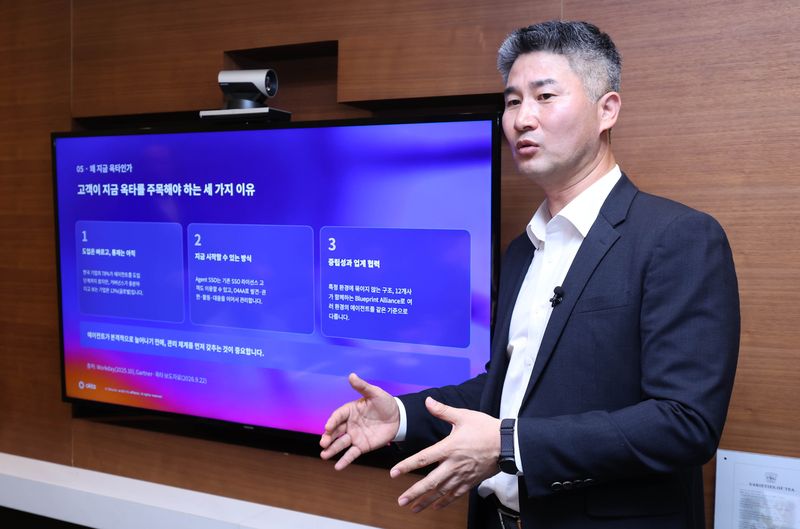
[Financial News] Okta Korea is presenting an integrated security strategy to address corporate security threats arising from the spread of artificial intelligence (AI) agents. The key is to give AI agents independent identities, just like people, and centrally manage everything from access permissions and activity records to threat response. The company plans to strengthen its partnerships with global technology companies and support the safe adoption of AI by Korean businesses.
Hwang Gyu-eon, CEO of Okta Korea, said at “Oktane on the Road Seoul,” held at Hotel Eliena in Gangnam District, Seoul, on the 18th, “A series of security incidents involving the use of AI have recently occurred across various industries, including the domestic financial sector, and AI security is emerging as the biggest issue facing customers.” He added, “Interest is growing significantly in Okta’s message that AI agents, too, should be managed through identity, just like people.”
Okta analyzed that as AI agents perform tasks on behalf of people, managing their permissions to access corporate systems and data has emerged as a new security challenge. Restricting access could reduce the usefulness of AI agents, while expanding their permissions could increase security risks.
Okta has therefore put forward its “First-Class Identity” strategy, which manages AI agents as independent identities. The company said that while it has previously focused on integrating the management of employees’ identities and access permissions, going forward, AI agents should also be given separate identities so that consistent security policies can be applied across the entire organization.
Last September, Okta unveiled its AI agent security platform, “Okta for AI Agents.” The technology helps companies track the AI agents operating within their organizations, set access permissions, monitor activity, and respond to anomalies.
In particular, Okta identified the location, permissions, activity, and threat response of AI agents as the four key areas of security management. The approach is to identify all AI agents operating within an organization, grant them only the minimum permissions necessary to perform their tasks, and track their activity so that access can be blocked immediately if a problem arises.
Okta is also expanding its partnerships with global technology companies. Last September, it launched the “Blueprint Alliance” with 12 companies, including Amazon Web Services (AWS), Google Cloud, CrowdStrike, and Salesforce. The goal is to connect AI agents and security systems across companies and apply common standards to identity management, access control, and threat detection.
At this Seoul event, Okta plans to introduce its domestic business strategy, ways to control AI agents’ access permissions, and its integrated security platform roadmap. Hwang said, “Through this event, we will provide concrete guidance to help Korean companies gain visibility and control and build a safe AI environment where security and innovation can coexist.”
[email protected] Jang Min-kwon Reporter