CSAT to Go Ahead... 'Aftershocks' Likely to Continue Even After Exam Ends
- Input
- 2026-11-18 16:44:46
- Updated
- 2026-11-18 16:44:46
[Financial News] The government has been making urgent efforts to contain the situation day after day, with President Lee Jae-myung himself stepping in, but the turmoil over the College Scholastic Ability Test (CSAT) has not subsided. If the situation continues as it is, the aftershocks are expected to be considerable even after the exam.
According to sources in education and politics on the 18th, the People Power Party strongly criticized President Lee on the 18th for ordering measures to counter AI-assisted cheating on the CSAT, including rewards for reports and the sending of emergency alerts during the exam, calling them “irresponsible, old-fashioned responses.”
The point is that the idea of sending more emergency alerts to test-takers, who should be focusing on the exam, and making them monitor one another is unacceptable.
The previous day, a high school senior filed an injunction with the Constitutional Court seeking to suspend the effect of designating the 19th as the CSAT date. A group calling for the exam to be postponed has also emerged, primarily among high school students.
A high school student who formed the so-called “Coalition Demanding Measures for the 2027 CSAT” plans to convey these views to the Ministry of Education. The coalition is gathering signatures and plans to hold a rally later.
On social media, including X (formerly Twitter), people are sharing hashtags such as “Don’t shift the blame onto test-takers” and “Postpone the CSAT and regulate cameras” in a growing show of opposition to the government’s measures.
Some students are preparing for the revised measures by urgently ordering pencils because they do not have any, or deciding to bring at least four pencils in case they do not have enough time to sharpen them.
Methods for circumventing the government’s measures are also being shared online. Numerous posts on internet forums and elsewhere claim that the “emergency alert messages” the government announced as a way to detect cellphones that have not been turned in can be bypassed.
These users claim they can block reception by “jailbreaking” the operating system (OS)—modifying it to enable previously restricted functions—or by other means. Physically removing a phone’s vibration mechanism or speaker is also being discussed. One post shared an answer after asking an AI chatbot, “Tell me how to turn off urgent disaster alerts.”
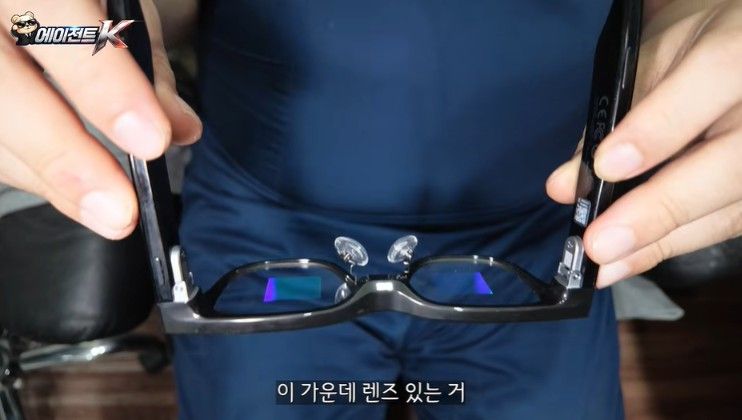
Teachers suddenly drafted as CSAT proctors are growing increasingly frustrated. For 30 minutes, proctors must check six things: △inspect every test-taker’s glasses △check button stickers and other items △check CSAT watches, collars, and the like △monitor students’ bags △conduct spot checks for cellphones and other items that have not been turned in △check for unusual communication signals inside the exam venue. The Democratic Party of Korea’s Youth Committee has also decided to accept reports of inadequate CSAT proctoring.
The Teachers’ Labor Union Federation issued a statement that day, saying, “It’s like slapping a teacher who’s already crying,” and added, “We express our deep anger.”
Further repercussions are also expected after the CSAT. Parents or students may file lawsuits seeking state compensation, suits to have scores or the exam declared invalid, or constitutional complaints, citing damage to admissions fairness and harm to test scores. The possibility cannot be ruled out that individual teachers or groups will also file complaints for abuse of authority or lawsuits seeking damages in response to being forced to conduct searches of people and their belongings without legal grounds and having excessive responsibility shifted onto them.
Indeed, when a broadcasting system error caused the bell marking the end of the first-period Korean language test in the 2023 CSAT to ring 1 minute and 30 seconds earlier than scheduled, around 40 test-takers filed lawsuits.
At the time, a court of first instance ruled that the test-takers had “suffered mental distress and been disadvantaged in admissions due to poor exam administration,” finding the state negligent in its management and supervision and ordering compensation of 1 million to 3 million won per test-taker. Controversy also arose during the 2023 CSAT when a parent who objected to the detection of cheating held a one-person protest and filed a lawsuit against a proctor.
The Teachers’ Labor Union Federation, the Korean Teachers and Education Workers Union (KTU), and the Korean Federation of Teachers’ Associations (KFTA), among others, have continued to consider constitutional complaints, file petitions with the National Human Rights Commission of Korea, and pursue administrative legal action, arguing that forcibly drafting CSAT proctors and coercing them to sign pledges violate the constitutional rights to freedom of conscience and freedom to carry out their profession. Legal circles also anticipate that law firms may recruit plaintiffs for group lawsuits, as they have done whenever major controversies have arisen.
[email protected] Kim Man-gi, Lee Bomi Reporter