K-Startups Lead With Semiconductors and Enterprise AI, Meet Japanese Investors in Tokyo [On the Scene]
- Input
- 2026-11-18 16:09:57
- Updated
- 2026-11-18 16:18:52
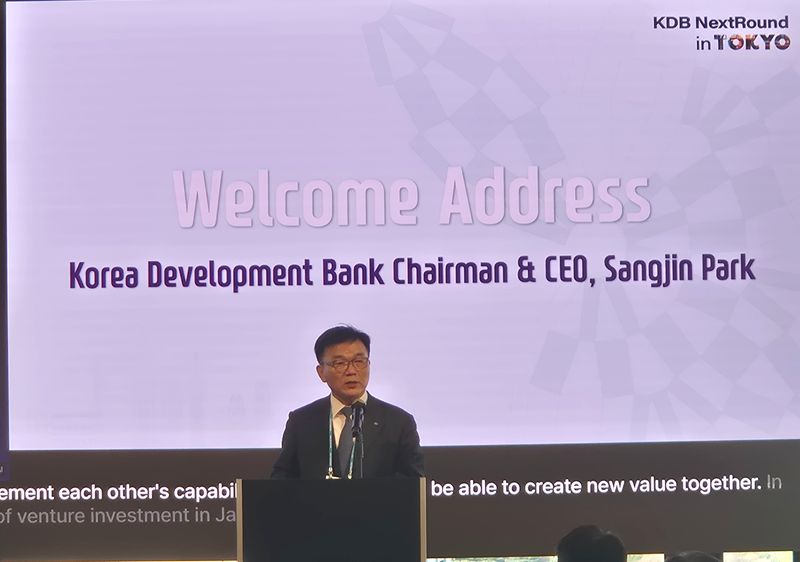
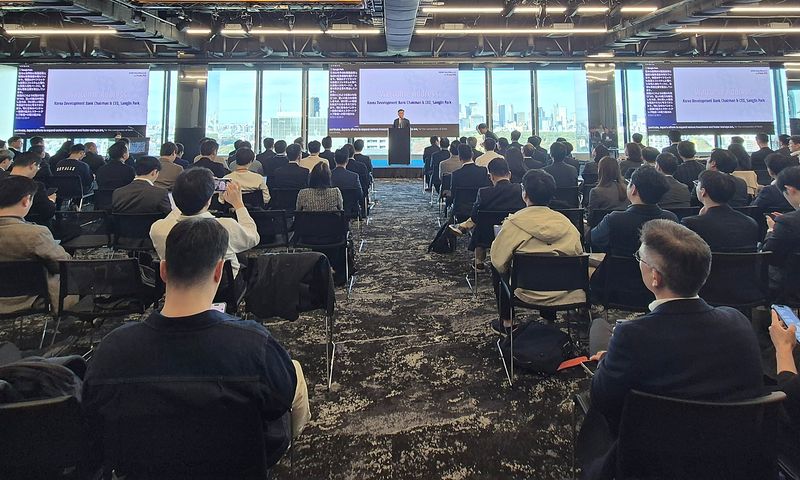
【Financial News, Tokyo = Correspondent Seo Hye-jin】 On the 18th, on the 18th floor of the DG Building at Shibuya Parco in Tokyo, Japan, Japanese translations appeared on the left side of the screen in time with the Korean presentations, while English subtitles ran along the bottom. At “KDB NextRound in Tokyo 2026,” artificial intelligence (AI), a focus of investor interest, also helped lower language barriers between Korean and Japanese companies and investors. A representative of a Korean venture capital (VC) firm who attended for the third consecutive year called it “the most remarkable change,” adding, “As AI removes language barriers, I think the investment environment will become even more active.”
The event, co-hosted for the third consecutive year since 2024 by KDB, Digital Garage and DG Daiwa Ventures (DGDV), drew an estimated 250 or so representatives from Korean and Japanese VC firms, financial institutions and operating companies. Twelve Korean startups presented their technologies and business models as they sought investment and local partnerships.
Deep tech and enterprise AI take the lead, alongside biotech and lifestyle services
Presentations were organized into three sessions—deep tech, enterprise AI, and platforms and consumer services—with four companies in each. A VC that recommended a company introduced it in one minute, and the startup then spent nine minutes explaining its technology and growth strategy. Another Korean VC representative said, “The startups coming here seem more mature than before,” adding, “They seem to be preparing to some extent before entering Japan, realizing that Korean or English alone won’t be enough.”
The first presentation was by ePort, a company that makes filler materials for semiconductor packaging. Next came ETIFOS’s vehicle-to-everything (V2X) communications, an AI- and robotics-based new materials development platform, and a system for improving the energy efficiency of heavy industrial equipment. Technologies for manufacturing, from materials development to equipment operations, took center stage.
In the enterprise AI session, Kristin Company presented a service supporting shoe design and production, while Colosseum Corporation introduced logistics and supply chain solutions. Korea Deep Learning showcased document-work automation, and Sionic AI presented technology for using AI agents. These business models apply AI to design, production and operations.
The final session featured CellArk Bio, which works in skin and cell regeneration; online education platform Glorang; brand and creator collaboration platform Inidit; and sports-matching platform MyPlay Company. The event covered a broad range of fields, from industrial technology to biotech and lifestyle services.
In his opening remarks, KDB Chairman Park Sang-jin emphasized not only technology development but also the ability to turn technologies into products and services suited to each country’s industries. The aim is to combine Japan’s manufacturing technology and industrial base with Korea’s innovative capabilities. He also said that the expansion of venture investment in Japan is broadening the foundation for cooperation between the two countries.
From incubation and investment to overseas expansion, KDB to select more Japanese fund managers
KDB also presented examples of startups’ growth through its linked programs: the “NextOne” incubation program, the “NextRound” fundraising platform and the “NextRise” startup expo.
AI company Wrtn went through the NextOne incubation program and participated in NextRise in 2022, then took part in NextRound in Silicon Valley the following year and received follow-on investment from KDB. Colosseum Corporation, which presented at this event, also took the stage in Tokyo after beginning its incubation in 2022, participating in the expo and receiving KDB investment.
Cha Hyeong-geun, head of KDB’s NextRound team, said that since the program launched in 2016, at least 3,500 companies had participated in investor relations presentations, and at least 1,000 of them had raised a cumulative total of about $9 billion. Chairman Park also said KDB was expanding its provision of risk capital, including by making at least 1.7 trillion won in direct and indirect investments this year.
KDB is also strengthening local partnerships through its “Global Partnership Fund,” which invests in funds managed by overseas firms. The approach encourages foreign capital to invest in Korean startups and supports their overseas expansion through local fund managers.
Regarding the sixth fund now in preparation, Cha said, “We plan to select more Japanese fund managers to expand our influence in the Japanese market.” KDB’s Tokyo branch is also broadening the foundation for local cooperation by investing in Japanese venture funds.
[email protected] Seo Hye-jin Reporter