3.3 Times as Many Firms Fall Into Distress as Recover... KOSDAQ (Korea Securities Dealers Automated Quotations)’s ‘Quagmire of Distress’ [fn Market Watch]
- Input
- 2026-11-18 15:24:04
- Updated
- 2026-11-18 15:24:04
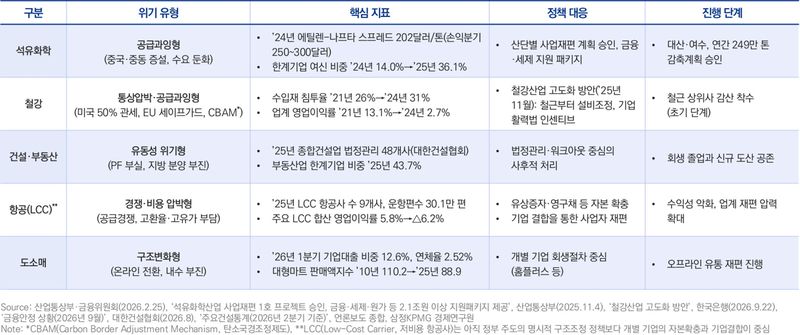
According to a report published on the 18th by Samjong KPMG, titled “The Growing Number of Marginal Companies: The Direction of Corporate Restructuring,” the share of listed companies with more than seven years in business that were marginal companies rose 12.7 percentage points, from 13.8% in 2019 to 26.5% in 2025. The number of marginal companies reached 579. A marginal company is generally defined as one whose interest coverage ratio has remained below 100% for three consecutive years.
The burden of distress was concentrated on KOSDAQ. Last year, marginal companies accounted for 30.3% of KOSDAQ-listed firms, about 1.7 times the 17.4% share on KOSPI. In particular, on KOSDAQ, the number of companies newly classified as marginal was 3.3 times the number of companies that recovered. The rate of companies emerging from marginal status was just 10.5%. This means far more companies are newly falling into distress than are recovering from it.
Many of the marginal companies on KOSDAQ were small firms with sales of less than 20 billion won. Their median operating margin was -24.2%, and three out of four recorded operating losses for three consecutive years. On KOSPI, many of the companies were mid-sized or large firms with more than 50 years in business, and their reliance on borrowing was about twice that of healthy companies.
The problem is that improvements in companies’ overall financial indicators are not translating into a resolution of individual companies’ distress. According to Bank of Korea data, the interest coverage ratio for all companies subject to external audits rose to 369.8% last year, improving significantly from 2023. The recovery in performance in some sectors, including semiconductors, lifted the average. However, the share of companies with an interest coverage ratio below 100% actually rose from the previous year to 39.9%. Four out of 10 companies could not cover even that year’s interest expenses with the operating profits they earned.
The share of marginal companies whose interest coverage ratio remained below 100% for three consecutive years also rose from 14.9% in 2021 to 19.1% last year, the highest level since records began in 2010. Of the 29,468 companies subject to external audits, 5,632 were marginal companies. One in five small and medium-sized companies (20.0%) was classified as marginal.
New distress was emerging faster than marginal companies were recovering financially. Last year, among companies already subject to external audits, there were 1,517 newly classified marginal companies, 1.9 times the 793 that recovered to healthy status. The number of newly classified companies rose about 1.7-fold in two years, from 875 in 2023.
Corporate distress is leading to actual bankruptcies. Applications for corporate rehabilitation doubled, rising from 661 in 2022 to 1,321 last year. Over the same period, corporate bankruptcy filings reached 2,282 in 2025, a record high. From January through September this year, corporate bankruptcy filings also rose 12.5% from the same period a year earlier, to 1,874. That was far higher than the 3.5% increase in applications for corporate rehabilitation.
Yang Jin-hyeok, an executive vice president at Samjong KPMG, said, “It is important to move away from adjusting debt after corporate value has been impaired and instead intervene proactively while corporate value and cash-generating capacity remain,” adding, “The key task is to build a market-oriented restructuring ecosystem in which early intervention, new financing and private-sector restructuring capital create a virtuous cycle.”
[email protected] Kim Hyun-jung Reporter