“Two Subway Lines Make a Difference”... Regional Multi-Line Station-Area Apartment Prices Soar
- Input
- 2026-11-18 14:42:40
- Updated
- 2026-11-18 14:42:40
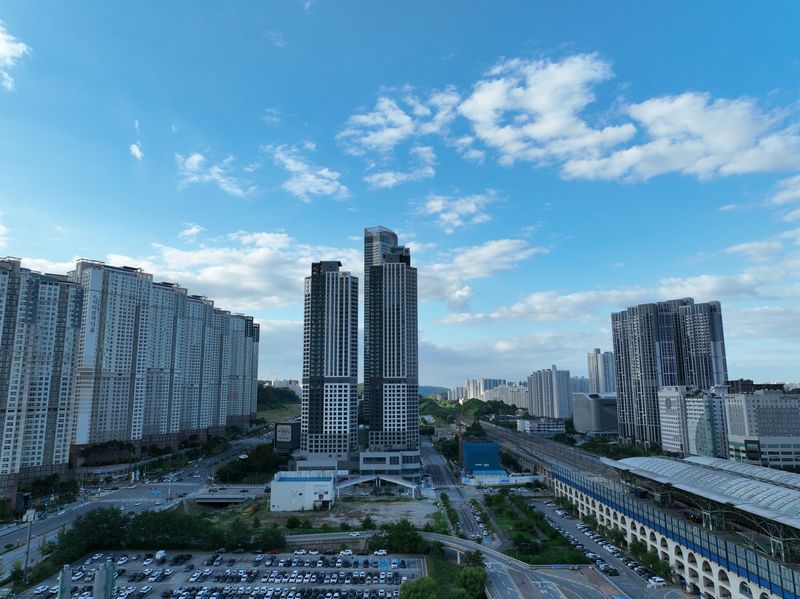
[Financial News] Fewer than 10% of urban rail stations in regional cities were found to be transfer stations where passengers can use two or more lines. As a result, “multi-line station areas” are drawing attention in the real estate market.
According to the Ministry of Land, Infrastructure and Transport’s Rail Portal on the 18th, 30 of the 319 urban rail stations operating in regional cities are transfer stations, accounting for 9.4% of the total. The term “multi-line station area” refers to a location close to a transfer station where two or more lines intersect, or one where stations on different lines can be used.
Multi-line station areas are considered particularly scarce in regional cities, which have relatively fewer subway stations than the Seoul metropolitan area. Indeed, some apartments in multi-line station areas in Daegu, Busan and Gwangju have sold for more than they did last year.
According to the Actual Transaction Price Disclosure System of the Ministry of Land, Infrastructure and Transport, an 84.99-square-meter unit at Suseong Beomeo W in Beomeo-dong, Suseong-gu, Daegu, sold for 1.75 billion won in September. That was 330 million won (23.2%) more than the 1.42 billion won it fetched in the same month last year. The complex is near Beomeo Station on Daegu Urban Railway Line 2, and the station will become a transfer station when Line 4 opens in the future.
A 59.06-square-meter unit at Haeundae Xi Complex 1 in U-dong, Haeundae District, Busan, also sold for 850 million won in September. That was 100 million won (13.3%) above the 750 million won sale price in the same month last year. The complex is near BEXCO Station, served by Busan Urban Railway Line 2 and the Donghae Line.
An 84.84-square-meter unit at Mudeungsan IPARK in Hak-dong, Dong District, Jeonnam-Gwangju Integrated Special City, sold for 700 million won in July, the highest transaction price there in the past year. That was up 113 million won (19.3%) from 587 million won in July last year. The complex is near Namgwangju Station on Gwangju Urban Railway Line 1, and Line 2 is also planned to connect to the area when it opens in 2027.
Meanwhile, new housing is also being supplied near major railway stations in regional cities.
In Asan-si, South Chungcheong Province, the residential officetel e-Pyeonhansesang City Cheonan–Asan Station, developed by Korea Asset Trust and built by DL Construction, is on sale. The project comprises 396 units, each with an exclusive area of 84 square meters. KTX Cheonan–Asan Station and Asan Station on Seoul Subway Line 1 are within a 500-meter radius.
In Busan, BS Hanyang plans to launch sales this month for Yeonsan Station Sujain Centrio in Yeonsan-dong, Yeonje District. Of the 335 homes, with exclusive areas ranging from 59 to 84 square meters, 139 will be offered for general sale. The site is within walking distance of Yeonsan Station on Busan Urban Railway Lines 1 and 3, and Busan National University of Education Station on Line 1 and the Donghae Line.
IPARK Hyundai Development Company will also begin sales this month for IPARK MUdeungsan Sky Foret in Hak-dong, Dong District, Jeonnam-Gwangju Integrated Special City. Of the 2,299 homes, 1,387 units with exclusive areas ranging from 59 to 135 square meters will be offered for general sale. Residents can use Namgwangju Station on Gwangju Urban Railway Line 1, and Line 2 is also scheduled to open in the future.
[email protected] Choi A-young Reporter