Despite Push to Foster Homegrown Humanoids, 9 in 10 University Robots Are Chinese-Made
- Input
- 2026-11-19 09:46:01
- Updated
- 2026-11-19 09:46:01
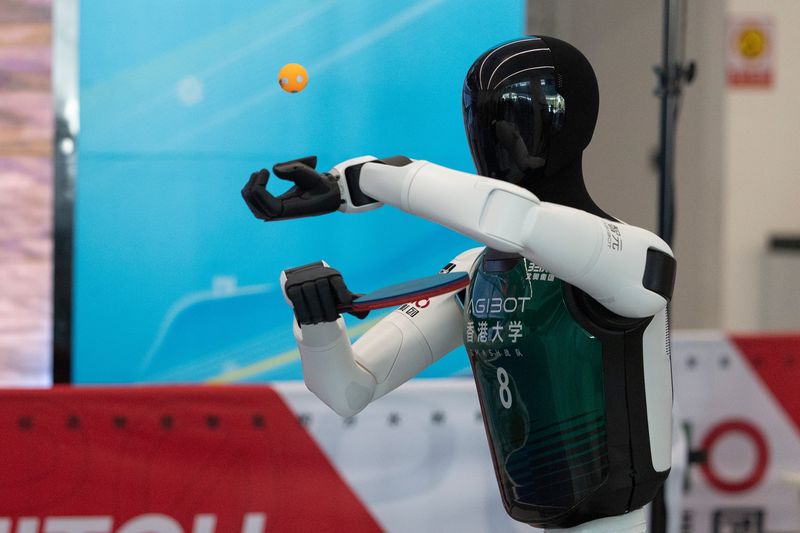
[Financial News] The government is stepping up efforts to foster South Korea’s humanoid robot industry, but Chinese-made robots appear to dominate research settings at domestic universities. The robots’ operating software also relies heavily on U.S.-made products, prompting concerns that expanding hardware deployment alone will not be enough to break free from dependence on foreign technology.
According to the National Assembly’s Special Committee on Budget and Accounts on the 19th, a survey by the Ministry of Trade, Industry and Energy of 24 major universities and research labs in South Korea found that Chinese-made hardware accounted for 92.3% of the humanoid robots owned by the 13 universities that had them. U.S.-made software accounted for 84.6% of the software used to control the robots’ movements.
The government plans to invest 2.3 trillion won in the humanoid ecosystem by 2030. It has newly allocated 30 billion won for next year to supply 200 homegrown humanoid robots to universities, government-funded research institutes and other institutions. The plan is to create initial demand by providing 150 million won per robot and encourage domestic companies to invest in mass production.
The problem is that South Korea’s robotics ecosystem is already heavily dependent on foreign technology. In particular, if foreign-made software needed for robots to perceive their surroundings, make decisions about tasks and carry them out becomes firmly established, dependence on foreign technology for core technologies could persist even if homegrown hardware is deployed.
The National Assembly analyzed that “even if the deployment of homegrown hardware is expanded, reliance on foreign companies for core software could limit how much the robotics industry as a whole can actually reduce its dependence on foreign sources.”
The supply capacity of homegrown robots is also a challenge. Last year, South Korea shipped just 171 humanoid robots, accounting for 1.2% of the global market. China shipped 12,868 during the same period, taking 87.7% of the global market. The Ministry of Trade, Industry and Energy said domestic companies could produce around 2,100 units a year, but the National Assembly said their actual supply capacity needed to be objectively verified.
The Ministry of Trade, Industry and Energy says production capacity is expanding as large domestic companies enter the market, and that it is also supporting the development of AI models for homegrown robots and the acquisition of operational data.
The National Assembly also stressed that the development and wider deployment of AI models for robots and control and operating software should go hand in hand with the rollout of homegrown robots. The aim is not merely to increase the number of homegrown robots deployed, but to secure core technologies in South Korea as well.
[email protected] Kim Kyung-min Reporter