The 'Kickrani' That Darted Out of a Residential Alley Was an Insurance Scammer
- Input
- 2026-11-18 15:33:52
- Updated
- 2026-11-18 15:33:52
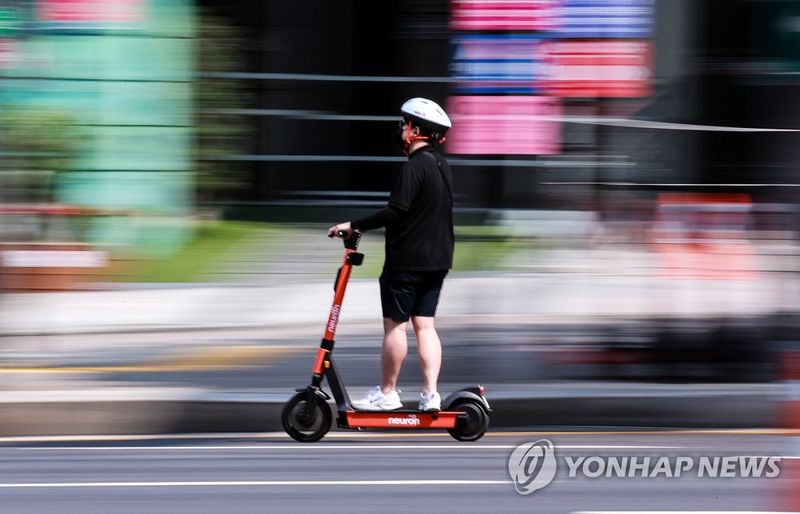
On the 18th, the Financial Supervisory Service released cases of deliberate crashes and false hospitalizations uncovered in a targeted investigation into auto insurance fraud, and offered guidance on how consumers should respond. The investigation uncovered cases of people deliberately colliding with vehicles using electric kick scooters, chasing vehicles suspected of drunk driving and causing crashes, and continuing to work as designated drivers or taxi drivers while hospitalized.
A taxi dropping off a passenger gets hit with a 'bang'
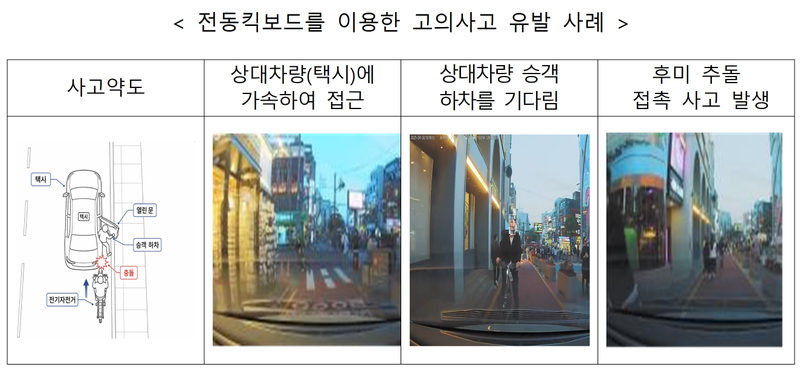
A, who carried out the scam using an electric kick scooter, was found to have deliberately collided with vehicles in around 80 accidents in all. A would wait in blind spots, such as residential alleys, then hit the side or rear of a vehicle when it turned or emerged from an alley. A also sometimes struck the rear of a taxi when its back door opened as it stopped to let passengers out.After each crash, A exaggerated their pain and demanded a cash settlement. If the parties could not reach an agreement, A obtained a medical certificate and filed claims for bodily injury and property damage coverage. The FSS investigated the case with the Korea Automobile Damage Compensation Promotion Agency and identified signs of a planned crime, including similar circumstances and incidents concentrated in specific areas and at night, before referring the case to the police agency with jurisdiction for investigation. As electric scooter-related accidents have increased to the point that the term 'Kickrani'—a blend of 'kick scooter' and 'water deer,' meaning to dart out suddenly like a water deer—has become popular, a case of exploiting this situation for insurance fraud has been uncovered.
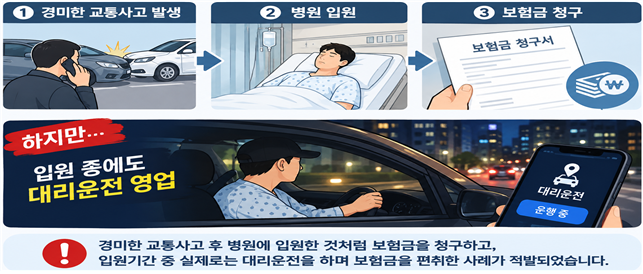
An investigation into false hospitalization found records showing that designated driver B worked for 20 days, excluding the admission and discharge days, while hospitalized for 22 days. Most of the suspects, including B, were hospitalized for minor injuries such as simple sprains but did not stop working. Many repeatedly drove late at night or regularly worked as designated drivers while hospitalized.
The FSS also found numerous cases in which the same suspects repeatedly claimed to be hospitalized. It determined that these were planned crimes aimed at repeatedly defrauding insurers and notified the police agency with jurisdiction about drivers who worked as designated drivers while hospitalized, on suspicion of violating the Special Act on the Prevention of Insurance Fraud.
False hospitalization cases also uncovered
Some individual taxi drivers were also caught operating normally while hospitalized. Taxi driver C was hospitalized four times for minor traffic accidents and worked a total of 36 hours over 14 of the 23 days spent in hospital—about 2.5 hours per day on average. Taxi driver D used a fuel subsidy card, which can only be used for taxi operations, more than 10 times while hospitalized. Investigators also found a case in which the card was used during hospitalization at a location more than 300 km from the hospital.The FSS separately notified the police agency with jurisdiction about false hospitalizations on suspicion of violating the Special Act on the Prevention of Insurance Fraud, and about improper receipt of fuel subsidies on suspicion of violating the Passenger Transport Service Act. If allegations of fraudulently obtaining insurance payouts through false hospitalization are substantiated, the penalty can be up to 10 years in prison or a fine of up to 50 million won. If a subsidy was received for fuel used for purposes other than taxi operations, it can be reclaimed, payments can be suspended for up to one year, and the recipient can face up to two years in prison or a fine of up to 20 million won.
Suspects who allegedly selected vehicles suspected of drunk driving and caused crashes were also identified. E chased a vehicle driving erratically, including running a red light, then accelerated sharply and collided with it when the other vehicle changed lanes. F approached the side blind spot of a vehicle traveling on a highway with its hazard lights on, then caused a crash by moving in close when it changed lanes.
Some traveled together in groups and repeatedly staged similar crashes involving vehicles driven by people suspected of drunk driving or changing lanes. Based on evidence including the fact that they took turns playing the roles of drivers and passengers in the at-fault and victim vehicles, the Financial Supervisory Service concluded that they had colluded in an organized manner in advance. After analyzing dashcam footage and confirming intent, including collisions in which they made no effort to avoid impact, it notified the police agency with jurisdiction on suspicion of insurance fraud.
Deliberately causing crashes while sharing cars with 'prison buddies'
G, who had served a prison sentence for insurance fraud and been released, was again suspected of deliberately causing around 20 crashes while taking turns using several expensive cars. The Financial Supervisory Service referred dozens of suspects who repeatedly staged crashes in the same way to investigative authorities for investigation.The FSS urged anyone who suspects a deliberate crash not to rush into a settlement at the scene, but to notify the police and their insurer first. It said they should secure dashcam footage, photos of the scene and witness statements, and record information about the other vehicle and the other party.
The FSS also advised drivers to slow down and check their surroundings where visibility is obstructed, such as alley entrances and taxi pickup and drop-off points. In crowded places, it urged people to choose carefully where to get out, and advised taxi passengers to check behind them before opening the door. It also said that even in an accident involving drunk driving, people should not comply with unreasonable demands from the other party and should notify the police and their insurer. The FSS emphasized that drunk driving itself is a crime punishable by law, regardless of whether someone has been victimized by insurance fraud.
[email protected] Park Mun-su Reporter