“Egyptian Judgments Can Be Trusted Even Without Embassy Verification”... Supreme Court Overturns Refugee Status Denial
- Input
- 2026-11-18 13:18:05
- Updated
- 2026-11-18 13:18:05
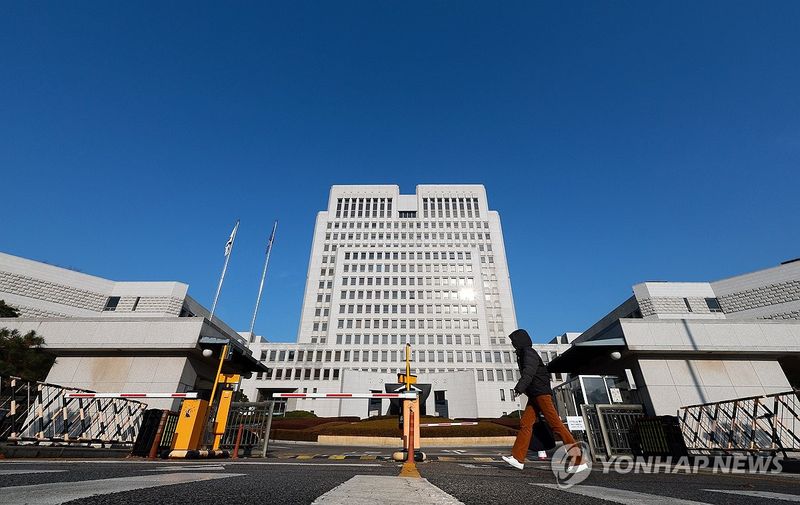
Legal sources said on the 18th that the Supreme Court's First Division (Justice Cheon Dae-yeob, the justice in charge) overturned a lower court ruling against the plaintiff and remanded the case to the Seoul High Court. The ruling came on the 27th of last month in the final appeal of a lawsuit brought by A, an Egyptian national, against the head of the Incheon Immigration Office, seeking to overturn a decision denying refugee status.
A arrived at Incheon International Airport in July 2018 with B-2 tourist transit status and applied for refugee status a week later. A claimed to have been arrested and detained after taking part in anti-government protests in Egypt, where A was beaten and tortured, and then to have fled to Sudan, where a military court sentenced A in absentia to 15 years and three years in prison, respectively, for participating in the protests. In February 2022, the head of the Incheon Immigration Office denied refugee status, saying there was no basis to recognize a “well-founded fear of persecution.” The Minister of Justice also dismissed A's appeal in August last year.
The issue was whether the two Egyptian criminal judgments submitted by A could be treated as genuine documents. In June last year, the Incheon District Court, the court of first instance, dismissed the claim, finding that statements about the extent of A's participation in the protests, the sentences, and how the judgments were obtained were inconsistent, and that the judgments' format and some of their entries did not provide sufficient grounds to find them authentic. The Seoul High Court, the second-instance court, also dismissed the appeal in September last year.
The Supreme Court began with Article 356 of the Civil Procedure Act. A document is presumed to be an authentic public document if its manner of preparation and purport indicate that it was prepared by a public official in the course of their duties (paragraph 1); this provision also applies mutatis mutandis to documents prepared by foreign public agencies (paragraph 3). Citing a precedent from December 2016, the panel said it was desirable to have a diplomatic mission authenticate or verify the documents, but “this is ultimately a matter to be decided through the free evaluation of evidence, and authenticity may also be recognized by considering other evidence and the overall purport of the proceedings.”
The court found there was room to conclude that the judgments in this case met those requirements. They set out the alleged facts, the applicable legal provisions, the gist of the evidence, the defendants' arguments, and the court's findings; no contradictions or errors were found in their contents. The case number on the first judgment also matched the number on the indictment, and the judgment included handwritten notations listing the names of the presiding judge, military prosecutor, and court clerk, as well as stating that the copy matched the original.
The court also noted the circumstances that had made verification by the diplomatic mission impossible. Since February 2022, after the Egyptian government requested that inquiries be made through official diplomatic channels, the Embassy of the Republic of Korea in Egypt has been responding that “there is no longer any way to verify the authenticity of the requested documents.” The panel said it could examine whether, in these circumstances, the fact that the judgments were posted on an international human rights NGO's website could be considered one basis for finding them authentic, “albeit to a limited extent.”
The assessment of the inconsistencies in A's statements was also overturned. The panel found that they “fell within a range that could readily be understood as arising mainly from the limits of memory or from communication errors during interpretation.”
[email protected] Kim Dong-gyu Reporter