Cho Tae-yong's 'Martial Law Perjury' Sentence of 2 Years and 6 Months Upheld... Supreme Court: 'Press Conference Constituted Political Involvement'
- Input
- 2026-11-18 11:20:42
- Updated
- 2026-11-18 11:20:42
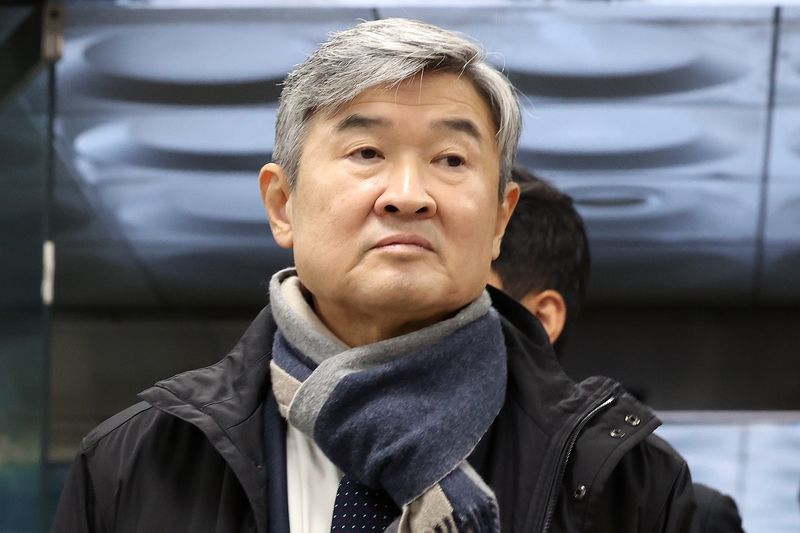
On the morning of the 18th, the Supreme Court's Third Division (Justice Oh Seokjun, the justice in charge) dismissed the appeals filed by both Cho and the special prosecutor in Cho's final appeal. Cho had been indicted on charges of violating the Act on Testimony, Appraisal, etc. before the National Assembly and the NIS Act, destroying evidence, preparing and using false official documents, perjury, and dereliction of duty. The lower-court ruling sentencing him to 2 years and 6 months in prison and suspending his qualifications for 2 years and 6 months was thereby finalized.
The crux of the case was whether former NIS First Deputy Director Hong Jang-won had made a report. The lower court found it established that, immediately after the December 3 emergency martial law, Cho had received a report from Hong that “the president had ordered that ‘the DCC support the arrest of key politicians.’” The Supreme Court agreed.
Four categories of charges were upheld. From December 6 to 10, 2024, Cho held press conferences and gave interviews to the effect that no such order or report existed, and sent text messages and letters to current and former employees. The lower court viewed these acts as “linked to his position as NIS director, rather than undertaken in a personal capacity,” and found them to constitute political involvement. This was before the vote on the first impeachment motion.
The conviction for destroying evidence by conspiring with former Presidential Security Service chief Park Jong-joon to delete the call records from the secure phone of the Presidential Security Service that Hong used was also upheld. Cho argued that the deletion was a measure taken in response to a security incident under the Security Work Regulations. The Supreme Court said that, unless the call records had been classified as secret, the mere fact that the secure phone's screen had been disclosed to the media was not enough to establish that a security incident had occurred.
The remaining convictions were for false statements. They covered his testimony during a parliamentary investigation that he had never received Hong's report; his submission of a false written response concerning a document from the foreign minister in response to Basic Income Party lawmaker Yong Hye-in's question about materials requested for the investigation; and his statement at the eighth hearing of the impeachment trial that he had not seen former President Yoon Suk Yeol mention “emergency measures” at the safe-house meeting or seen the martial law proclamation being delivered.
By contrast, acquittals were finalized for dereliction of duty for failing to inform the National Assembly Intelligence Committee of Hong's report, and for political involvement in providing NIS closed-circuit television (CCTV) footage to People Power Party lawmakers in February last year. The provision of the footage was deemed to fulfill a legal obligation of the NIS.
Last May, the first-trial court, Criminal Division 32 of the Seoul Central District Court (Presiding Judge Ryu Kyung-jin), found Cho guilty only of perjury and some counts of preparing false official documents, sentencing him to 1 year and 6 months in prison. In August, the second-trial court, Criminal Division 1 of the Seoul High Court (Judge Yoon Sung-sik), accepted that Hong had made the report and also found Cho guilty of political involvement and destruction of evidence. In this ruling, the Supreme Court clarified the purpose of the NIS Act provision prohibiting political involvement and the criteria for determining what conduct it prohibits.
[email protected] Kim Dong-gyu Reporter