Jeju's 24-Year Visa-Free Entry Policy at a Crossroads... Dilemma Between Tourism Growth and Illegal Overstays
- Input
- 2026-11-18 11:32:44
- Updated
- 2026-11-18 11:32:44
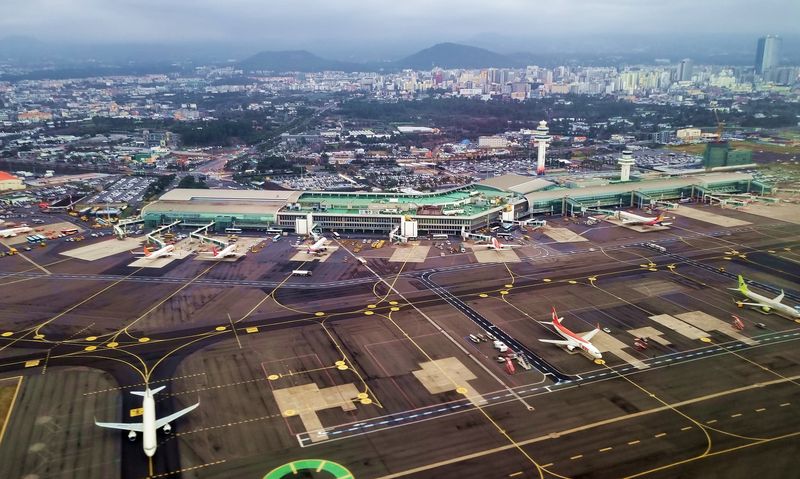
【Financial News, Jeju—Reporter Jeong Yong-bok】 Twenty-four years after Jeju’s visa-free entry provision was fully implemented in 2002, it has become the target of a bill seeking its complete repeal. As of August this year, 11,945 foreign nationals who entered visa-free were overstaying illegally. Meanwhile, foreign tourists’ card spending rose 38.7% from January to September, making it necessary to assess both the economic benefits of opening up tourism and the effectiveness of stay management.
According to the National Assembly and Jeju Special Self-Governing Province on the 18th, Rep. Song Eon-seok of the People Power Party (Gimcheon, Gyeongsangbuk-do) introduced as the lead sponsor on the 13th a bill to repeal Jeju’s visa-free entry provision, titled the “Partial Amendment to the Special Act on the Establishment of Jeju Special Self-Governing Province and the Development of the International Free City.” Nine lawmakers from the same party joined as co-sponsors.
The amendment would delete seven provisions, from Article 197 of the Jeju Special Act, which allows visa-free entry for foreign nationals, through Article 203, which covers matters including permission to travel beyond the authorized area of stay and immigration control.
Rep. Song argued that the visa-free system, introduced to promote tourism, was being abused for illegal overstays, illegal employment and unauthorized departures from Jeju, and called for stronger entry screening and stay management. He also cited residents’ safety concerns over crimes committed by foreign nationals and violations of basic public-order rules as reasons for introducing the bill.
Jeju Province and the tourism industry oppose a complete repeal. They say that removing a key provision used to attract foreign tourists and expand international air routes could affect the local tourism industry and related service businesses.
At a Jeju Tourism Strategy Meeting on the 16th, Jeju Governor Wi Seong-gon called for the bill to be withdrawn and instructed relevant departments to analyze the visa-free system’s economic impact.
As the easing of immigration restrictions needed to attract tourists clashes with calls for stronger management to prevent illegal overstays, a review of a key policy of the Jeju International Free City has begun.
■ 2.22 Million Visitors... Foreign Market Expands as Domestic Spending Falls
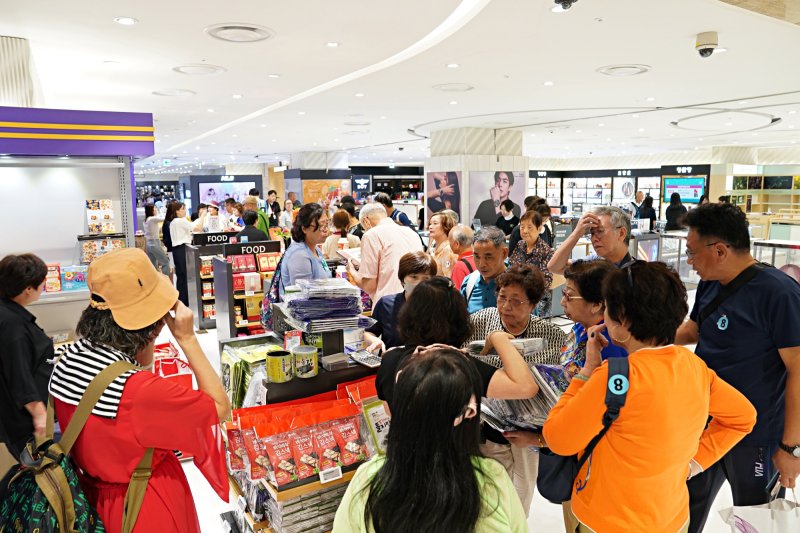
Jeju’s visa-free entry system originated as part of a policy to develop the island into an international hub for tourism and exchange.
On April 15, 1998, the government allowed groups of 10 or more Chinese tourists to enter Jeju without a visa. From May 1, 2002, the policy was expanded to include individual tourists.
The aim was to simplify entry procedures for foreign nationals and improve access for tourists, in line with the vision of Jeju as an international free city.
Under Article 197 of the current Jeju Special Act, foreign nationals entering through Jeju’s airport or seaports for tourism, transit or other purposes are generally allowed to enter without a visa. However, nationals of certain countries designated by the Minister of Justice are excluded.
The permitted stay for visa-free entrants is 30 days. Depending on the entrant’s eligibility, separate permission to travel beyond the authorized area of stay is required to visit areas outside Jeju.
Visa-free entry does not exempt travelers from entry screening. Immigration authorities may check the purpose of entry and the traveler’s plans for their stay, and can deny entry to foreign nationals who do not meet the requirements.
Implementation of the system has also been suspended before. It was temporarily halted on February 4, 2020, due to the spread of COVID-19, and resumed on June 1, 2022.
Foreign tourists now account for a growing share of Jeju’s tourism market. According to figures released by Jeju Province at a tourism strategy meeting on the 16th, 11,717,000 visitors came to Jeju from January to October this year, a 1.9% increase from the same period last year.
The number of domestic visitors fell 0.6% to 9,489,000, while the number of foreign visitors rose 14.2% to 2,228,000. Foreign tourism was thus what underpinned the increase in total visitors.
The gap was even wider in tourists’ card spending. From January to September this year, card spending by tourists in Jeju totaled 2.0512 trillion won, up 3.4% from the same period a year earlier. Spending by domestic tourists fell 4.8% to 1.5311 trillion won, while spending by foreign tourists surged 38.7% to 520.1 billion won.

Over the same period, foreign tourists’ card spending accounted for 25.4% of all tourists’ card spending. The visitor count and card spending figures cover different periods: January to October and January to September, respectively. They cannot be used to calculate changes in spending per visitor or the direct economic impact of the visa-free system.
The expansion of direct international flights also contributed to the increase in foreign tourists. The number of international flights departing from Jeju totaled 8,849 from January to September this year, up 24.7% from 7,095 over the same period last year. The tourism market also showed signs of diversifying beyond China to include Taiwan, Japan and Singapore.
By contrast, domestic flight capacity is declining. The Korea Airports Corporation’s Jeju International Airport listed 2,948 domestic flights per week in its schedule for this winter, 90 flights (3.0%) fewer than last winter.
This is why growth in the foreign tourism market matters as domestic tourism demand and spending weaken. Jeju’s tourism industry believes that the visa-free system has made the island more accessible to foreign tourists and supported demand for international flights, accommodation, dining and shopping.
However, it is difficult to attribute the increase in foreign tourists solely to the visa-free system. Multiple factors are at play, including more international flights, demand for overseas travel, tourism facilities and travel products, and changes in relations between countries.
Nor did every foreign tourist who visited Jeju use the island’s visa-free entry provision. Tourism statistics also include foreign nationals who entered under general visa-waiver agreements or other entry qualifications.
The temporary visa-free program for Chinese group tourists implemented nationwide must also be distinguished from Jeju’s own special provision.
Starting September 29 last year, the government allowed groups of three or more Chinese tourists to travel visa-free anywhere in the country for up to 15 days. The program was extended through December 31 this year.
In Jeju, both individual and group Chinese tourists are allowed to visit visa-free for 30 days. The two programs differ in their eligibility, permitted stay and scope of travel. Even if the special provision under the Jeju Special Act is repealed, entry based on separate laws or visa-waiver agreements would not be prohibited across the board.
To determine which countries’ tourists, air routes and travel products would actually be affected by the repeal bill, separate analysis is needed of the numbers of people entering under Jeju’s visa-free provision, broken down by nationality and purpose, along with data on their tourism spending.
■ 11,945 Illegal Overstays... Management Gaps Exposed by Unauthorized Departures and Illegal Employment
The adverse effects of the visa-free system are becoming apparent in the management of visitors’ stays after they enter the country.
According to data obtained by Rep. Song Eon-seok from the Ministry of Justice and other agencies, the number of foreign nationals who entered Jeju under the visa-free provision and then overstayed illegally rose from 10,826 in 2023 to 11,426 in 2024 and 11,581 in 2025. As of August this year, the figure stood at 11,945, an increase of 1,119 from 2023.
Recent incidents of illegal overstays and unauthorized departures from Jeju reveal weaknesses in the management system.
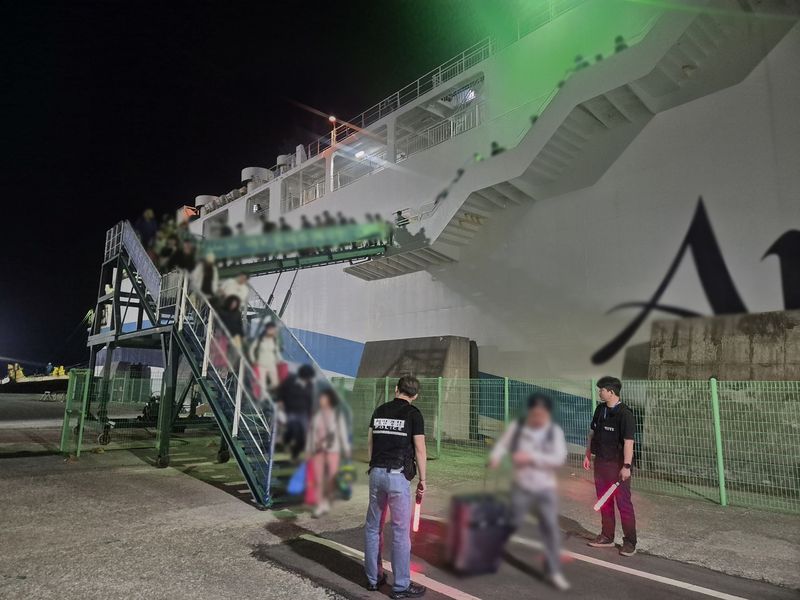
On September 22, police and the coast guard caught 18 foreign nationals, including Chinese and Indonesian citizens, who were overstaying illegally at Pier 2 of the Port of Jeju. The coast guard, which responded to a request for assistance from police, checked the immigration status of 35 foreign nationals in three vans and found 18 illegal overstayers. Investigators found that they had gathered at the port to take part in work such as handling nets on fishing boats moored there.
A case involving an attempt to illegally move visa-free entrants to another region also went to trial. In September, the Jeju District Court sentenced each of four defendants to 18 months in prison, suspended for three years, for attempting to illegally transport 12 Vietnamese nationals who had entered Jeju visa-free to Yeosu, South Jeolla Province.
In June 2024, the four were caught by the coast guard as they tried to put the Vietnamese nationals aboard a vessel at Hallim Port in Jeju City and move them to another region. The court found that their crime had disrupted the management of foreign nationals’ entry and departure.
The Ministry of Justice is also stepping up enforcement against illegal overstays and illegal employment among visa-free entrants. The Korea Immigration Service has been conducting an intensive crackdown on foreign nationals who entered Jeju visa-free and are overstaying illegally, from October 7 through December 11. By October 28, it had caught 232 illegal overstayers.
The crackdown targets not only foreign nationals overstaying illegally, but also employers who repeatedly hire them illegally and brokers who arrange illegal employment.
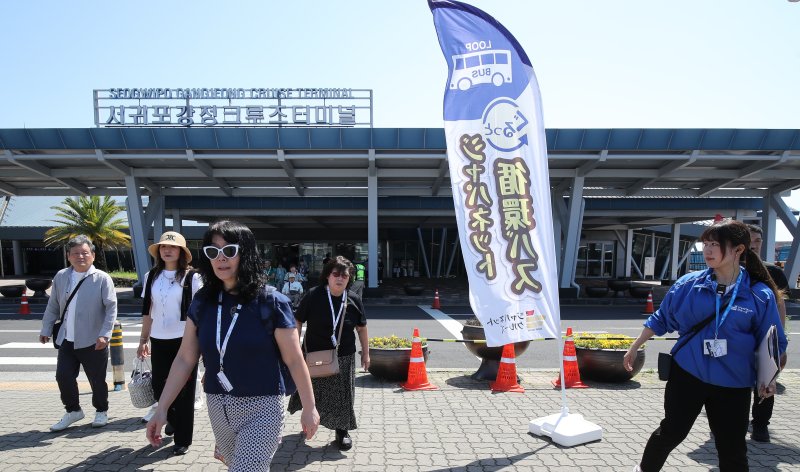
The problem is that entry screening alone cannot prevent all illegal employment by tourists or overstays. Effective stay management requires oversight not only of employers and brokers who arrange illegal employment, but also of illegal activities that occur during accommodation and travel.
The number of foreign suspects in criminal cases in Jeju also increased. The Jeju Provincial Police Agency arrested 767 foreign suspects last year, up 157, or 25.7%, from 610 in 2024.
However, the increase in foreign suspects cannot be directly interpreted as an increase in crime caused by the visa-free system. The statistics include foreign nationals with various immigration statuses, including Jeju residents and workers, as well as tourists.
Directly comparing the number of tourists with the number of criminal suspects is also inappropriate, as the two statistics have different populations and counting criteria. Confirmed illegal acts in individual cases should be dealt with rigorously, but that is distinct from assessing the risk posed by foreign tourists as a whole.
Addressing residents’ safety concerns requires an objective review of actual patterns of crime and other illegal acts, the status of foreign nationals by immigration category, and the results of enforcement and follow-up management by immigration authorities.
■ Complete Repeal or Stronger Management... The Key Is Managing Stays and Departures, Not Just Entry
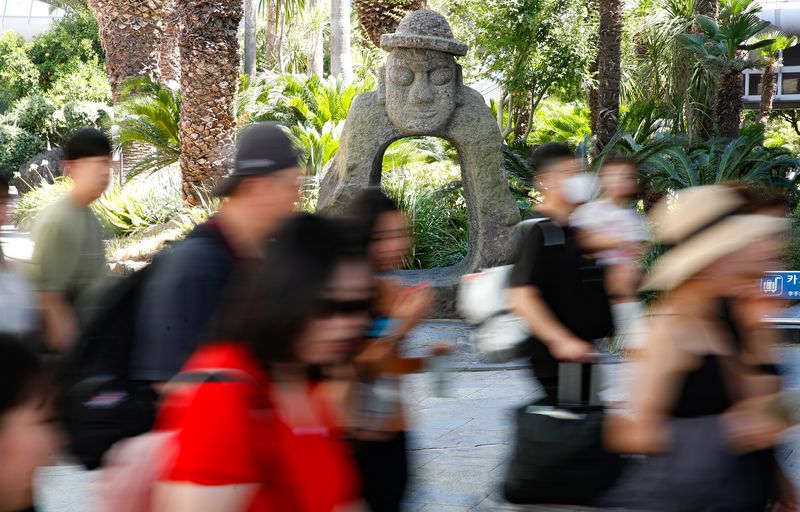
A key issue in the bill is whether eliminating Jeju’s visa-free provision would be an effective policy tool for reducing illegal overstays and crime.
Rep. Song’s bill would not only delete Article 197, which allows visa-free entry. It would also delete Articles 198–203, which cover permission to travel beyond the authorized area of stay, the prevention of unauthorized travel, the obligations of transport operators and immigration control.
Article 197 also includes a provision allowing a recommendation from the governor to replace a recommendation from a central administrative agency, which is required in the visa-issuance process for employees of foreign-invested companies in Jeju.
The amendment could therefore affect not only the convenience of entry for tourists, but also related immigration control procedures and some special provisions concerning investment.
If these provisions are deleted all at once, their relationship with the general Immigration Control Act, the legal status of people who have already entered visa-free, and the need to revise related management rules would all need to be considered.
Making visas mandatory at the entry stage and detecting illegal overstays or illegal employment after entry are distinct policy measures.
Evidence is also needed on how effectively stricter visa-issuance procedures would prevent entry for the purpose of illegal employment, and what additional impact they would have compared with existing entry screening.
The Ministry of Justice is currently responding by strengthening entry screening and post-entry management while maintaining the visa-free system’s purpose of promoting tourism.
According to measures announced on October 30, the Ministry of Justice is using the passenger pre-boarding check system (IPC) to prevent high-risk individuals, including people wanted by the International Criminal Police Organization and those with criminal records in South Korea, from boarding aircraft.
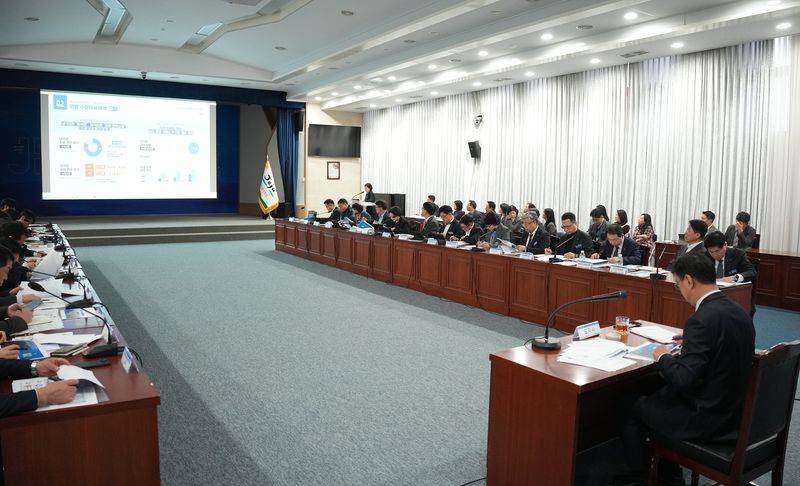
A total of 3,103 foreign nationals were denied entry into Jeju from January to September this year. The figure includes cases involving entry restrictions, forged or altered passports, and denial of entry.
The Ministry of Justice is also pursuing measures to scrutinize more closely the purpose of entry and stay plans of foreign nationals entering visa-free, and to prevent entry for the purpose of illegal employment.
The government is also pursuing the introduction of a “pre-departure check system” to verify, when air tickets are issued, whether visa-free entrants seeking to travel from Jeju to other regions have permission to do so. The system has not yet reached a confirmed implementation stage. Further steps, including securing a budget and consulting with relevant agencies, are required.
The National Police Agency, the Korea Coast Guard, the Ministry of Employment and Labor and other relevant agencies have agreed to step up joint crackdowns and information sharing on offenses including arranging illegal employment, unlicensed driving and illegal paid transport.
Jeju Province, too, needs to establish the case for maintaining the system with economic evidence. At a tourism strategy meeting on the 16th, Governor Wi called for the bill to be withdrawn after the Jeju Tourism Association asked the province to respond to moves to abolish visa-free entry.
Wi said, “Visa-free entry has played a key role in revitalizing the local economy,” adding, “I will persuade the government and the National Assembly based on substantive evidence.”
He instructed relevant departments to analyze and report on the visa-free system’s economic impact. At the same meeting, Jeju Province also decided to activate a collaborative system across all departments to encourage tourists to stay longer and spend more, and to reduce inconvenience. The aim is to address the problem of tourist arrivals not translating into tangible benefits for the local economy.
In July, Jeju Province proposed a pilot program to the government that would allow foreign group tourists who entered visa-free to travel to areas outside Jeju as well. The proposal was intended to extend tourists’ stays in South Korea and increase their spending, but concerns were raised about managing illegal overstays and the possibility of reduced tourism spending in Jeju.
Governor Wi explained at a National Assembly audit on October 22 that he had dropped the proposal after the Ministry of Justice said it would be difficult to pursue. Maintaining the visa-free provision and expanding the area travelers can visit are separate issues. Any policy to broaden the scope of permitted travel would require even more thorough evaluation of its tourism benefits and the management of visitors’ stays.
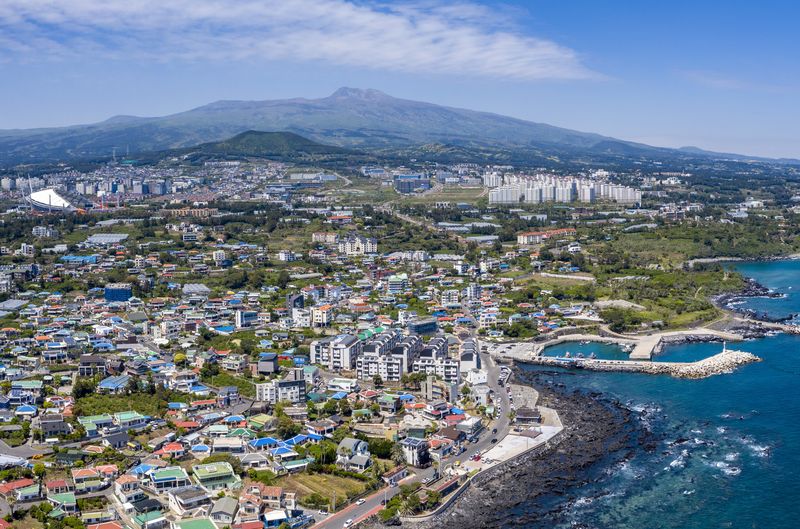
The Jeju Tourism Association opposes repealing the visa-free system, but agrees that stronger management is needed to address illegal overstays, illegal employment and crimes involving foreign nationals. It called for stronger entry screening, improved stay management, crackdowns on illegal employment and a cooperative system among relevant agencies as alternatives.
Two kinds of data are needed to decide whether to retain or abolish the visa-free system. On the tourism side, its economic impact must be assessed by examining the actual number of visa-free entrants who visit, their spending, sales in the accommodation and food-service industries, and its effect on sustaining air routes.
On the immigration control side, it is necessary to examine the proportion of visa-free entrants who overstay, the incidence of illegal employment and unauthorized departures, the number of departures and removals following enforcement, and the administrative costs of management.
Both approaches have limitations: assessing the system’s risks solely by the cumulative number of illegal overstayers rather than all entrants, and treating all foreign tourists’ spending as an economic benefit of visa-free entry.
Jeju’s visa-free entry provision, in place since 2002, has been a key tool in the policy to develop Jeju as an international free city. But for an open tourism market to be sustainable, responsibility for immigration control and residents’ safety must go hand in hand with it.
Rep. Song’s amendment still has to go through deliberation and a vote in the National Assembly, and the current visa-free system remains in force.
The National Assembly is responsible for examining the need for a complete repeal and its legal implications, while Jeju Province must demonstrate the economic benefits of maintaining the system and its impact on the local community. The Ministry of Justice still needs to improve the effectiveness of entry screening, enforcement against illegal overstays and illegal employment, and the system for managing departures.
The future of Jeju’s visa-free entry system depends on how thoroughly objective evidence is gathered on the economic benefits of opening up tourism, public safety and the management of visitors’ stays.
[email protected] Jeong Yong-bok Reporter