Ulsan Mayor Kim Sang-wook: “5.9907 Trillion Won in Next Year’s Budget ... Focus on Livelihoods and Industrial AX”
- Input
- 2026-11-18 13:11:27
- Updated
- 2026-11-18 13:11:27
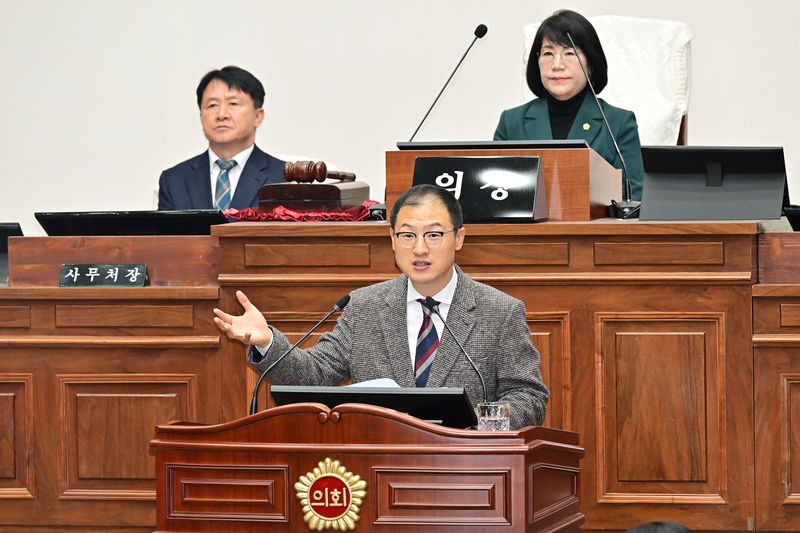
【Financial News, Ulsan = Reporter Choi Soo-sang】 Ulsan Metropolitan City Mayor Kim Sang-wook outlined the direction of city administration for next year while presenting a 2027 budget proposal totaling 5.9907 trillion won in a policy address at the second plenary session of the second regular session of the 269th Ulsan Metropolitan Council, held on the 18th.
For 2027, he set out five key directions for city administration: boosting industrial competitiveness and people-centered growth; ensuring citizens’ basic quality of life; creating convenient mobility and living environments; building a cultural and garden city; and creating a safe and sustainable living environment.
In his policy address, Mayor Kim first emphasized cooperation with the city council and expressed his gratitude for initiatives including the introduction of ordinances related to the 120 Ulsan Civil Complaint Center. He then said the grant rate for autonomous districts would be raised from the current 20% to 24%, the highest level nationwide, providing the districts with 86.9 billion won more than this year. He urged the districts to use the additional funds to provide strong support for residents’ livelihoods.
He then explained key projects by sector. In industry, the city will accelerate innovation in key industries and the industrial artificial intelligence transformation (AX). It will develop heavy-duty AI technologies tailored to worksites in shipbuilding, automotive and petrochemical industries, and pursue the creation of an industrial AX Nexus demonstration complex. The city aims to promote people-centered innovation so that workers are not left behind in the industrial transition, while positioning itself as a Northeast Asian energy hub through Phase 2 of the Namshin Port Energy Hub project and links among floating offshore wind power, green hydrogen and ammonia. It will support the investment base for future mobility—including autonomous, electric and hydrogen-powered vehicles—and next-generation secondary batteries, and work to attract related companies and develop an industrial ecosystem centered on AI data centers.
In the livelihoods and welfare sector, the city will expand efforts to identify households in crisis and Ulsan-style integrated care for older adults and people with disabilities. It will provide marriage and new-child support grants and improve childcare conditions at daycare centers to ease the burdens of marriage, childbirth and child-rearing. It will also strengthen essential local medical services by expanding support for pediatric, childbirth and emergency care, securing personnel, and boosting the capacity to treat serious illnesses.
In the transportation and urban sectors, the city will improve city bus routes and operating systems and introduce half-price fares for youth on city buses. It will expand smart bus stops and new transportation services, including demand-responsive and autonomous buses. After reviewing the feasibility of introducing a publicly operated city bus system and establishing the Ulsan Transportation Corporation, and holding public consultations, the city will prepare to implement the plans in stages, starting with some routes. It will also improve road and pedestrian conditions and address transportation and parking problems in industrial complexes.
To build a cultural and garden city, the city will foster signature festivals featuring the participation of residents and local artists, and strengthen the preservation and use of historical and cultural heritage, including the petroglyphs of Bangudae Stream, Eonyang Eupseong Fortress and Byeongyeongseong Fortress. It will reexamine the life of independence activist Park Sang-jin through culture and the arts and support creative spaces for local artists. It will also pursue a joint bid with Busan and South Gyeongsang Province to host the 2038 Asian Games. The city plans to prepare without disruption for the 2028 Ulsan International Garden Expo and leave industrial spaces as green and garden-culture hubs visited by residents and people from around the world.
In the disaster, safety and environment sectors, the city will pursue the introduction of specialized wildfire firefighting vehicles, unmanned fire-suppression robots and firefighting helicopters to prepare for major wildfires and fires at industrial sites, and upgrade fire stations and protective equipment for firefighters. It will strengthen its ability to respond to climate change and disasters by expanding coverage under the Ulsan Citizens’ Safety Insurance, repairing aging water and sewer pipes, and extending water supply to outlying areas.
Regarding the funds to be managed in 2027 under the budget proposal, he said there would be 14, including the Integrated Fiscal Stabilization Fund, totaling 947.9 billion won—32.7 billion won more than this year’s 915.2 billion won.
Revenue will include 791.2 billion won from items such as the recovery of principal on deposits, 115 billion won from the issuance of local development bonds, and 41.7 billion won in transfers from the general account. Expenditures will include 714.9 billion won for items such as repayment of principal and interest on borrowings, 195.2 billion won in loans for major projects, and 37.8 billion won for projects funded for the funds’ stated purposes.
Mayor Kim said, “During the budget review, I will listen to the city council’s views with an open mind and provide thorough explanations.” He added, “I ask for the cooperation of the city council and residents so that we can bring warmth to people’s livelihoods, make daily life more convenient and open up new opportunities for the future.”
[email protected] Choi Soo-sang Reporter