550,000 CSAT Takers Face a Major Crisis... Education Minister Smiles While Discussing AI Cheating [Video]
- Input
- 2026-11-18 10:41:32
- Updated
- 2026-11-18 10:41:32
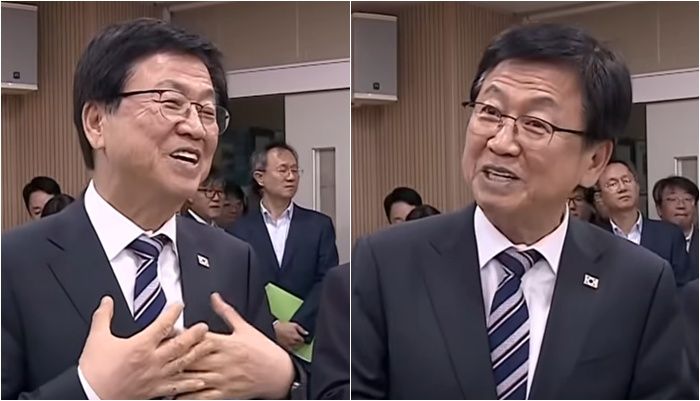
[Financial News] With concerns growing over cheating using artificial intelligence (AI) ahead of the 2027 College Scholastic Ability Test (CSAT), controversy has arisen after Education Minister Choi Kyo-jin was caught smiling while discussing the issue.
After drawing criticism at the National Assembly for responding that he could not be sure of catching 100% of AI-assisted cheating, his conduct during an inspection of CSAT test sites has also come under scrutiny.
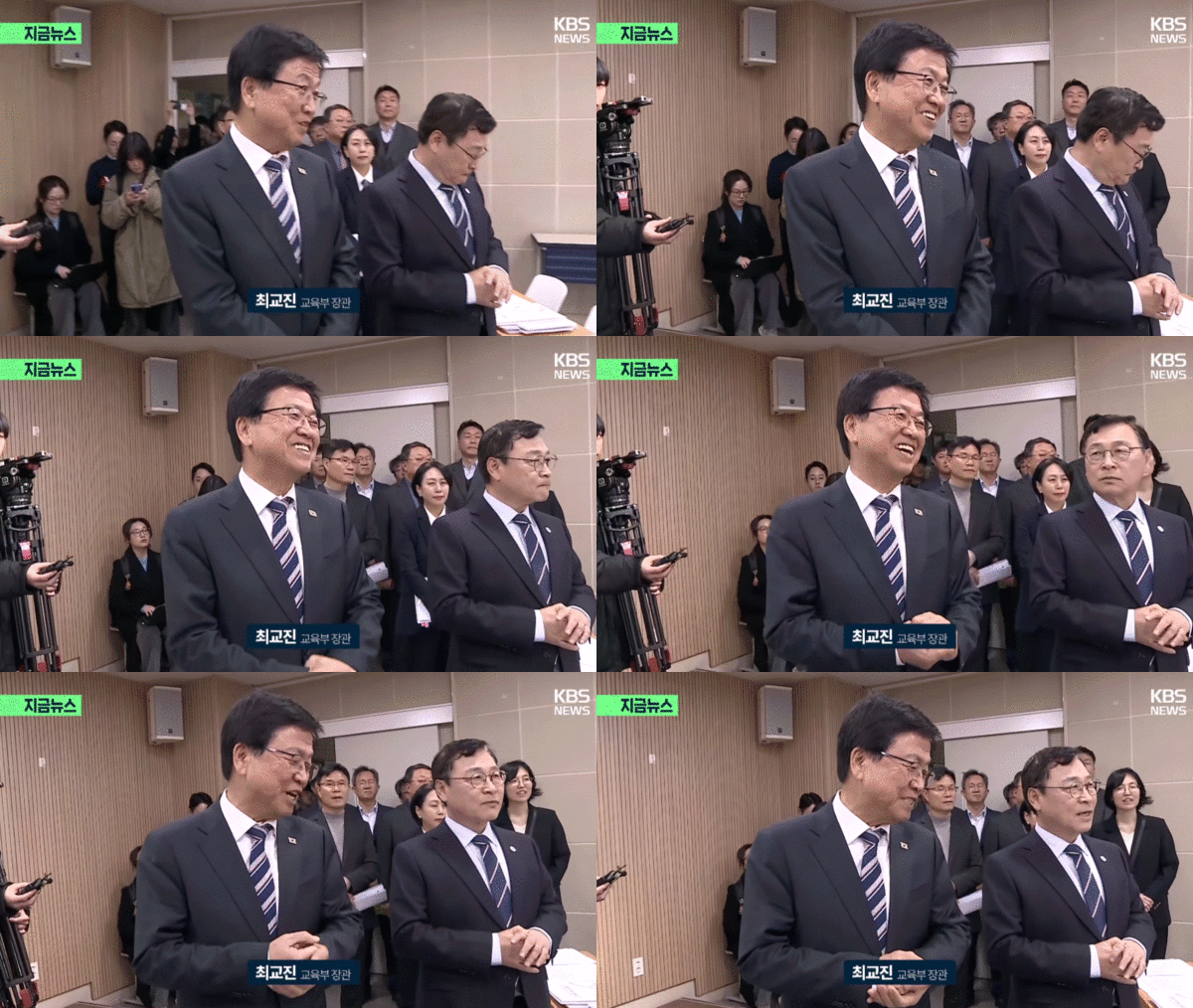
On the 16th, Minister Choi visited Yeongdeungpo Girls’ High School in Yeongdeungpo-gu, Seoul, with Seoul Metropolitan Office of Education Superintendent Geun-sik Chung to inspect preparations for the CSAT test site and safety measures.
At the site, Minister Choi mentioned a recent AI-cheating case that surfaced during the tax accountant exam. He said, “Have things really gone this far? When you think about it, it’s frightening how far people have gone in using machines in the wrong way,” and expressed concern, asking, “What if even just one or two people are tempted to do something like this secretly?”
Despite being at a gathering where a serious issue was being discussed, Minister Choi was caught on media cameras smiling, prompting criticism.
After the video was released, online commenters reacted with remarks such as, “Does he not realize how serious the situation is right now?” “There’s been cheating, and the education minister is sitting there smiling.” “I can’t believe he made such an irresponsible remark while sitting in that position.” “If he can’t solve the problem, he should step down,” and “An incompetent person who can’t read the situation.”
Minister Choi also sparked controversy with his response about the possibility of detecting AI-assisted cheating during a full meeting of the National Assembly’s Education Committee held the same day.
When Park Jeong-hun, a lawmaker from the People Power Party, asked whether he was confident they could catch 100% of cheating involving tiny cameras and small earpieces, Minister Choi replied, “I don’t think I could.”
Lawmaker Park then criticized his ability to respond as education minister, and Minister Choi explained, “I meant that, given my age, it would be difficult for me personally to do that.”
Lawmaker Park pointed out that the question was whether test-site proctors, not the minister personally, could detect cheating, and sighs were heard in the meeting room.
With the 2027 College Scholastic Ability Test (CSAT) now just one day away, concerns are being voiced over whether the government’s measures to prevent cheating will work properly on the ground.
The Korean Federation of Teachers’ Associations (KFTA) and the Korean Teachers’ Union Federation (Teachers’ Union) called for detection equipment, specialized personnel and specific response guidelines, saying advanced devices such as AI smart glasses are difficult to detect with proctors’ unaided eyes alone.
On the 17th, the government announced a plan to add around 8,400 personnel across 1,312 CSAT test sites nationwide, including around 1,800 staff dedicated to checking smart devices and around 6,600 hallway proctors. Prime Minister Han Seong-suk said the government would pursue a plan to extend the period during which cheaters are barred from taking the CSAT from the current one year to 10 years, and that those responsible for serious cheating would also face criminal liability.
Even after the government announced plans to add proctors, the KFTA pointed out that simply increasing staff numbers would not be enough to ensure expertise in identifying advanced devices. The Teachers’ Union also stressed the need for effective guidelines that proctors can use in the field.
The government is also considering sending additional, unscheduled critical disaster alerts on the 19th, the day of the CSAT, to identify test takers who have not turned in their cellphones.
The measure takes advantage of the fact that users cannot opt out of critical disaster alerts, unlike emergency disaster alerts or safety information alerts.
The consideration of this unscheduled alert is in line with instructions from President Lee Jae Myung.
There are also concerns that test takers concentrating on their exams could be startled by a sudden alert sound or lose focus, disrupting the tests.
In particular, test takers with disabilities are granted 1.5 to 1.7 times as much testing time as other test takers, depending on the type of disability. Since test and break times vary by exam session, the timing of the alert needs to be considered.
There are also concerns that members of the public could mistake the alert for a real disaster, since it would be sent to everyone in the country.
A Ministry of the Interior and Safety official said, “It’s important to ensure that no innocent people are harmed, so I think the Ministry of Education will take those factors into account,” adding, “We are continuing to coordinate closely.”
[email protected] An Ga-eul Reporter