Saemaul Geumgo in the Red Even After Excluding Troubled Units... Its 'Profitability Crisis' Runs Deeper Than PF [fn Market Watch]
- Input
- 2026-11-18 09:31:25
- Updated
- 2026-11-18 09:31:25
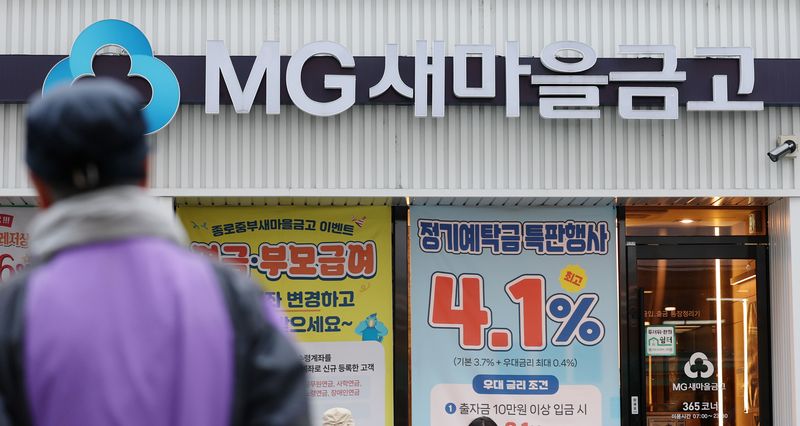
Lee Seong-won, a research fellow at NICE Information Service, identified the weakening of Saemaul Geumgo’s underlying earnings-generating capacity as a key risk on the 18th in a report titled “Performance and Outlook for the Mutual Finance Sector from a Credit Rating Perspective.”
According to NICE Investors Service, as of the end of 2025, 55.5% of Saemaul Geumgo units were loss-making. That was up 51.9 percentage points in just three years, from 3.6% in 2022. The share of vulnerable units that were loss-making and had nonperforming loan ratios of 8% or higher also rose over the same period, from 1.1% to 20.0%.
These vulnerable units held about 65 trillion won in deposit liabilities, accounting for 26.1% of Saemaul Geumgo’s total deposit liabilities. They accounted for 50.5% of all nonperforming loans. Losses at vulnerable units made up 66.3% of the losses posted by all loss-making units and amounted to 267% of the profits earned by profitable units.
The problem is difficult to explain as being limited to troubled vulnerable units. Units that were in the red despite having nonperforming loan ratios below 8% accounted for 35.5% of all units. In other words, about six in 10 loss-making units had nonperforming loan ratios below 8%.
The researcher said, “In particular, Saemaul Geumgo’s vulnerable group accounts for 26.1% (65 trillion won) of deposit liabilities and half of nonperforming loans, and combined losses remain even after the vulnerable group is excluded.” He added, “This shows that, alongside reducing troubled loans, improving earnings power is also necessary.”
Saemaul Geumgo’s net interest spread (NIS) in 2025 was 0.90%, the lowest among the five mutual finance sectors. Its selling, general and administrative expense ratio was 0.82%, not far below its interest margin. This leaves limited capacity to absorb credit costs after interest income has covered operating expenses.
Even in NICE Investors Service’s analysis assuming credit costs fell to historically normal levels, Saemaul Geumgo’s loss-absorption capacity was negative 0.06 percentage points. Its pre-provision profit ratio in 2025 was 0.17% of total assets, below even the 0.22% average net credit cost ratio for 2016–2019. This means that even if the cost burden from troubled loans eases, Saemaul Geumgo’s existing earnings power alone is not enough to cover credit costs.
The causes of deteriorating profitability also differed from those in other mutual finance sectors. From 2022 to 2025, Saemaul Geumgo’s capacity to absorb credit costs fell by 1.09 percentage points, with 81% of the decline stemming from a drop in its pre-provision profit ratio. This indicates that weakening underlying earnings power contributed more to the decline in profitability than the burden of provisions resulting from an increase in troubled loans.
Saemaul Geumgo posted a net loss of 1.74 trillion won in 2024 and continued to record large losses in 2025. In the first half of this year, interest expenses fell as high-interest deposits matured, bringing the net loss down to about half the level recorded in the same period a year earlier. However, credit costs from troubled loans and a decline in deposits remain factors weighing on a recovery in performance.
The researcher said, “Saemaul Geumgo ’s highly troubled units are large in scale, with substantial losses, and losses are the most widespread across the sector. Reducing troubled loans, stabilizing deposits and improving underlying earnings power are therefore considered key requirements for a recovery in performance.”
[email protected] Reporter Kim Hyun-jeong
[email protected] Kim Hyun-jeong Reporter