Southeast Asian Smartphone Market Plunges 36%... Samsung Defends No. 1 Spot With Galaxy Z Fold 8 [1-Day IT Item]
- Input
- 2026-11-18 14:00:00
- Updated
- 2026-11-18 14:00:01
[Financial News] Southeast Asia's smartphone market contracted sharply amid a memory supply shortage and rising component costs. As manufacturers cut supplies of low-end smartphones with low profit margins, shipments fell by at least 30%, while average selling prices rose by more than 50%. Samsung Electronics maintained its lead in overall shipments, buoyed by expanding foldable phone sales and steady performance in the premium market.
Southeast Asian shipments fell 36%, but average selling prices rose 53%
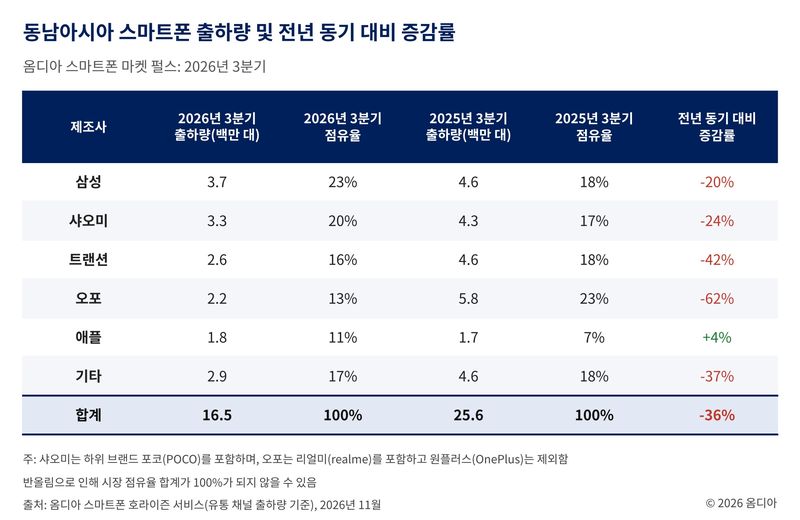
According to market research firm Omdia on the 18th, smartphone shipments in Southeast Asia totaled 16.5 million units in the third quarter of this year, down 36% from a year earlier. Market revenue fell by just 1% over the same period, while the average selling price (ASP) rose 53%.The decline in shipments was attributed mainly to manufacturers adjusting supply in response to the memory shortage and rising component costs. The explanation was that the gap between shipments and revenue widened as manufacturers reduced the share of low-end smartphones with low profit margins and focused on higher-value models.
Samsung Electronics recorded shipments of 3.7 million units, down 20% from a year earlier, but retained its No. 1 position in the Southeast Asian market. Its decline was smaller than the overall market drop of 36%, and its market share by shipments was estimated at about 22.4%. Weak sales of low- and mid-range smartphones amid rising memory costs led to a decline in overall shipments, but Samsung fared relatively well compared with its competitors.
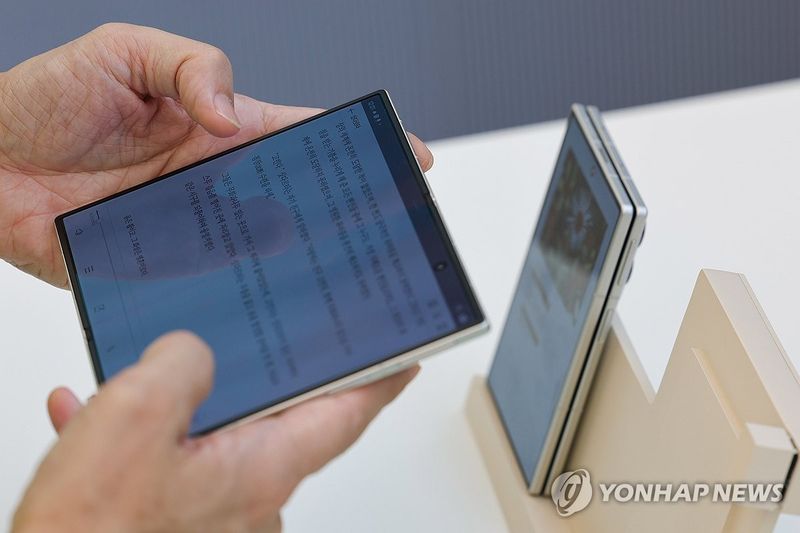
Foldable phones grew in the premium smartphone segment. The Galaxy Z8 series, launched in the third quarter of this year, recorded higher shipments than its predecessor. In particular, shipments of book-style foldable phones rose by at least 40% year on year following the launch of the Galaxy Z Fold 8. This suggests that the company secured demand for higher-value models even as sales of low- and mid-range smartphones weakened.
Xiaomi's shipments fell 24%, but revenue grew by double digits as its average selling price rose 55%. In Vietnam, shipments increased 50%, putting Xiaomi in first place in the market for the first time.
Transsion's shipments fell 42%, bringing its market share down to 16%. Oppo's shipments, including realme, fell 62% to 2.2 million units, the steepest decline among major manufacturers. The impact was especially pronounced because the company cut supplies of ultra-low-cost smartphones priced below $100 amid the burden of rising memory costs.
Apple was the only one of the top five manufacturers to record shipment growth, with a 4% increase. Expanded sales in Malaysia and Vietnam drove the growth. Its business structure, centered on premium smartphones, was judged to have been relatively less affected by the contraction in the low-end market.
“Impact of supply constraints rather than slowing demand”... Vietnam the only market to grow
Omdia said it would be difficult to conclude that the decline in shipments was due to weaker consumer demand. The company explained that manufacturers were adjusting their supply strategies because the memory shortage was making it difficult to offer the same memory and storage capacity at previous sales levels.Omdia Senior Analyst Sheng Win Chau said, “The decline in shipments this quarter should not be hastily interpreted as weakening demand,” adding, “The impact on consumer demand will depend on how buyers respond to sharp price changes and manufacturers’ specification adjustments to reduce costs.”
By country, Vietnam was the only market in Southeast Asia to grow. Smartphone shipments in Vietnam rose 1% from a year earlier, while Indonesia, the Philippines, Malaysia and Thailand all saw declines of at least 30%.
Omdia Research Manager Le Xuan Chiu explained, “In Vietnam, foreign direct investment and manufacturing activity, along with strong exports driven by global demand for AI hardware, supported domestic demand.”
Omdia forecast that as memory supply constraints persist, manufacturers will continue to scale back low-end smartphones and restructure their businesses around higher-value models.
[email protected] Yoon Hong-jip Reporter