Java, Used by 71% of Public Systems, Has a 'Critical Vulnerability'... Update Promptly
- Input
- 2026-11-18 09:53:02
- Updated
- 2026-11-18 09:53:02
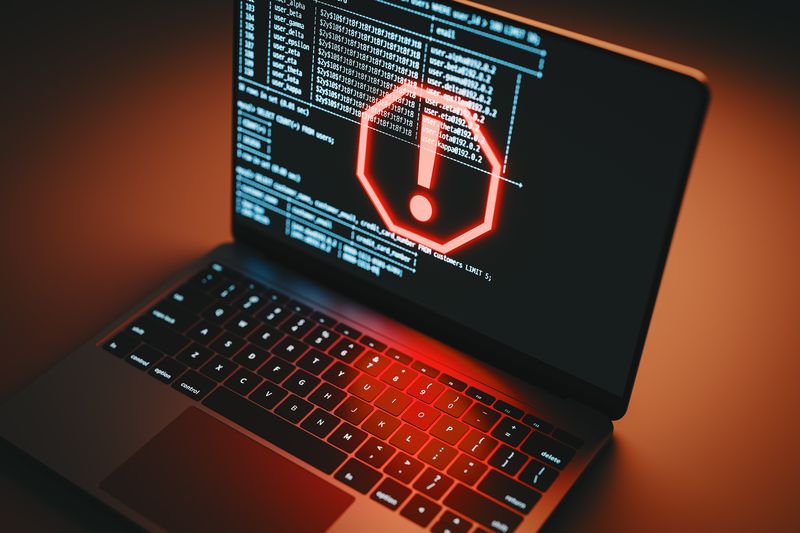
[Financial News] Following the recent discovery of a security vulnerability in the web development language PHP, a critical-severity vulnerability has been confirmed in Java, which is widely used in key information technology (IT) systems in the public, financial and corporate sectors.
With Java used as a development language in 71% of domestic public information systems, rapid security checks and updates are needed to prevent damage to key business systems.
According to IT industry sources on the 18th, Oracle, the developer of Java, released a patch on the 17th (local time) through its “Critical Patch Update” to fix 11 security vulnerabilities found in Java Standard Edition (Java SE). Oracle said all of the vulnerabilities could potentially be exploited over a network without user authentication or account privileges.
Among them, CVE-2026-114938 is a vulnerability that causes memory corruption during data processing in OpenJDK, Java’s runtime environment. The US security firm Caliph, which is reportedly the first to discover the vulnerability, named it “Java4Shell” and rated its severity at 9.2 out of 10 under the Common Vulnerability Scoring System (CVSS) 4.0. This corresponds to the highest risk rating, “Critical.”
Java used in 71% of domestic public information systems
The problem is that Java is widely used across key business systems in the public, financial and corporate sectors. While PHP is primarily used to develop websites and web applications, Java serves as the underlying technology for large-scale business systems, including financial transactions, e-commerce, public administration services and corporate enterprise resource planning (ERP).
In particular, the public sector in South Korea has a high level of dependence on Java. According to the Ministry of the Interior and Safety’s “2026 Statistical Report on the Status of Public-Sector Information Resources Based on Pan-Government EA,” of the 15,618 public information systems as of the end of last year, 11,132 used Java as their development language, accounting for 71.28% of the total—the largest share among development languages. Java was used in 89.05% (1,642) of the information systems at central administrative agencies. South Korea’s e-government standard framework is also based on Java.
The vulnerability was found in the “Base64 decoder,” which Java uses to convert data. If an attacker sends abnormally manipulated data, the program’s memory can be corrupted, creating a risk that the vulnerability could be exploited to execute malware remotely or steal sensitive information.
The vulnerability has drawn attention because it also exposes a gap in the memory safety that Java has long touted as a strength. Java automatically manages memory and blocks improper access, but it also contains code written in low-level languages such as C, C++ and assembly. Java’s memory-protection features do not apply to this code in the same way, leaving a risk of memory corruption; this vulnerability, too, was found in code written in assembly.
Products affected by the vulnerability include certain versions of the Java SE 17, 21, 25 and 27 release lines, some performance-optimized versions of Java 8, and Oracle GraalVM. According to Caliph, Java distributions based on OpenJDK and provided by Amazon, Microsoft and Red Hat may also be affected, so users should check the products and versions they are using.
Government urges urgent checks... verify restart after applying patches
To prevent damage from exploitation of the vulnerability, the government is urging users to urgently check where Java is in use and promptly apply security patches.According to the Korea Internet & Security Agency (KISA)’s BohoNara portal, Java 17 should be updated to version 17.0.21.1, Java 21 to 21.0.13.1, Java 25 to 25.0.5.1, Java 27 to 27.0.1.1, and the performance-optimized version of Java 8 to 8u513. GraalVM for JDK 17 and 21 should be updated to versions 17.0.21.1 and 21.0.13.1, respectively, while GraalVM Enterprise Edition should be updated to version 21.3.20.1.
The Ministry of Science and ICT emphasized, “Companies and institutions should first check whether Java is used, and which versions are in use, in key business systems such as internet-facing services, groupware and enterprise resource planning (ERP) systems,” and “after applying security patches, they should restart the services and check whether the updates have been applied in the actual operating environment.”
Oracle also announced, “Reports continue to come in of attempts to exploit vulnerabilities for which security patches have already been provided,” and “users should keep products on versions that are currently supported and apply security patches without delay.”
[email protected] Choi Hye-rim Reporter