Four Moa Town Plans in Seoul's Guro, Yangcheon, Gangbuk and Seongbuk Districts Pass Review; 6,319 Homes Planned
- Input
- 2026-11-18 11:15:00
- Updated
- 2026-11-18 11:15:00
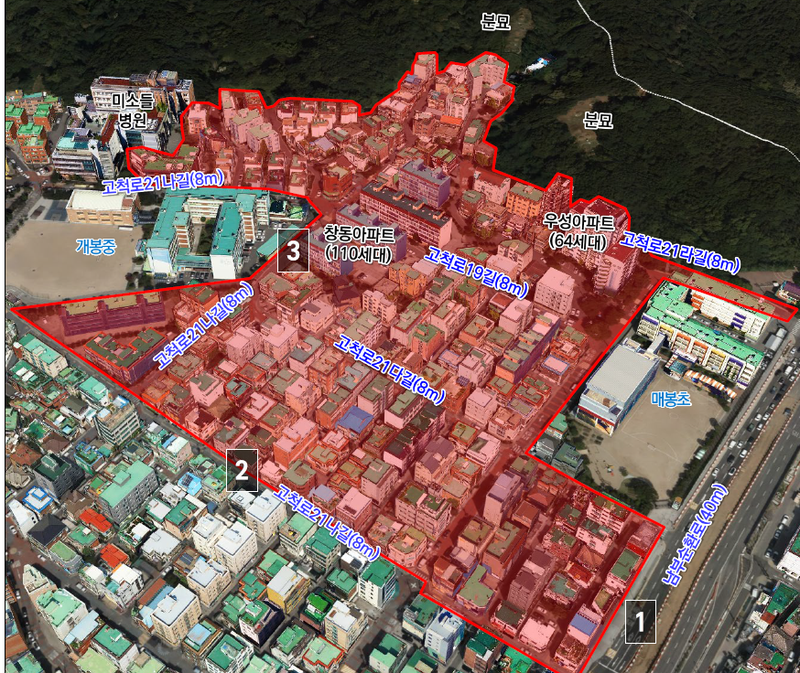
[Financial News] In four areas—Gaebong-dong in Guro District, Mok 2-dong in Yangcheon District, Suyu-dong in Gangbuk District and Hawolgok-dong in Seongbuk District—the Moa Town projects aim to provide a total of 6,319 homes in apartment buildings. The plan is to improve conditions for carrying out the projects by upgrading zoning and applying a project viability adjustment factor while renovating aging, low-rise residential neighborhoods.
According to the Seoul Metropolitan Government on the 18th, the Moa Town management plans for four areas were approved with revisions or conditionally approved at the main committee meeting of the 13th Integrated Deliberation Committee on Small-Scale Housing Improvement, held the previous day.
The area around No. 20, Gaebong-dong, Guro District, covers 65,416.6 square meters. It will be redeveloped to provide 1,485 homes, an increase of 324 from the existing 1,161.
The area was selected as a Moa Town candidate site in November 2024, and some sections were selected in February this year for the public-participation Moa Town contest. As a result, it will receive benefits including an expanded project area and a lower rental-housing contribution rate accompanying zoning upgrades.
Under the plan, the A1 section's Type 1 General Residential Area will be upgraded to Type 2, and some Type 2 General Residential Area will be upgraded to Type 3. The zoning in the A2 section will also be upgraded from Type 2 (up to seven stories) to Type 3. Gocheok-ro 21na-gil will be widened from 8 meters to 14 meters, and Gocheok-ro 19-gil from 8 meters to 12 meters, to separate vehicle and pedestrian traffic.
Three Moa Housing projects in the area around No. 231-27, Mok 2-dong, Yangcheon District, will be developed together to provide a total of 1,786 homes. Of these, 287 will be rental homes.
The site is an aging, low-rise residential neighborhood near Yongwangsan Neighborhood Park and Yeomchang Station on Seoul Subway Line 9. Taking the hilly terrain into account, buildings will be planned at up to 22 stories, while those near Yongwangsan and the low-rise residential area to the north will be limited to 15 stories or fewer.
The project viability adjustment factor for Moa Housing will also be applied to ease the burden of providing rental housing, and Yongwangsan Neighborhood Park will be expanded. Mokdong Jungangbon-ro 18-gil will be improved to a width of 14 meters and used as a main access route.
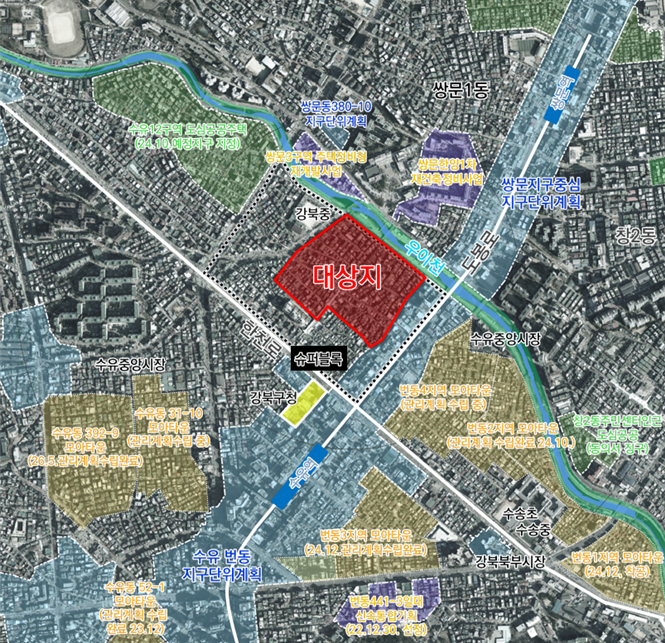
Six Moa Housing projects are planned on a total site of 93,814.5 square meters in the area around No. 141, Suyu-dong, Gangbuk District. The area will undergo a major redevelopment, providing 2,441 homes—1,068 more than the existing 1,373—including 453 rental homes.
The site lies between Suyu Station and Uicheon Station. The Seoul Metropolitan Government plans to improve pedestrian access linking Baengnyeon Market and Uicheon, and build an underground public parking lot with about 70 spaces for market visitors and residents.
Parks and public open spaces will also be expanded to provide residents with places to rest and improve access along Uicheon. Eunmoru Children's Park will grow from 918 square meters to 1,502 square meters. Two public open spaces will be created along the section connecting to the Uicheon waterfront activity hub, and the school route leading to Gangbuk Middle School will also be improved.
One Moa Housing project in the area around No. 40-107, Hawolgok-dong, Seongbuk District, will provide 607 homes, 204 more than the existing 403. There will be 89 rental homes.
The area is an aging, low-rise residential neighborhood near Wolgok Station on Seoul Subway Line 6. The city plans to apply the project viability adjustment factor and widen Wolgok-ro 18-gil to 10–11 meters to provide two lanes and sidewalks on both sides. Hwarang-ro 14-gil will also be widened from 10 meters to 13 meters, and pedestrian conditions will be improved by linking community facilities with neighborhood-serving facilities.
Myeong No-jun, head of the Seoul Metropolitan Government's Housing Office, said, "At this review, we applied the project viability adjustment factor to improve conditions for carrying out Moa Housing projects, and also drew up plans to improve roads, pedestrian environments and resident amenities." He added, "We will continue to actively support the swift implementation of Moa Housing and Moa Town projects suited to the characteristics of each area."
[email protected] Choi A-young Reporter