“Stay Put From November Through December...” Why an Expert Warns Against Year-End Trading
- Input
- 2026-11-18 06:47:48
- Updated
- 2026-11-18 06:47:48
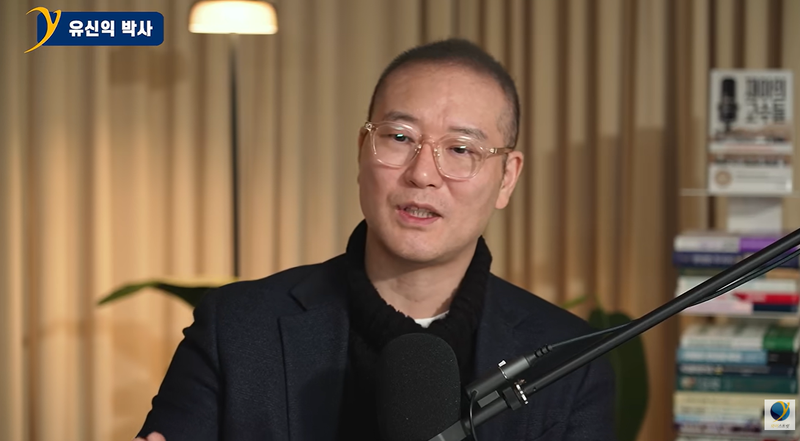
[Financial News] Amid growing volatility in global financial markets, experts say investors should refrain from rash trading and focus on identifying companies that can remain competitive even after the AI bubble bursts.
Dr. Yoo Shin-ik, chief economist at KB Kookmin Bank, appeared on the economic YouTube channel “Y Street – The Compounding Effect of Knowledge and Assets” on the 15th and said, “Through year-end, rather than rashly buying and selling stocks, investors should monitor the macroeconomic factors driving the market and the competitiveness of individual industries, and prepare for investment opportunities.”
Dr. Yoo said, “From November through December, you really should stay put,” explaining, “Right now, asset prices aren’t reflecting fundamentals; they’re in a state of ‘scatter,’ being thrown in different directions by uncertainty.” His assessment was that recent stock prices have been moving sharply in response to various factors rather than reflecting companies’ earnings or growth prospects.
He warned, “Making trading decisions in a period like this exposes your money and portfolio to uncertainty.”
Dr. Yoo forecast that market uncertainty would gradually ease after the Federal Reserve System (the Fed)’s December Federal Open Market Committee (FOMC) meeting and negotiations over the U.S. federal government budget early next year.
He stressed that investors should distinguish between share-price corrections and growth in the industry when it comes to AI-related stocks.
Dr. Yoo said, “The expectations driven by the ‘revolution’ thesis that led the market in the first half of this year were steeped in excessive bubble sentiment.” He analyzed, “That doesn’t mean AI technology itself is unnecessary; rather, market expectations are becoming more realistic as capital-intensive investment in facilities hits its limits or undergoes efficiency testing.”
However, he explained, “The bursting of a financial bubble doesn’t mean the industry is being reshaped,” adding, “The industry is continuing to grow steadily.”
Dr. Yoo stressed, “Unlike in the past, when investors trusted momentum and bought the dip indiscriminately, going forward it will be important to find companies that are the real deal and can truly survive in the industry ecosystem.”
Above all, regarding the asset-allocation portfolio he recommends for the second half of the year and beyond, he advised maintaining allocations of 30% to AI and growth stocks, 30% to healthcare, 20% to gold and long-term government bonds, and 20% to cash to respond to turning points that could arise at any time.
He had previously advocated a “3:3:2:2” strategy for stocks, defensive assets, gold and cash to cope with prolonged high interest rates and volatile markets. He proposed a “tactical asset allocation (4:3:2:1)” as a temporary adjustment to that strategy.
Dr. Yoo said, “The 30% allocation to defensive assets, including healthcare, that I previously recommended has outperformed the market and served as a reliable safety net.” He added, “I recommend taking 10 percentage points from the 20% cash allocation and shifting it into core AI growth assets that have fallen excessively, for a portfolio of ‘40% AI: 30% defensive assets and healthcare: 20% gold: 10% cash.’”
He added, “Rather than being swept up in short-term fear and joining the panic selling, this is the time for a tactical response: buying the dip in high-quality tech stocks with attractive valuations.”
[email protected] An Ga-eul Reporter