Kim Jong Un 'May Take a Chinese Special Plane'... 'Russia's Response Hints at the Possibility of a U.S.-North Korea Summit... There Are Small Signs'
- Input
- 2026-11-18 06:52:10
- Updated
- 2026-11-18 06:52:10
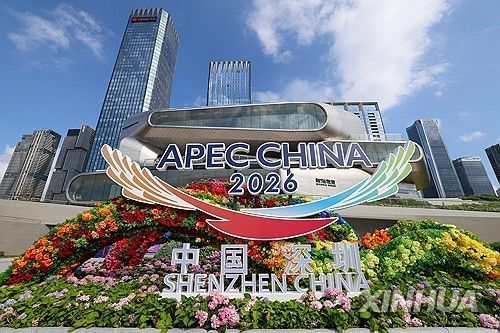
[Financial News] Some observers say the chances of a U.S.-North Korea summit taking place have increased following the Kremlin’s announcement that North Korean leader Kim Jong Un could meet Russian President Vladimir Putin during the APEC summit in Shenzhen, China.
Former deputy coordinator for North Korea at the U.S. Office of the Director of National Intelligence Sydney Seiler, now a senior adviser at the Center for Strategic and International Studies (CSIS), told Reuters on the 17th local time, “The Kremlin wouldn’t have said that unless it was confident that President Putin and Chairman Kim would meet,” adding, “I’m fairly confident that something is underway.”
The Kremlin’s announcement the previous day came as President Putin met in Moscow with Jo Yong-won, a secretary of the Central Committee of the Workers’ Party of Korea who is known to be one of Kim’s closest aides.
Kremlin spokesman positive about North Korea-Russia summit in Shenzhen, China ... no signs yet that Kim Jong Un will attend
Kremlin spokesman Dmitry Peskov responded to a question from state-run TASS about a North Korea-Russia summit, saying, “Of course, if he (Chairman Kim) attends the APEC summit.”
Seiler’s remarks, which drew attention to the Kremlin announcement, were seen as raising the possibility that if Kim visits Shenzhen, China, for a North Korea-Russia summit, it could naturally lead to a U.S.-North Korea summit.
John Delury, a professor at the Hopkins-Nanjing Center for Chinese and American Studies, also told Reuters, “There have been small signs” pointing to a U.S.-North Korea summit, and predicted, “If Kim Jong Un goes to Shenzhen, he will talk to Donald Trump.”
The “small signs” Delury mentioned were recent visits by North Korean officials to China and Russia in succession, a Chinese delegation’s visit to Pyongyang, and Kim’s visit last month to Dandong, on the China-North Korea border.
He expected that if Kim attends the APEC summit, he would travel to Shenzhen aboard a special Air China plane provided by China, as he did for the 2018 Singapore summit during Trump’s first term.
The previous day, President Trump was meeting Quad leaders in Manila, Philippines, when reporters asked whether “Chairman Kim is coming (to China).” He replied, “He’d like to,” adding, “Let’s see what happens.” The Quad is a security partnership between the United States, Japan, Australia and India.
Regarding the possibility of Kim attending the summit, the APEC Secretariat said it had no information about China or those invited by China. At a regular briefing, China’s Foreign Ministry said it had no information to share when asked whether Kim had been invited to the APEC summit.
However, there have been no clear signs so far that a summit will take place, and many remain skeptical that it will actually happen.
Risks for U.S. allies in Asia, including South Korea ... follow-up talks with U.S. allies
Seiler said one incentive for Kim to agree to a meeting with President Trump, which would be more symbolic than substantive, could be that he might see it as a first step toward recognition of North Korea’s status as a nuclear-weapon state.
He predicted, “It won’t happen overnight, but ultimately Kim Jong Un will seek to persistently pressure the world to accept North Korea as a nuclear-weapon state.”
Analysts say the summit on the 19th between Chinese President Xi Jinping and President Putin, expected to be the biggest event during Trump’s stay in Shenzhen, may struggle to produce any agreement given their differing aims and could pose a risk to Asian allies, including South Korea.
In an article for the U.S. think tank Atlantic Council, former White House National Security Council (NSC) senior director for Europe and Russia Andrew Peek said, “The U.S. president will clearly raise the issue of Iran (at the U.S.-China-Russia summit),” and said that even without an agreement, seeing Xi Jinping and Putin discuss Iran with Trump would likely create unease in Tehran.
He noted, “Trump could also raise the issue of Ukraine,” adding that “it would still be useful to set a precedent for including China in Ukraine negotiations” within a future multilateral framework that would include Europe.
Nuclear disarmament, which President Trump initially raised as an agenda item for the U.S.-China-Russia summit, is unlikely to yield tangible results because of China’s reluctance, and “Putin has little incentive to bring Xi Jinping to the negotiating table,” said Alexandra Mullen, Atlantic Council deputy director.
“Xi Jinping aims to build political capital ahead of next year’s party congress” ... “A showpiece event”
For Xi, the aim of the U.S.-China-Russia summit is to “accumulate as much political capital as possible ahead of next year’s party congress, which could grant him an unprecedented fourth term,” and success would mean putting on “a good showpiece event” according to a set script, without unexpected developments, Atlantic Council senior director Melanie Hart analyzed.
Former U.S. ambassador to Ukraine John Herbst said, “Putin proposed a trilateral summit to create a setting similar to the Yalta Conference, where great powers decide the fate of ‘small countries.’” He added, “Putin wants Xi Jinping’s support to encourage Trump to keep pressuring Ukraine.”
Atlantic Council senior fellow Rick Hoehne predicted that if the summit turns into a “second Yalta Conference,” in which great powers decide the fate of smaller countries, it would heighten Taiwan’s concerns about the U.S. halting arms sales, Japan’s concerns about Russia and China drawing closer, South Korea’s concerns about North Korea’s nuclear buildup and closer ties between North Korea and Russia, and the Philippines’ concerns about disputes in the South China Sea.
He said, “More important than the summit itself will be follow-up consultations with U.S. allies in the Indo-Pacific to ensure strategic consistency and reaffirm to them the United States’ commitment to collective defense.”
[email protected] Lee Seok-woo, International Affairs Correspondent Reporter