'War' Returns After 55 Years... Centre Pompidou Hanwha's 'Chagall: A Journey Beyond' [fn Art Snap]
- Input
- 2026-11-18 07:00:00
- Updated
- 2026-11-18 07:00:03
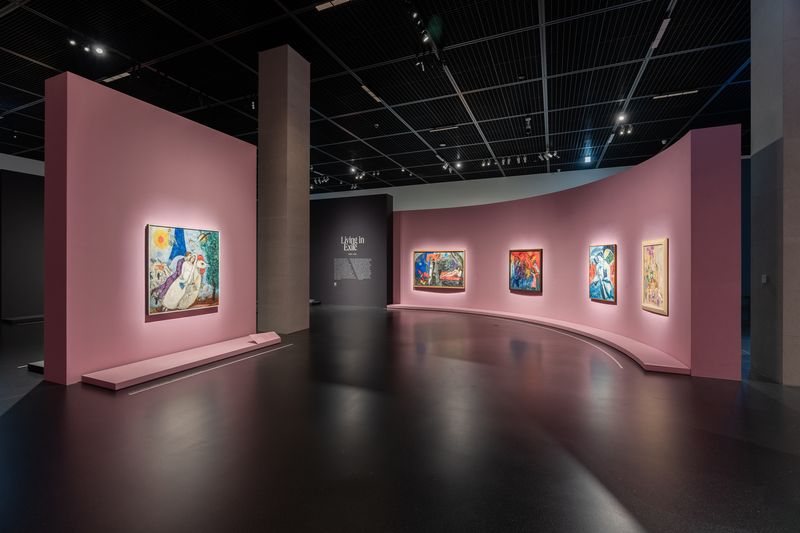
'Chagall: A Journey Beyond,' opening on the 24th at Centre Pompidou Hanwha in Yeouido, Yeongdeungpo-gu, Seoul, is the second exhibition featuring works from the collection of the Georges Pompidou National Art and Culture Centre in Paris. It brings together 57 paintings and eight sculptures and ceramic works that had been spread across 10 institutions in France. Sixty-one of the 65 original works are being shown in Korea for the first time. The exhibition is divided into six sections, spanning early paintings from 1908 to works from the late 1970s.■ Couples Flying in the Sky, Angels FallingChagall grew up in a Jewish village in Vitebsk, now in Belarus. After encountering Cubism in Paris in 1911, he painted a wedding procession from his hometown in geometric forms. He returned home in 1914 to see his fiancée, Bella Rosenfeld, but was stranded there by World War I. The two married the following year.
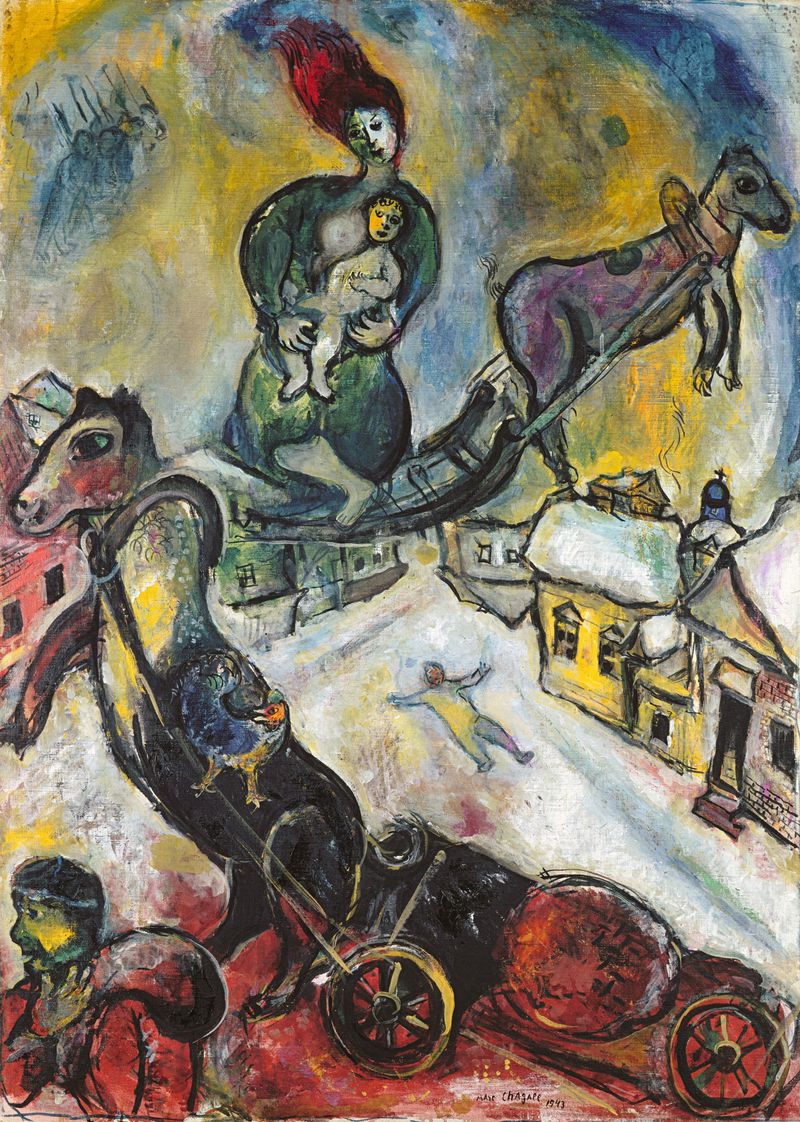
The curatorial team chose 'War' as one of the works showing how Chagall viewed his identity and the realities of his time while exiled in New York. Curator Park added that after finalizing all the works for the exhibition, the team discovered that this painting had been exhibited in Korea in 1971.■ The Sheen of a Black Vase, the Light of Cathedral WindowsAfter returning to France in 1948, Chagall settled in Vence, near Nice. The light of the Mediterranean brightened his palette, and he began working with clay in nearby Vallauris. 'Black Vase (Vase noir)' is a ceramic piece coated with slip and glaze and fired several times. Its black surface has a sheen and looks as soft as velvet. In the marble sculpture 'Two Nudes (Deux nus),' Adam and Eve, carved into the surface of a cylinder, face each other. Adam's face resembles Chagall himself.

Angela Lampe, chief curator of the modern collection at the National Museum of Modern Art at Centre Pompidou, who curated the exhibition, said, "Chagall did not see artworks as isolated objects; he viewed them as creations that could transform a space and engage in dialogue with those who inhabit it."
Some of the stained glass from Metz Cathedral in France, remade by a Korean glass studio, will be on display in the exhibition. In the final room, a video of the ceiling mural at the Paris Opera House will be projected across a circular floor 8 meters in diameter as opera and ballet music plays. The exhibition runs through March 28 next year.
[email protected] Jang In-seo Reporter