Iran Attacks U.S. Air Force Base in Bahrain
- Input
- 2026-11-18 03:43:55
- Updated
- 2026-11-18 03:43:55
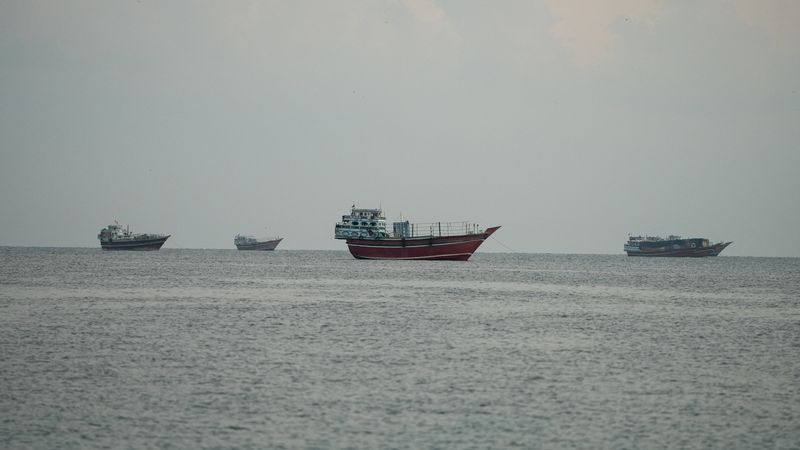
Military tensions between the United States and Iran are escalating again. With talks to end the war deadlocked, the two sides are trading attacks targeting key strategic sites and oil tankers.
According to the Financial Times (FT) on the 17th (local time), Iran's Islamic Revolutionary Guard Corps (IRGC) announced that it had attacked one U.S. military radar system in Bahrain with a drone that day. The U.S. Navy's 5th Fleet is based in Bahrain.
Bahrain said it had intercepted several Iranian drones.
Iran's attack appears to be retaliation for an attack on one of its strategic maritime positions in the Strait of Hormuz.
Earlier, Iranian government officials claimed that the United States had begun airstrikes on Qeshm Island that night. Iranian state media reported that several explosions were heard locally. The deputy governor of Hormozgan Province, which oversees the area, said, however, that there had been no damage to infrastructure, residential areas or businesses.
Maritime threats in the Strait of Hormuz are also mounting.
The IRGC said that a supertanker carrying crude oil and a gas carrier had been struck by mines in the Strait of Hormuz that day. It claimed the vessels had run into trouble while using the 'unauthorized' western and southern waterways of the strait, and that although U.S. fighter jets provided air cover, the mines proved impossible to counter.
Maritime security experts said that the Tara Gas, an liquefied natural gas (LNG) carrier owned by the United Arab Emirates (UAE), was struck off the coast of Oman on the night of the 15th. The United Kingdom Maritime Trade Operations (UKMTO), a maritime security organization under the Royal Navy, confirmed on the 17th that the vessel had been struck twice, with a fire breaking out on deck during the second strike.
The clashes came as talks to end the war made no progress despite efforts by Qatar and other mediators.
Tensions are rising, particularly as the United States builds up its forces around Iran.
United States Central Command (CENTCOM) said on the 16th that the aircraft carrier USS Theodore Roosevelt had arrived in the Middle East. With the USS George H.W. Bush, deployed last April, and the USS George Washington, which arrived in August, this brings the number of U.S. carrier strike groups gathered in the Middle East to three.
The United States' hard-line stance is shaped by a convergence of domestic politics and its strategy for pressuring Iran.
President Donald Trump had warned even before the Republican Party suffered a crushing defeat in the midterm elections on the 3rd that he could resume airstrikes on Iran after the election. Last week, he also said, "There is no need for an agreement with Iran." This suggests a plan to sustain the naval blockade, foment economic hardship and social unrest, and use them to bring down the Iranian regime from within.
[email protected] Song Kyung-jae Reporter