[Report] “Korea Is a Market With Potential”... Hokkaido Deputy Governor’s ‘Sales Pitch’ in Festival Attire
- Input
- 2026-11-18 07:30:00
- Updated
- 2026-11-18 07:30:02
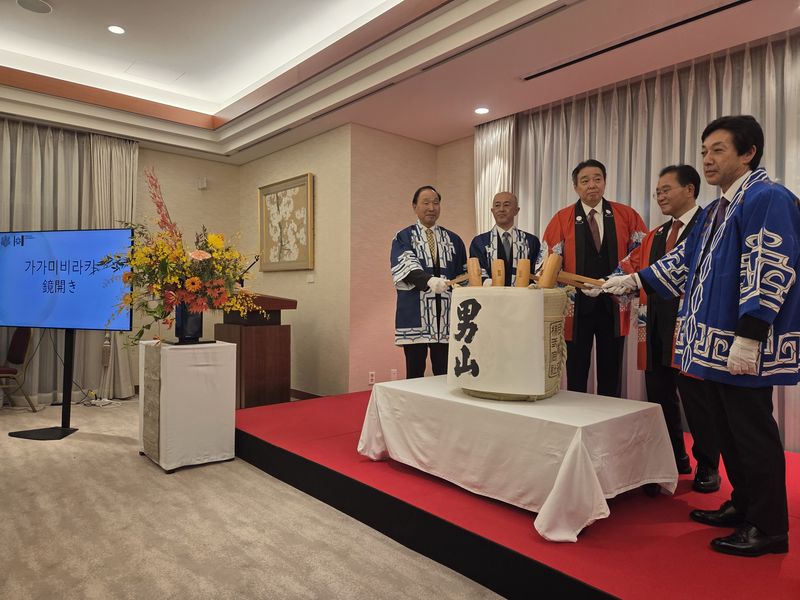
Takayuki Kano, Hokkaido’s vice governor, said this when we met at around 7:30 p.m. on the 17th at the Japanese ambassador’s residence in Seongbuk District, Seoul. Kano was wearing a traditional Japanese festival coat called a happi as he prepared to take part in kagami-biraki, the opening ceremony of the Hokkaido Food and Tourism Reception. The ceremony marks the start of an event by breaking open the lid of a sake barrel with a wooden mallet. When a Korean reporter spoke to him, he continued explaining Hokkaido’s “market appeal” without taking his eyes off the reporter, despite an aide urging him, “You need to get up to the podium.” He stressed, “We want to launch the Hokkaido Dosanko Plaza brand in Korea,” adding, “This brand, which sells local specialties certified by the Hokkaido government, would certainly appeal to Koreans as well.”
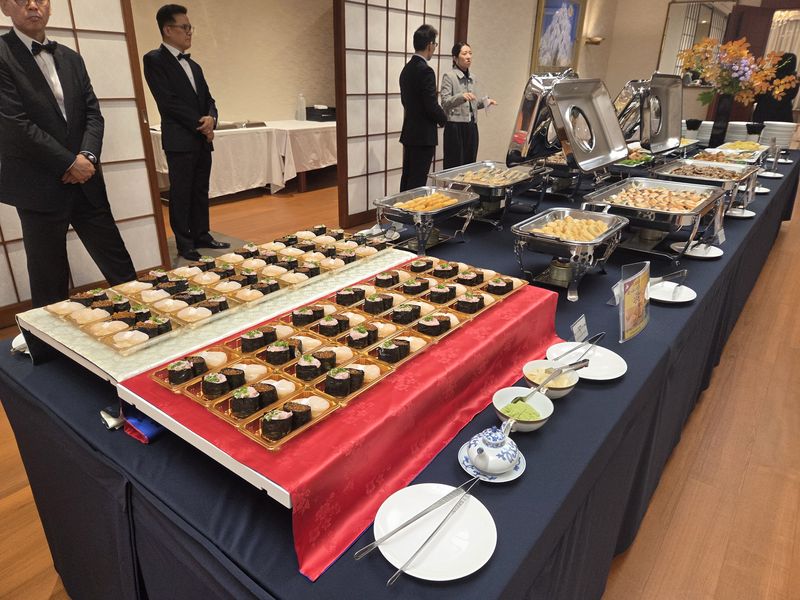
Based on the reporting conducted that day, the frequent exchanges between Korea and Hokkaido are why the Hokkaido government sees Korea as an attractive market. According to Hokkaido government statistics, about 1,036,000 South Koreans visited Hokkaido in fiscal 2025 (April last year through March this year), the most among foreign visitors, ahead of Taiwan, China and the United States. Taiwan ranked second with 717,700 visitors, followed by China with 412,100; Korea was the only country to top one million. Beyond its top ranking, the scale of Korean visits is significant given that Hokkaido had a resident population of 4.98 million as of October last year.
Air links are also expanding. According to plans presented by the Hokkaido delegation at the reception, daily service on the Incheon–Hakodate route will begin on the first of next month, while the Daegu–New Chitose and Cheongju–Obihiro routes will each launch next January. This means departure points, previously limited to the Seoul metropolitan area, will expand to Daegu and Cheongju. To spread visitors beyond the western cities of Sapporo and Otaru, where they have been concentrated, Hokkaido is promoting southern Hakodate, central Asahikawa and eastern Obihiro as hubs. More routes will broaden both the number of people traveling between the two regions and the areas they can reach. Hokkaido already maintains local-government exchanges with four areas in South Korea: Seoul, Busan, South Gyeongsang Province and Jeju.
Vice Governor Kano noted that Hokkaido Dosanko Plaza has also expanded overseas. “Dosanko Plaza is broadening its sales channels abroad, including through its presence in a Japanese department store in Singapore,” he said. “Given that visitor statistics suggest demand for Hokkaido culture among South Koreans, the Hokkaido government will work to enter the Korean market.”
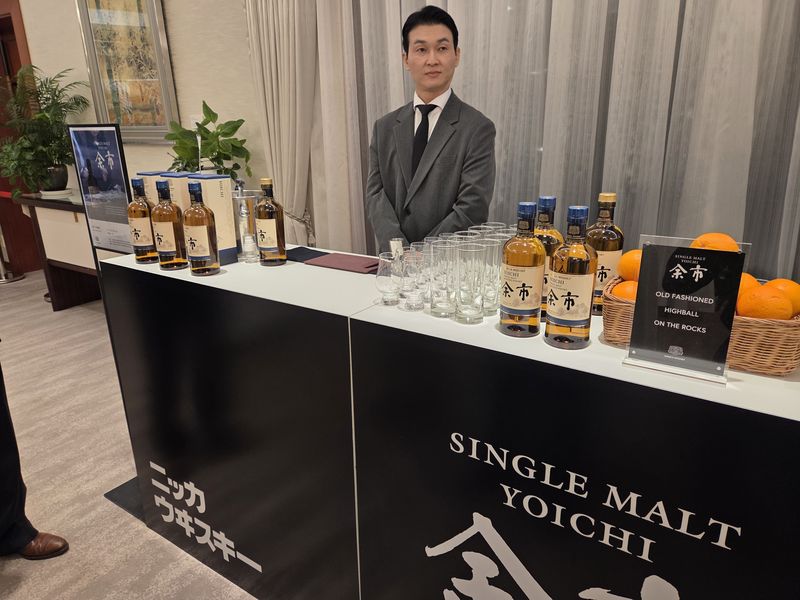
The Hokkaido officials’ decision to come to Korea to promote local specialties, especially food products, is tied to the structure of Hokkaido’s gross regional domestic product (GRDP). According to statistics from Japan’s Ministry of Economy, Trade and Industry (METI) and other sources, in fiscal 2023 the secondary sector, centered on manufacturing, and the tertiary sector, centered on services, accounted for 16.9% and 77.9% of Hokkaido’s GRDP, respectively. Within manufacturing, food manufacturing accounted for 36.0% of total industrial production in 2024, ranking first ahead of petroleum and coal product manufacturing at 12.2% and steelmaking at 8.0%.
The reception also offered a chance to meet representatives of companies in other manufacturing sectors, not just food. One example was a representative of Nitori, a furniture and household goods brand. “Nitori already operates seven stores in Korea, and their sales are increasing day by day,” the representative said. “Demand among Koreans for simple designs, along with the ability to sell Hokkaido’s excellent metalwork at competitive prices, gives us an edge in the Korean market.”
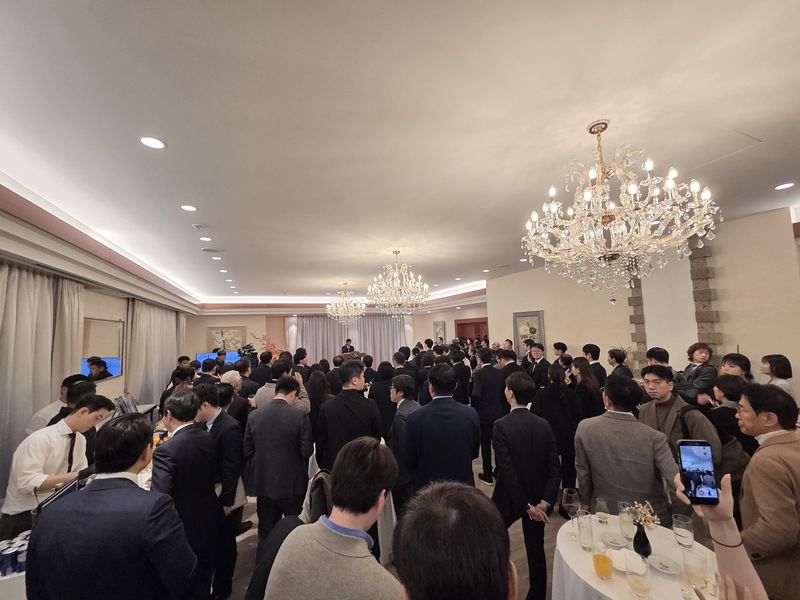
Mizushima Koichi, Japan’s ambassador extraordinary and plenipotentiary to the Republic of Korea (the Japanese ambassador to South Korea), told a reporter from this newspaper, “One of the embassy’s key roles is to create a platform not only for businesses but also for local governments to promote themselves overseas.” He added, “Last year, at the request of 10 Japanese prefectural governors, among others, we organized opportunities for them to engage with local government officials in Korea, including provincial governors, as part of their promotional efforts.” Korean attendees at the reception also included People Power Party lawmaker Yoon Jae-ok, a member of the National Assembly’s Climate, Energy, Environment and Labor Committee, and a senior official at the Korea Agro-Fisheries & Food Trade Corporation (aT).
[email protected] Kim Dong-gyu Reporter