“Measures Against AI Cheating Inadequate” ... Test-Taker Files Constitutional Complaint Seeking CSAT Delay
- Input
- 2026-11-17 20:29:00
- Updated
- 2026-11-17 20:29:00
On the 17th, Ahn Min-jun, 18, who identified himself as a high school senior preparing to take the exam, filed a constitutional complaint with the Constitutional Court of Korea seeking to postpone the CSAT scheduled for the 19th. The central request is to overturn the exam date set by the Korea Institute for Curriculum and Evaluation (KICE) and the Ministry of Education’s decision to keep the existing schedule. Ahn also sought an injunction to suspend the effect of the exam date designation until the Constitutional Court issues its final ruling.
Ahn argued that forcing students to take the exam without a proctoring system in place to prevent cheating through the misuse of AI technology could violate test takers’ fundamental rights. His argument was that the government is so focused on keeping to the exam schedule that it is failing to fulfill its responsibility to create a fair competitive environment.
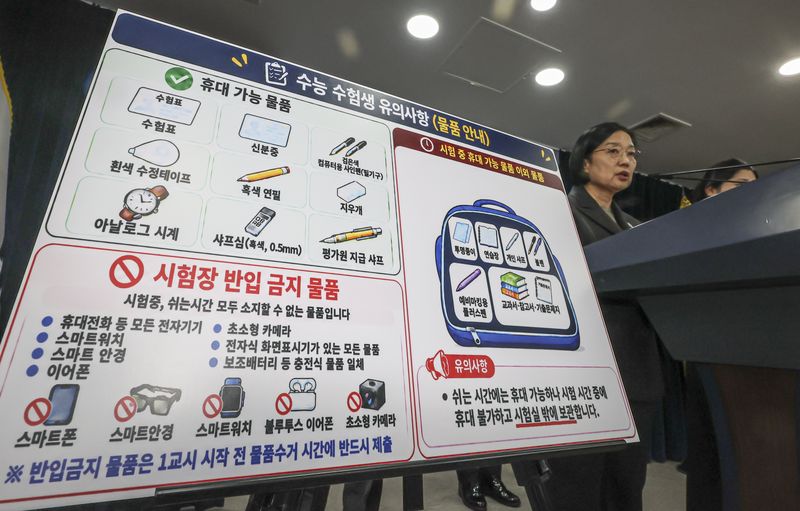
Earlier, as controversy over the possibility of AI-assisted cheating grew, the Ministry of Education announced measures including stricter screening procedures at test centers and the deployment of additional proctors. It nevertheless decided not to change the CSAT schedule, citing the burden of securing the exam papers if the test were postponed, the need to adjust subsequent college admissions schedules, and the potential for confusion among test takers.
Ahn questioned whether the government’s measures would work properly at actual test sites. Because the enhanced proctoring measures were announced just two days before the CSAT, he said there was not enough time to distribute the relevant guidelines to test centers nationwide and for proctors to familiarize themselves with the new procedures. He also raised concerns that the screening capabilities of the additional staff had not been adequately verified.
Ahn stressed, “The date of the CSAT is set to fulfill the exam’s purpose of fairly assessing abilities and using the results in college admissions. If the schedule is maintained while leaving out the time needed to secure the proctoring conditions required for that purpose, test takers will have to bear the risk.”
He also made clear that postponing the exam was not an end in itself. Ahn said, “Postponing the CSAT is not the goal, but one means of ensuring a fair exam. More important than holding the exam on its scheduled date is ensuring that all test takers are protected from cheating and can compete on equal terms.”
With the CSAT fast approaching, objections from test takers like these and calls to postpone the exam are expected to grow.
[email protected] Kim Hyeong-gu Reporter