Cho Kuk: “No Problem Entering Japan Despite Past Criminal Record” ... Pushes Back Against Entry Denial
- Input
- 2026-11-17 19:15:28
- Updated
- 2026-11-17 19:15:28
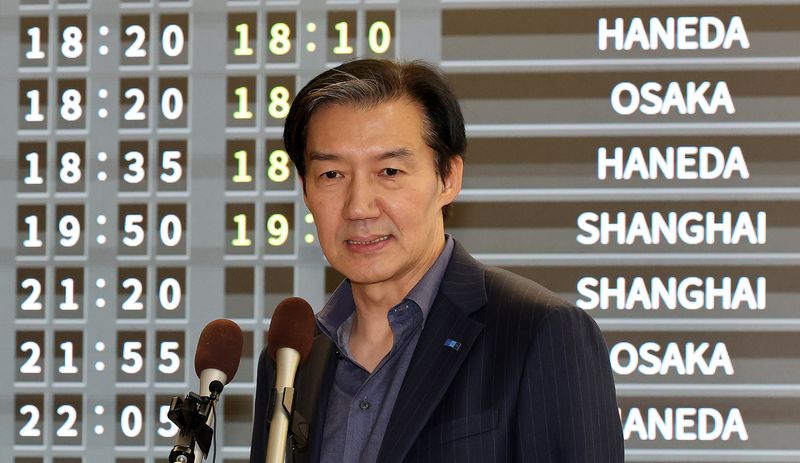
Speaking to reporters in the arrivals hall at Gimpo International Airport that afternoon, Cho said, “Although I had a criminal record for violating the National Security Act in the early 1990s, I also visited Japan several times about 10 years ago. I attended a joint academic conference between Seoul National University and the University of Tokyo, and although I had been pardoned and had my rights restored by then, I entered without any problems.”
Article 5 of Japan’s Immigration Control and Refugee Recognition Act provides that foreign nationals with certain criminal convictions are subject to denial of landing. Cho has a criminal record stemming from cases including a past violation of the National Security Act and a more recent abuse-of-authority case.
Cho said, “It is completely untrue that the Japanese government told our consul general it had notified me or the Rebuilding Korea Party in advance to apply for a visa through the Embassy of Japan in the Republic of Korea. Neither I nor anyone else in the party has ever received a request to apply for a visa or attend an interview.” He added, “If the claim is that anyone with a past criminal record is automatically denied entry, why would they have told me to attend a visa interview? I believe the Japanese government is making up an alibi after the fact.”
Cho also raised suspicions that Japanese authorities had known in advance that he would enter Japan and had prepared relevant materials. He said, “When I arrived at Haneda Airport, I could see what appeared to be about 200 to 300 pages of documents about me stacked up. I was questioned twice in a separate interview room over about an hour and a half.” He added, “If they knew I was coming to Japan and had even prepared materials, shouldn’t they have contacted me in advance to say that I needed to apply for a visa?” He questioned the Japanese side’s explanation.
Asked about the possibility, raised by some, that his visit to Dokdo in 2024 had played a role in the decision, Cho said, “I don’t know.” He also cited the earlier case of singer Lee Seung-cheol being denied entry to Japan, saying, “I think the Japanese government may be hiding its true intentions and using the relevant laws as a pretext.”
On his plans for further action, Cho said, “I think we will need to find out what the Japanese government’s real intentions are through our Ministry of Foreign Affairs. I plan to examine this matter point by point.”
[email protected] Jiwon Song Reporter