Ruling and Opposition Parties Won’t Raise Crypto Tax Deduction Cap ... Dispute Settled for Now
- Input
- 2026-11-17 18:29:43
- Updated
- 2026-11-17 18:29:43
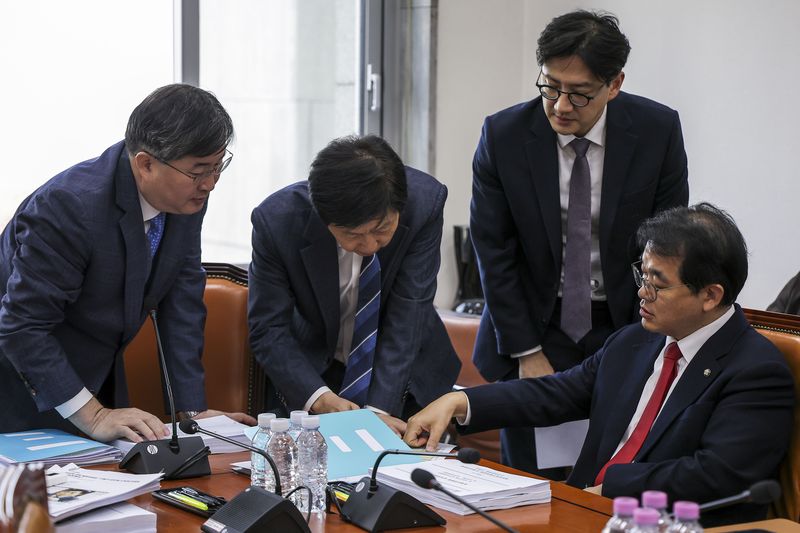
Rep. Bae Jun-young, the People Power Party secretary on the National Assembly of the Republic of Korea’s Finance, Economy and Planning Committee, told reporters during a meeting of the Tax Subcommittee that day, “The parties have agreed not to raise the (virtual asset) basic deduction limit from 2.5 million won to 50 million won.”
The decision by the ruling and opposition parties that day to keep the basic deduction limit for virtual asset taxation unchanged is understood to have been influenced by the view that the two-year postponement of taxation has reduced the effectiveness of raising the limit. Tax fairness with other investment vehicles, such as overseas stocks, which have a basic deduction of 2.5 million won, also appears to have been considered. Concerns that sharply raising the deduction limit to 50 million won could exclude small investors from taxation and increase revenue volatility are also understood to have played a role.
Earlier, on the 11th, the ruling and opposition parties reached a tentative agreement to postpone virtual asset taxation for two years. They decided that same day to discuss further the other outstanding issues, including raising the basic deduction, introducing loss carryforward deductions, and requiring virtual asset service providers to submit tax data. The issue of raising the basic deduction was settled that day.
Bae said negotiations between the ruling and opposition parties on the remaining issues had made substantial progress. Regarding the requirement for virtual asset service providers to submit tax data, he said, “It is being finalized that the data will be submitted in a form that does not allow users’ personal information to be identified.”
On introducing loss carryforward deductions, he said, “The government is proposing three years, while some favor five,” adding, “Once that is settled, there are no other points of contention.”
[email protected] Kim Hyeong-gu Reporter