CSAT to Add 8,400 Proctors, but... Teachers' Groups: High-Tech Device Detection Relies Solely on Teachers' Eyes
- Input
- 2026-11-17 16:36:00
- Updated
- 2026-11-17 16:36:00
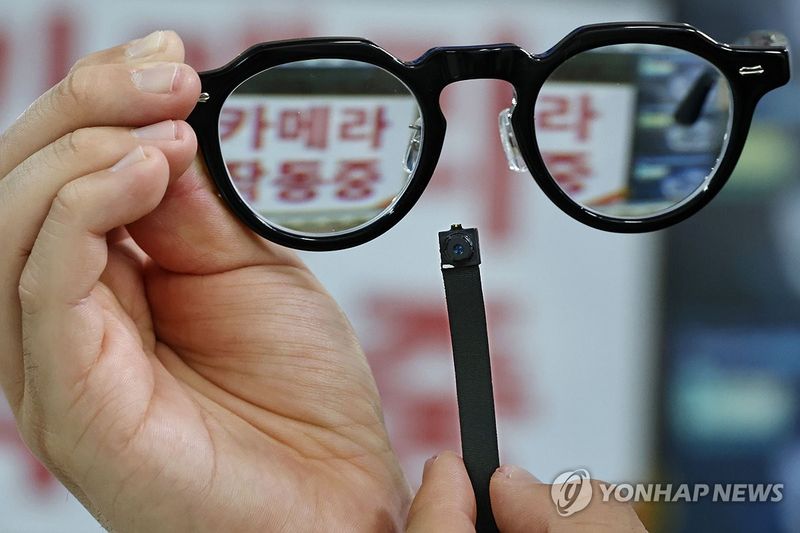
[Financial News] With the 2027 College Scholastic Ability Test (CSAT) just two days away, the government announced measures to prevent cheating, including adding around 8,400 proctors, prompting teachers' organizations to question their effectiveness. Critics say that specialized equipment and personnel capable of identifying high-tech devices such as smart glasses and miniature cameras remain in short supply, while the burden of proctoring is being placed ever more heavily on teachers.
The Korean Teachers and Education Workers Union (KTU) issued a statement on the 17th, saying, “The government's measures focus on tightening surveillance and checks by teacher proctors and mobilizing additional personnel,” and criticizing the government for “shifting onto teacher proctors the responsibility for failing to prepare for high-tech cheating.”
The KTU pointed out that cheating using AI was entirely foreseeable, yet the Ministry of Education only began preparing measures after the controversy over cheating on the tax accountant exam.
The KTU expressed particular concern about the burden on teachers under the tightened proctoring guidelines. Before the preliminary bell for the first test session, proctors must have candidates place their glasses on their desks and check whether they are smart glasses. They must inspect glasses during subsequent sessions as well and check whether miniature cameras are concealed in buttons, collars or sleeves. During the test, they are also instructed to watch for behaviors such as candidates repeatedly touching their collars, buttons or ears, or moving their lips.
The KTU warned that complaints could arise if normal behavior is suspected of being cheating, and that proctors could be held accountable for lax supervision if they fail to detect cheating devices. It said this is why teachers complain, “We're in trouble if we catch them, and in trouble if we don't.”
The Teachers' Union Federation also said in a statement that day that simply increasing the number of proctors would not in itself make it possible to detect high-tech devices.
The Teachers' Union Federation said, “Increasing the number of proctors does not automatically bring the expertise needed to identify these devices,” adding, “The limitations in identifying high-tech devices should not be compensated for by relying on individual teachers' vigilance.”
The Teachers' Union Federation argued that it was necessary to determine whether sufficient time and conditions had been secured to check every candidate's glasses, buttons, collar and sleeves. It also called for clarity on what equipment and expertise the additional personnel would have, and who would make the final decision if cheating was suspected.
It also urged the government to take responsibility for complaints and lawsuits arising during proctoring.
The KTU called for the introduction of a “national litigation responsibility system” for CSAT proctors. It said that if civil lawsuits are filed, education offices should lead the litigation, and that legal assistance, including appointing counsel, should be provided in cases of criminal complaints or accusations.
The Teachers' Union Federation welcomed the government's pledge not to make teachers who diligently carry out proctoring duties bear responsibility for unjustified complaints and lawsuits. However, it stressed that concrete protections should follow, including how education authorities would respond and who would bear litigation costs if actual disputes arise.
The Teachers' Union Federation said, “At this point, it is more important to prepare so that the announced measures can actually be implemented at test sites than to keep adding new inspection items.”
[email protected] Lee Bomi Reporter