Jeju Tourism Spending Trends Diverge ... Domestic Visitor Spending Down 4.8%, Foreign Visitor Spending Up 38.7%
- Input
- 2026-11-17 16:08:56
- Updated
- 2026-11-17 16:08:56
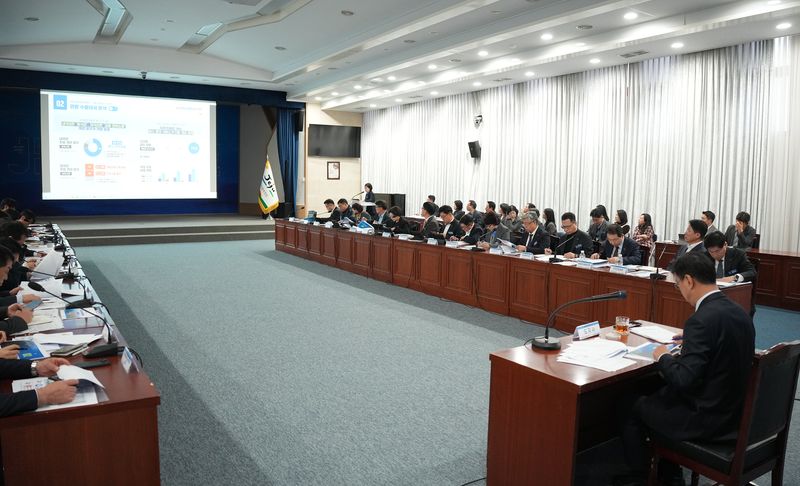
【Financial News, Jeju — Reporter Jeong Yong-bok】 Card spending by domestic tourists visiting Jeju fell 4.8%, while spending by foreign tourists rose 38.7%. Bus-related complaints accounted for 26.6% of all tourism complaints, putting the recovery of domestic demand and improvements to transportation and services at the forefront of Jeju’s tourism policy priorities.
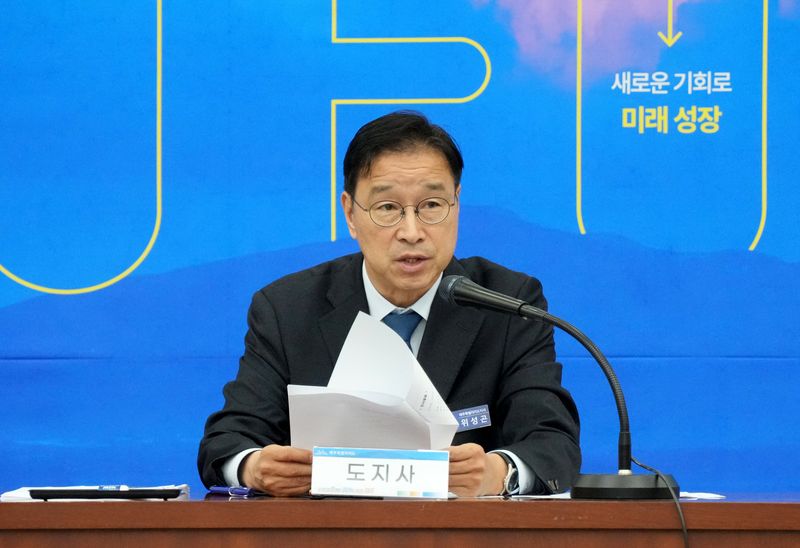
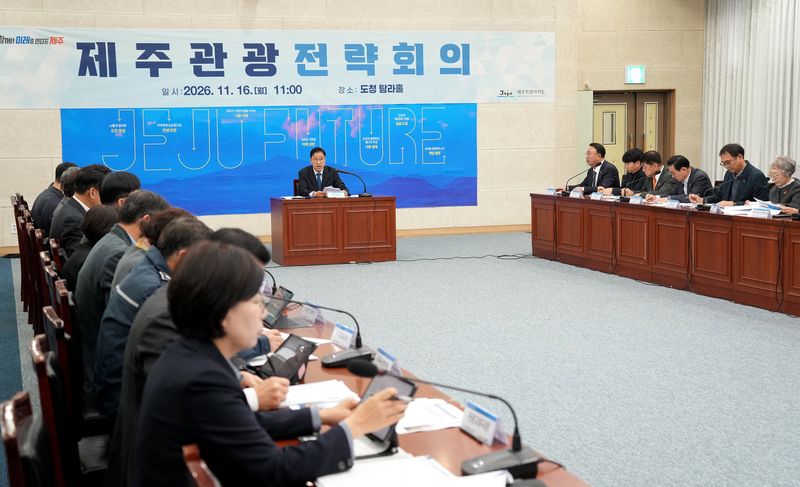
According to Jeju Province on the 17th, Governor Wi Seong-gon chaired a Jeju Tourism Strategy Meeting at Tamna Hall in the provincial government office the previous day, where he discussed measures to increase tourists’ length of stay and spending and address complaints across sectors, including transportation, lodging and food services.
Jeju Province will establish a collaborative framework involving not only its tourism department but also all provincial divisions and bureaus, the two administrative cities, the Jeju Tourism Organization, International Convention Center Jeju, the Jeju Special Self-Governing Province Tourism Association, Korea Airports Corporation (KAC), including its Jeju International Airport, and other relevant organizations. The tourism strategy meeting will be held quarterly.
Tourism market indicators released that day showed demand and spending moving in opposite directions among domestic and foreign visitors. From January to October this year, 11,717,000 tourists visited Jeju, up 1.9% from the same period last year. The number of domestic visitors fell 0.6% to 9,489,000, while foreign visitors increased 14.2% to 2,228,000. These figures are provisional totals as of the end of October.
The gap was even wider in tourists’ card spending. From January to September this year, tourists’ card spending in Jeju totaled KRW 2.0512 trillion, up 3.4% from the same period a year earlier. Spending by domestic visitors fell 4.8% to KRW 1.5311 trillion, while spending by foreign visitors surged 38.7% to KRW 520.1 billion.
Higher spending by foreign tourists supported growth in overall tourism spending, while in the domestic market the decline in card spending was larger than the drop in visitor numbers. However, the visitor count covers January to October, while the card-spending figure covers January to September. Because the periods differ, the figures cannot be directly converted into a change in spending per visitor.
Another strain on Jeju’s tourism market is the reduction in domestic air service. According to KAC’s Jeju International Airport, the weekly schedule for domestic flights in winter 2026 calls for 2,948 flights, down 90 (3.0%) from 3,038 last winter. That is a decrease of 118 flights (3.8%) compared with this year’s summer schedule of 3,066.
Jeju Province identified the cost burden on airlines from high oil prices and rising demand for overseas travel, among other factors, as affecting the domestic tourism market.
Alongside shifts in tourism demand, service quality was also identified as an area needing improvement. The Jeju Tourism Complaint Center received a total of 1,880 complaints from July 2024 through September this year. It received 776 complaints last year and 674 from January to September this year.
Of the complaints received this year, 179 concerned buses, accounting for 26.6% of the total. The share of bus complaints rose from 7.9% in the second half of 2024 and 11.6% in 2025. Key complaints included bus drivers’ unfriendliness and use of informal speech, errors with foreign-card and QR-code payments, and long intervals between buses.
The share of complaints about service also rose, from 29.8% last year to 37.6% from January to September this year. By contrast, the share of complaints citing high prices fell from 5.6% in the second half of 2024 to 1.3% this year.
The inconveniences tourists experienced also differed by nationality. In the “2025 Jeju Special Self-Governing Province Survey of Visitors,” released by Jeju Province, 49.6% of domestic respondents cited high food prices as an inconvenience.
Foreign visitors most often cited difficulties using public transportation (21.4%) and language barriers (21.2%). Food prices (18.2%) and a lack of tourism information (13.5%) were also among the main complaints. Respondents could select multiple answers. The findings suggest that travel costs stood out more for domestic visitors, while transportation and communication issues were more prominent for foreign visitors.
Governor Wi ordered improvements in response to the tourism association’s complaint that processing times vary when tourism complaints are received and then forwarded to the responsible departments.
Governor Wi directed officials to set deadlines for handling complaints and inform tourists of them, analyze the causes of problems by sector—including buses, taxis, rental cars, lodging and restaurants—and report specific improvement measures. He particularly noted that complaints about rental car rates could affect confidence in Jeju tourism and called for the industry to discuss ways to address them.
New measures to improve transportation access are also in the works. Starting on the 25th, Jeju Province plans to add three late-night bus routes from Jeju International Airport to outlying areas. The late-night Route 101 to Seongsan, Route 102 to Hangyeong and Route 121 to Namwon are each scheduled to depart the airport at around 10:40 p.m.
The measure responds to concerns that existing late-night airport bus routes and the areas they serve outside the city are limited, making it difficult for tourists arriving late to get around.
The meeting also discussed initiatives to increase tourists’ spending in local communities. Jeju Province plans to connect national heritage, culture and the arts, rural experiences, marine leisure and ecotourism with local businesses, and expand nighttime tourism and longer-stay products.
The province also plans to strengthen links with tourism products so that participants in international conferences and academic events can visit nearby attractions and businesses instead of limiting their stay to conference venues and accommodations.
Jeju Province will also revamp its promotional system to attract tourists. It will bring festival and event information scattered across departments together on VisitJeju, the official Jeju tourism platform, and conduct joint promotions with airlines, online travel agencies and others.
A bill recently introduced in the National Assembly to abolish Jeju’s visa-free entry exemption was also discussed at the meeting. After the Jeju Tourism Association called for a response from the provincial government, Governor Wi said, “The bill must be withdrawn,” and stated, “We will analyze the economic impact of the visa-free system and persuade the government and the National Assembly.”
Governor Wi said, “Visa-free entry has played a key role in revitalizing the local economy,” and directed the relevant departments to analyze and report on the system’s economic impact.
On tourism policy more broadly, Governor Wi emphasized length of stay and the quality of the travel experience. “We need to extend tourists’ stays and offer experiences that are uniquely appealing to Jeju,” he said. “We must increase satisfaction and repeat visits so that the benefits translate into tangible vitality for residents and the local economy.” He added, “Efforts by the tourism department alone are not enough,” and stressed, “Every department must work as one team to strengthen Jeju tourism’s competitiveness and revitalize the local economy.”
Jeju Province will review progress on key tasks at its quarterly tourism strategy meetings and hold additional meetings as needed when issues arise. Whether a recovery in visitor numbers leads to increased local spending and sales, and how much recurring tourism complaints decline, are expected to be key measures of the policy’s success.
[email protected] Jeong Yong-bok Reporter