“Why Does My Blood Pressure Rise Every Winter?”...How to Manage Blood Pressure That Rises in the Cold, Even on Medication? [Health Talk]
- Input
- 2026-11-17 16:29:53
- Updated
- 2026-11-17 16:29:53
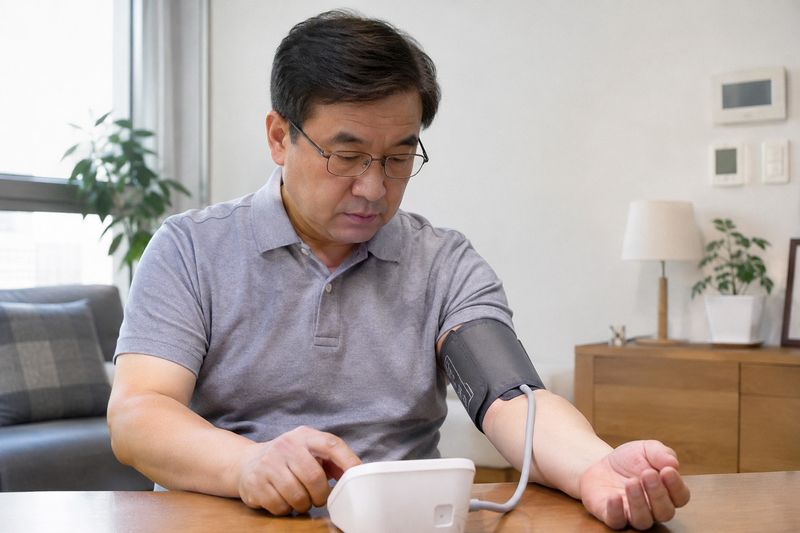
[Financial News] Around 3 in 10 adults in South Korea have hypertension. Because it causes few symptoms, it can be easy to leave untreated, but blood pressure tends to rise in winter, when blood vessels constrict in the cold, making careful management especially important.
According to the Korea Disease Control and Prevention Agency’s “2025 Status and Issues in Chronic Diseases,” an estimated 12.57 million adults aged 19 or older in South Korea had hypertension in 2023. That amounts to 28.6% of adults. Hypertension often progresses without noticeable symptoms, so a person’s blood pressure may be high without their knowing it. Since leaving high blood pressure untreated increases the risk of cardiovascular and cerebrovascular diseases, including heart attacks and strokes, it is important to check and manage your blood pressure regularly even if you have no symptoms.
Blood pressure fluctuates in the cold...measure it regularly at home, even without symptoms
When exposed to cold, our bodies constrict peripheral blood vessels to maintain body temperature. This increases vascular resistance and activates the sympathetic nervous system, which can raise blood pressure. Blood pressure also tends to rise in the morning as people wake up, and sudden exposure to cold air in winter can cause greater fluctuations.
Professor Kim Yong-hyun of the Department of Cardiology at Korea University Ansan Hospital explained, “In winter, people should be alert to blood pressure increases caused by the cold and regularly measure their blood pressure at home to check how well it is controlled, even if they are taking blood pressure medication.”
The problem is that hypertension places a continuous burden on the heart and blood vessels without causing noticeable symptoms. If blood pressure remains high for a long time, the walls of blood vessels can be damaged and atherosclerosis can develop or worsen, increasing the risk of cardiovascular and cerebrovascular diseases such as heart attacks and strokes.
According to the Korea Disease Control and Prevention Agency’s “2023 Statistics on Cardiovascular and Cerebrovascular Disease Incidence,” South Korea recorded 34,768 heart attacks and 113,098 strokes in 2023. Since cardiovascular and cerebrovascular diseases result from the combined effects of multiple risk factors, including hypertension, diabetes, dyslipidemia and smoking, keeping blood pressure properly controlled is a starting point for prevention.
Because hypertension often causes no specific symptoms, regular blood pressure checks are important. In South Korea, hypertension is diagnosed if repeated measurements at a clinic show a systolic pressure of 140 mmHg or higher or a diastolic pressure of 90 mmHg or higher. If the average of readings taken at home over several days is a systolic pressure of 135 mmHg or higher or a diastolic pressure of 85 mmHg or higher, a medical evaluation is needed to confirm the diagnosis. The American College of Cardiology uses a stricter threshold, classifying clinic blood pressure of 130/80 mmHg or higher as hypertension.
For an accurate reading, it is best to measure your blood pressure in the morning within an hour of waking, after urinating and before eating or taking blood pressure medication. In the evening, take a reading at a consistent time before bed, and rest for at least five minutes beforehand. Avoid caffeine, smoking and exercise for 30 minutes before measuring, and focus on changes in readings recorded over time rather than on a single measurement.
When a doctor or nurse measures blood pressure at a clinic, unconscious tension can sometimes cause a higher reading than the actual level; this is called the “white coat effect.” Such patients are first advised to keep a record of their blood pressure readings at home and bring it to the clinic. If they do not have a home monitor or the readings are considered inaccurate, their blood pressure during daily activities can be measured accurately using an arm-worn 24-hour ambulatory blood pressure monitor or a 72-hour ring-type blood pressure monitor.
Even when taking blood pressure medication, a person’s blood pressure control can change with shifts in temperature and lifestyle. If readings remain higher than usual, they should consult a healthcare professional to review their treatment, and should not stop taking medication or change the dose on their own.
Bundle up with a scarf and gloves, and keep salt intake below 6 g a day
In winter, take care to avoid sudden temperature changes, such as going straight from a warm indoor space into the cold outdoors. When going outside, dress warmly with items such as a scarf and gloves, and avoid strenuous outdoor exercise in the early morning when temperatures are low. If exercising in cold weather, warm up thoroughly; on days of severe cold, exercising indoors is another option.
Dietary habits also matter. Cut back on foods high in sodium, such as soups and processed foods, and maintain a healthy weight. Because Korean cuisine includes many soups and salted or fermented foods, the average daily salt intake among Koreans is estimated at around 10 g. The Korean Society of Hypertension recommends reducing salt intake to less than 6 g a day.
Quitting smoking and limiting alcohol are also necessary. The Korean Society of Hypertension recommends limiting alcohol to no more than two drinks a day. This is equivalent to about 720 mL of beer (one bottle), 200–300 mL of wine (one glass), 200 mL of sake (one glass), 60 mL of whiskey (two shots), or two to three glasses of soju (one-third of a bottle).
Regular exercise is also very important in treating hypertension. It is recommended that people do at least 30 minutes of aerobic exercise five to seven times a week. Adding isotonic strength exercises, such as using dumbbells to move the muscles, and isometric exercises, which involve exerting force on the muscles while holding a fixed position, two to three times a week can help lower blood pressure as well as improve metabolic health and build strength.
If symptoms that may indicate a heart attack or stroke occur, such as sudden chest pain, shortness of breath, paralysis on one side of the body, or difficulty speaking, call 119 for help immediately. Because how quickly cardiovascular or cerebrovascular disease is treated has a major impact on the outcome, do not delay when symptoms appear.
Professor Kim said, “Hypertension can place a continuous burden on the heart and blood vessels even without specific symptoms, so it is important to know your blood pressure accurately and manage it,” and advised, “If your blood pressure remains higher than usual, it is important to consult a healthcare professional to find an appropriate way to manage it.”
[email protected] Jung Myung-jin, medical correspondent Reporter