Maxed Out Borrowing to Buy Homes, Housing Costs Rose... More Give Up on Buying a Home
- Input
- 2026-11-17 16:00:00
- Updated
- 2026-11-17 16:00:05
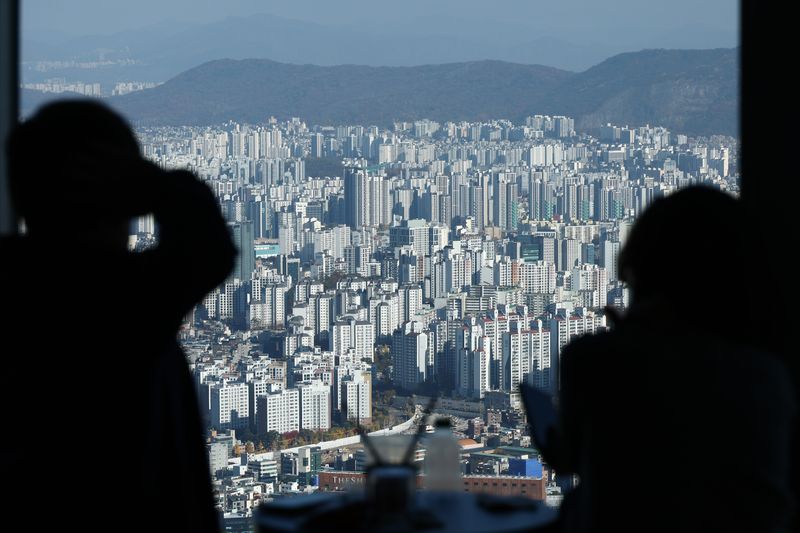
[Financial News] Last year, the share of households that owned a home, including both apartments and non-apartment housing, rose to 62.0%, up 0.6 percentage points from 61.4% the previous year. This is interpreted as meaning that young people and newlywed couples, who represent demand from actual homebuyers, set out to buy homes as rising prices and lending restrictions became more apparent. The rent-to-income ratio for renter households also rose sharply, making the burden of housing costs a reality. Meanwhile, some interpret the decline in the belief that owning a home is necessary—amid rising prices, lending restrictions and fewer homes available for jeonse and monthly rent—as a sign that sentiment among people looking at the real estate market is becoming polarized.
The Ministry of Land, Infrastructure and Transport announced the results of its 2025 Housing Survey on the 17th. The survey’s reference date was June of last year. Lee Yu-ri, director of the ministry’s Housing Policy Division, explained, “We conduct the survey at this time every year because the goal is to keep the reference point fixed and track changes in conditions.”
The shares of households that owned a home and those living in their own home both increased from the previous year. The homeownership rate rose by 0.6 percentage points to 62.0%, while the owner-occupancy rate increased by 0.7 percentage points to 59.1%. The owner-occupancy rate rose particularly sharply among young people and newlywed couples, who have substantial demand for homes to live in. For young people, it increased from 12.2% to 14.8%, and for newlyweds, from 43.9% to 45.7%. The interpretation is that households hurried to buy homes as lending restrictions and rising prices were anticipated after the new government took office last year, while more chose to live in their homes rather than make gap investments, amid requirements to occupy the property.
The most striking figure is the rent-to-income ratio (RIR), or monthly rent as a share of renter households’ monthly income. The RIR rose by 1.2 percentage points, from 15.8% in 2024 to 17.0% last year. This means renters’ housing-cost burden grew by the same measure. Kang Mi-na, a senior research fellow at the Housing Policy Research Center of the Korea Research Institute for Human Settlements, said, “This is thought to be due to incomes not having risen substantially,” adding, “The ratio has risen at some points in the past and fallen at others; it does not move in just one direction. The aim is to take a long-term view of where the market and housing conditions are headed.”
The RIR increased particularly sharply for young people and newlywed couples. For young people, it rose by 1.4 percentage points, from 16.0% to 17.4%. For newlyweds, it jumped by 2.5 percentage points, from 17.7% to 20.2%—the largest increase. The interpretation is that monthly rents rose as jeonse rentals became scarce due to requirements to live in the property and similar measures, at a time when rising home prices, lending restrictions and higher interest rates made buying more difficult.
The burden was also keenly felt. The share who said they felt burdened by rent and loan repayments was 69.3% among young people and 73.1% among newlyweds, far above the overall average of 55.9%. By region, the RIR for renter households rose from 20.8% to 21.5% in Seoul and from 15.2% to 17.4% in Gyeonggi. The analysis is that all were affected: households that bought homes by maxing out their borrowing, jeonse tenants, and households that switched to monthly rentals because buying became unaffordable and jeonse listings dwindled. The fact that young people most often cited financial circumstances and difficulty securing a home as reasons for delaying or avoiding marriage also shows that housing problems are holding them back.
Demand for housing support policies showed a weakening preference for jeonse. The share naming jeonse loans as the most-needed form of support fell across the board: from 27.8% to 21.8% among all households, from 40.6% to 35.4% among young people, and from 33.8% to 27.2% among newlyweds. Among young households, loans for home purchases (21.3%) ranked second, overtaking monthly rent subsidies. The share saying it was necessary to own a home fell to 85.6%, down 1.2 percentage points from 86.8% the previous year. It has declined for three consecutive years since 2022, when it stood at 89.6%.
Meanwhile, the Ministry of Land, Infrastructure and Transport emphasized improvements in housing conditions. Living space per person increased from 36.0m2 to 38.2m2, while the share of households below the minimum housing standard fell from 3.8% to 3.6%.
[email protected] Jeong Gyeong-su, Choi Ga-yeong Reporter