Nationwide 'Critical Disaster Alerts' to Catch CSAT Cheaters ... Hidden Phones Found
- Input
- 2026-11-17 15:45:23
- Updated
- 2026-11-17 15:51:01
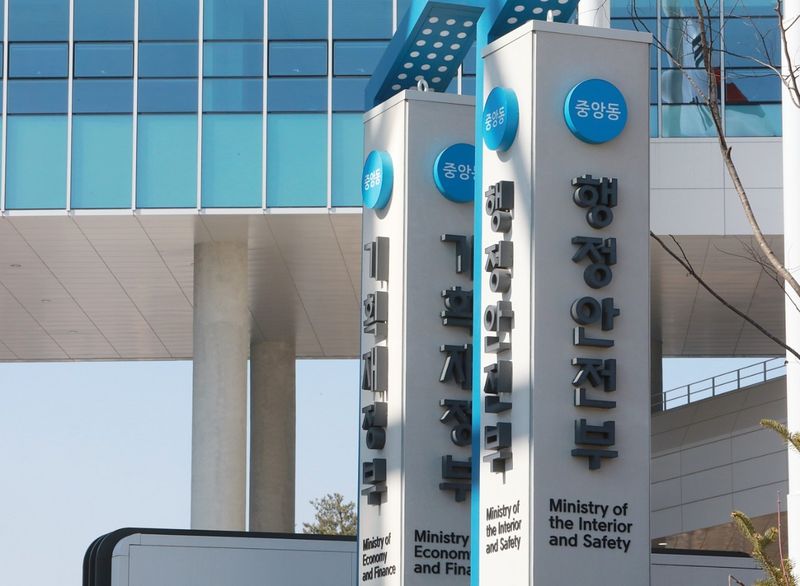
[Financial News] The government will send critical disaster alerts nationwide during the 2027 College Scholastic Ability Test (CSAT), scheduled for the 19th, to detect mobile phones that examinees have not turned in. It plans to use the fact that recipients cannot opt out of critical disaster alerts to find phones hidden by examinees.
Prime Minister Han Seong-suk said in a public address on countering cheating on the CSAT on the 17th, "We will send disaster alerts before the exam begins to detect mobile phones that have not been turned in."
The government plans to collect all electronic devices, including mobile phones, with their power turned off before the first exam session, store them separately at the exam headquarters, and return them after the exam. To prepare for the possibility that examinees may not turn in their phones and instead hide them in their bags, the government will have bags stored in hallways outside classrooms and will assign additional invigilators to the hallways. All examinees will undergo the same preliminary check before the first session.
The disaster alerts are scheduled to be sent between 8:25 and 8:30 a.m., before the first exam session begins.
Kim Kwang-yong, head of the Disaster and Safety Management Headquarters at the Ministry of the Interior and Safety (MOIS), said at a briefing that day, "People can opt out of emergency disaster alerts or safety guidance alerts, but they cannot opt out of critical disaster alerts."
Kim said, "If a mobile phone is left on, it will definitely sound," and explained, "We are sending the disaster alerts to make use of that feature." He added, however, that some 3G phones and other devices may not be able to receive critical disaster alerts.
Disaster alerts are divided into three types according to the level of risk: critical disaster alerts, emergency disaster alerts, and safety guidance alerts. Critical disaster alerts are sent when a major disaster or threat to human life means everyone must receive them, and recipients cannot opt out. An alarm of at least 40 decibels (dB) sounds at the phone's maximum volume. Emergency disaster alerts, by contrast, are used to notify people of possible terrorist attacks or radioactive material leaks, evacuation orders, and flood information at the severe level. Safety guidance alerts convey less urgent disaster information, such as recommendations to evacuate in advance or the lifting of evacuation orders. Recipients can opt out of emergency disaster alerts and safety guidance alerts.
It has emerged that there were also differing views within the government over sending the disaster alerts.
At the end of the briefing, Prime Minister Han said, "With critical disaster alerts, everyone receives them at the same time, so there was, in fact, considerable internal debate for and against." She added, "We judged it to be a very important matter, warranting an alert of that intensity." She went on to explain why the government had decided to use disaster alerts, saying, "With current technology, it was practically difficult to identify cases where examinees did not turn in their phones and hid them instead."
The government plans to continue investigating cheating even after the CSAT ends. Prime Minister Han said, "We will improve all legal procedures and systems that can be addressed after the fact, and will pursue any cheating uncovered this time to the end and catch those responsible."
[email protected] Lee Bomi Reporter