[Exclusive] “FSC Approval Required to Request Additional Materials”... FSS Administrative Reform Plan to Be Announced Next Week
- Input
- 2026-11-17 17:15:57
- Updated
- 2026-11-17 17:15:57
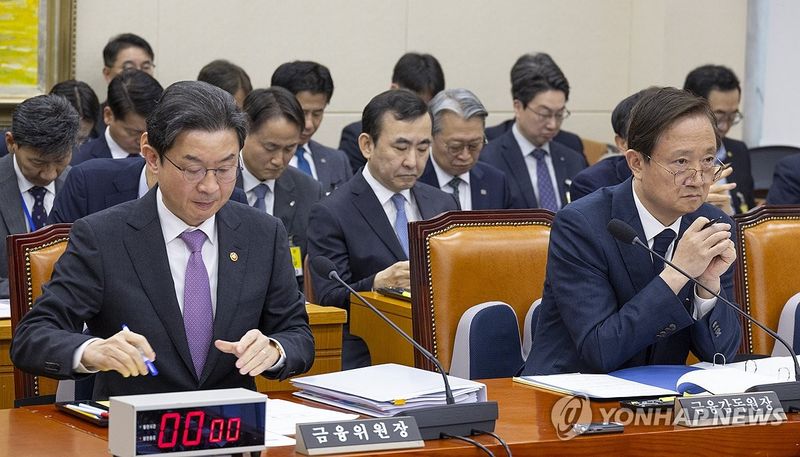
[Financial News] The “financial supervisory administration reform plan,” which would limit the inspection powers of the Financial Supervisory Service (FSS), will be unveiled next week. At its core, the plan would require matters related to inspections that the FSS previously decided on its own to receive prior approval from or be discussed with the Financial Services Commission (FSC).
According to financial industry sources on the 17th, financial authorities are set to announce the “financial supervisory administration reform plan” as early as the 23rd. The FSC and FSS concluded discussions on the plan on the 8th and reported it to the Public Institutions Management Committee the following day, the 9th. Ahead of a review of its designation as a public institution scheduled for next January, the FSS included in the plan measures to improve its management system, reform financial supervision, and strengthen consumer protection. An FSC official said, “We have completed discussions on all the details,” adding, “We plan to announce the reform plan next week once FSC Chairman Lee Eog-weon returns from an overseas trip.”
The plan is understood to contain tough measures that have prompted opposition within the FSS. Under the plan, materials the FSS receives during inspections will be limited to those on a list requested in advance. The intent is to recognize financial companies’ right to protect themselves. The FSS will need FSC approval to request additional materials during an investigation. FSC approval will also be required to extend an inspection period.
An FSS official said, “Even now, when we conduct on-site inspections, company messaging systems are often completely empty. Important conversations are probably conducted through messaging apps on personal phones, but if the messages are withheld on the grounds that they contain personal information, there is nothing we can do.” The official continued, “Cases of materials being withheld on lawyers’ advice are also increasing, and it is difficult to support reforms that make inspections even harder.” The official argued, “The global standard is that inspections must be free from outside influence because their independence is directly linked to the soundness of the financial sector. If requirements for FSC approval and consultation increase, that would be a step backward.”
By contrast, an FSC official said, “The reform plan was drawn up because the FSS has faced considerable criticism for opaque decisions and unwarranted interim inspection announcements in the course of carrying out its supervisory functions.” The FSC’s position is that internal opposition is only to be expected, since the measures are intended to increase transparency in financial supervision.
The plan is also set to generally restrict “interim inspection announcements” that disclose inspection details before results are finalized. During the tenure of former FSS Governor Lee Bok-hyun, the results of inspections of some financial companies were disclosed before they were finalized, prompting continued controversy that this could infringe the companies’ right to defend themselves. Exceptions are expected to be allowed only when public-interest grounds are recognized, such as preventing consumer harm from spreading or ensuring financial market stability.
Earlier, in January, the Public Institutions Management Committee decided to defer designating the FSS as a public institution, while setting a policy that it should be subject to management and oversight at least at the level applied to public institutions. Accordingly, the reform plan is expected to become a major basis for deciding whether to designate the FSS as a public institution. Some believe the FSS may find it difficult to avoid designation even if it implements all the measures in the plan. Under the government’s policy of relocating as many major public institutions in Seoul as possible to other regions to promote balanced national development, the government could designate the FSS as a public institution and then pursue its relocation.
The plan is also understood to include measures to clearly define the circumstances in which unannounced inspections are permitted. They are currently allowed when there is a risk that the inspection’s purpose could be difficult to achieve, for example, because materials may be destroyed. However, criticism has persisted that the rules are too abstract and allow the FSS to exercise its inspection powers broadly at its discretion.
Meanwhile, on the 16th, the FSS launched unannounced inspections of bank branches for the first time in about 10 years. The inspections are intended to determine whether a series of recent financial incidents in the banking sector stemmed from failures of internal controls.
[email protected] Park Mun-su Reporter