“Blood Sugar Suddenly Spiked?”... Could Be the First Sign of Pancreatic Cancer, the ‘Silent Cancer’ [Health Talk]
- Input
- 2026-11-17 14:45:33
- Updated
- 2026-11-17 14:45:33
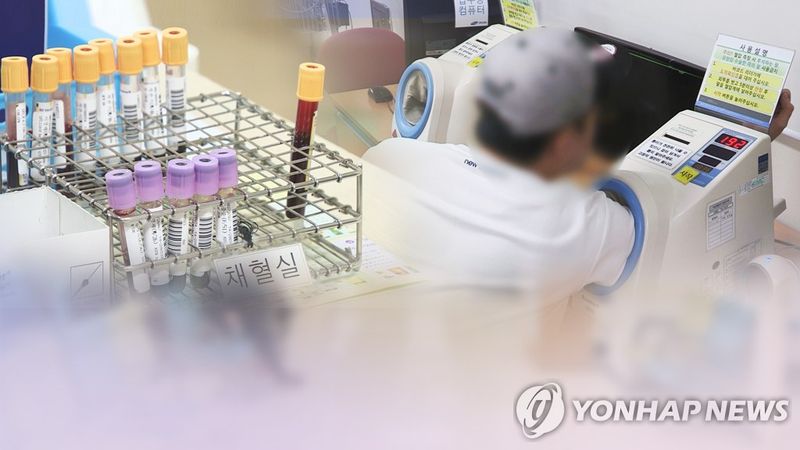
[Financial News] If your fasting blood sugar has suddenly risen on this year’s health screening results, don’t dismiss it as merely a “diabetes warning.” A rise in blood sugar without an obvious cause may be a sign of pancreatic cancer, known as the “silent cancer.” Ahead of World Pancreatic Cancer Day on the 19th, we look at the signs on health screening results that should not be overlooked.
According to the Health Insurance Review and Assessment Service, the number of patients treated for pancreatic cancer rose 34.6% in four years, from 23,865 in 2021 to 32,118 in 2025. The number of patients is increasing, but the survival rate remains low. The National Cancer for Knowledge and Information Center’s figures for five-year relative survival rates for major cancers (2019–2023) ranked thyroid cancer (100.2%), prostate cancer (96.9%), breast cancer (94.7%), lung cancer (42.5%), liver cancer (40.4%), and gallbladder and other biliary tract cancers (29.0%), while pancreatic cancer had the lowest rate, at 17.0%.
Ko Young-ho, director of the Korea Association of Health Promotion Health Screening Center in Busan’s Sasang District, emphasized, “Many people have a strong perception that pancreatic cancer is a cancer that cannot be treated once it is found, so they are often vaguely afraid of it or avoid it altogether. But if it is detected at a stage when surgery is possible, treatment can be expected, so rather than being afraid, it is important to understand the risk factors in your own body and manage them.”
Symptoms often appear only after the disease has advanced... about 43% have distant metastases at diagnosis
The pancreas is a slender, elongated organ about 15 cm long, located deep inside the body behind the stomach. It is divided into a head next to the duodenum, a middle section called the body, and a tail toward the spleen. It produces digestive enzymes that help break down food and sends them into the duodenum. It also secretes hormones such as insulin and glucagon, which regulate blood sugar, helping maintain the body’s energy metabolism at a steady level.
Pancreatic cancer is a malignant tumor that develops in the pancreas. In 85–90% of cases, it is pancreatic ductal adenocarcinoma, which arises in cells of the pancreatic duct, the channel through which digestive enzymes pass. Smoking is the most important risk factor, while diabetes, chronic pancreatitis, family history, obesity, and older age are also considered factors that increase the risk of developing the disease.
There are usually few clear symptoms in the early stages. Indigestion, abdominal discomfort, weight loss, and jaundice often appear only after the disease has progressed to some extent, and even then, they can easily be overlooked as common gastrointestinal problems.
Symptoms vary depending on the tumor’s location and size and the extent of metastasis. Most patients experience abdominal pain and weight loss, and most patients with cancer in the head of the pancreas develop jaundice. By contrast, cancers in the body or tail of the pancreas often have almost no early symptoms, and are frequently detected only after considerable time has passed. As a result, about 43% of pancreatic cancer patients already have distant metastases, meaning the cancer has spread to other organs, when they are diagnosed.
Not covered by national cancer screening... pay attention to “changes” in your screening results
Because pancreatic cancer is not covered by national cancer screening, it is important not to overlook warning signs in the results of routine health checkups. After age 50, a rise in blood sugar without a clear reason such as obesity or family history, or the unexplained worsening of previously well-controlled diabetes, may point to a problem with the pancreas. Extra caution is needed if unintentional weight loss occurs as well.
These changes are easier to spot by comparing health screening results from year to year than by looking at a single test result. Routine health screening tests alone cannot directly diagnose pancreatic cancer, but if warning signs appear, it is advisable to carefully assess the condition of the pancreas with imaging tests such as abdominal ultrasound, CT, and MRI, as well as blood tests.
If chronic pancreatitis or a pancreatic cyst is found during a health checkup, it warrants extra attention. Such findings increase the risk of pancreatic cancer, so regular follow-up tests to monitor changes can help with early detection. Some pancreatic cysts can progress to cancer over time, and if follow-up tests reveal concerning features, a decision will be made about whether treatment is needed.
Treatment for pancreatic cancer—surgery, chemotherapy, or radiation therapy—is determined by considering the extent of the cancer, its location, the patient’s overall health, and other factors. At present, surgery is the only treatment that offers the possibility of a cure. Ultimately, the key is detecting the cancer at a stage when surgery is possible.
Reduce risk factors through smoking cessation and weight management, and get regular checkups
There are no established guidelines for preventing pancreatic cancer yet, so the best approach is to avoid risk factors in daily life. Smokers have at least 1.7 times the risk of developing the disease compared with nonsmokers, so they should quit smoking and avoid secondhand smoke. It is advisable to cut back on high-fat, high-calorie foods, shift to a diet centered on vegetables and fruit, and maintain a healthy weight through regular exercise. People with diabetes or chronic pancreatitis should receive ongoing treatment. If a first-degree relative developed the disease before age 50, or if two or more family members have had it, pancreatic cancer may be familial, and extra caution is warranted.
Director Ko urged, “Regular health checkups and self-care are essential to reduce the risk of pancreatic cancer, which has no clear early symptoms. During health checkups, make sure to tell medical staff in detail about your usual lifestyle, whether you smoke, and any unusual signs in your body, and develop the habit of monitoring your health continuously through thorough examinations.”
[email protected] Jung Myung-jin, medical writer Reporter