KR Develops Offshore Wind Specialists... Conducts Practical Training
- Input
- 2026-11-17 14:22:50
- Updated
- 2026-11-17 14:22:50
[Financial News] The Korean Register (KR) has moved to strengthen the professional capabilities of industry practitioners in step with the growth of South Korea’s offshore wind industry.
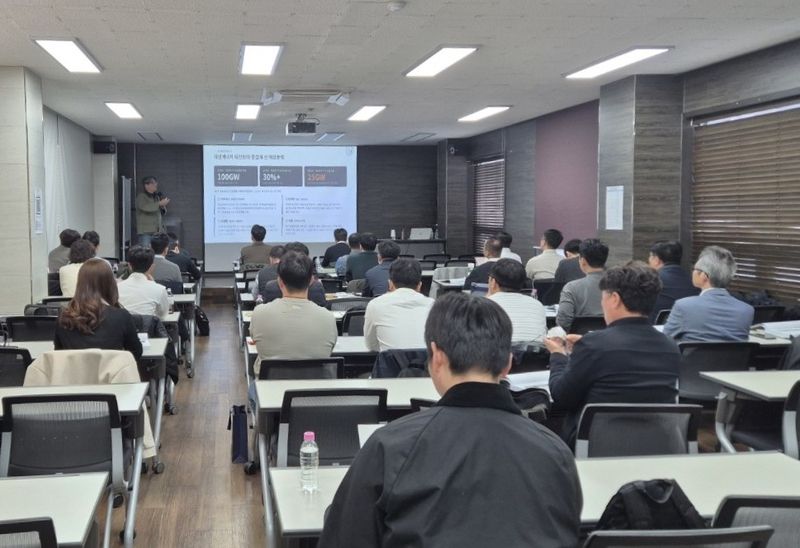
KR said on the 17th that it recently held “Key Technology Training for Offshore Wind Farm Development” at the Samkyung Education Center in Seoul for around 40 industry practitioners involved in offshore wind.
The domestic offshore wind industry has recently been laying the groundwork for growth, backed by the government’s policy to expand deployment. The government aims to deploy 25 GW of offshore wind capacity by 2035 and plans to hold tenders totaling 55 GW from 2026 through 2035. It also plans to gradually transition, starting in the second half of 2029, to a system in which the government selects areas suitable for offshore wind power generation and chooses developers through competitive bidding.
As a result, the importance is growing of specialists who can comprehensively assess project feasibility and safety throughout the entire process, from offshore wind farm development to construction and operation.
The training was organized in response to this industry demand, drawing on KR’s accumulated experience in certifying wind power facilities and offshore wind farms, as well as conducting technical due diligence, to share key technologies and case studies needed at actual project sites.
The training covered wind turbine type certification; certification of fixed-bottom and floating offshore wind farms; technical due diligence for onshore and offshore wind farms; blade life assessment; fleet planning for offshore wind farm construction and operation; economic feasibility assessments; and wind resource measurement, turbine layout and performance assessments.
Using real certification and technical due diligence cases, the training introduced technical risks and key considerations that may arise during project development, and shared practical considerations related to the economic feasibility of offshore wind farms and their installation and operation.
Lectures by outside experts were also held. Professor Kim Beom-seok of Jeju National University discussed trends in domestic offshore wind policy, while Kim Gyeong-hwan, a division head at the Korea Research Institute of Ships and Ocean Engineering (KRISO), introduced cases of floating offshore wind technology development.
Lee Sang-rae, head of KR’s Wind Business Team, said, “For the offshore wind industry to grow in earnest, it is important to have the expertise to comprehensively assess technical safety and project feasibility from the early stages of a project,” adding, “KR will continue to support the safe growth of South Korea’s offshore wind industry and strengthen the capabilities of industry practitioners, drawing on our accumulated experience in certification and technical due diligence.”
[email protected] Kwon Byeong-seok Reporter