Consumers Open Their Wallets for High-End Clothing Rather Than Luxury Bags... Fashion Companies Are All Smiles
- Input
- 2026-11-18 08:24:40
- Updated
- 2026-11-18 08:24:40
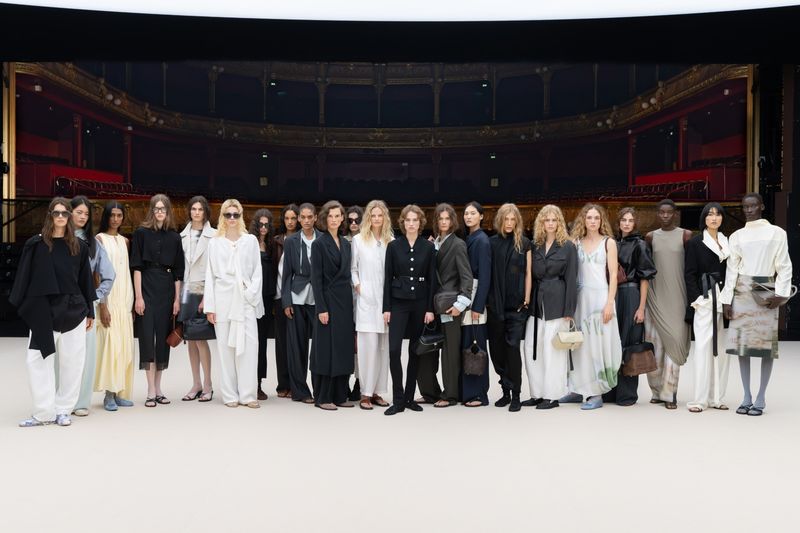
[Financial News] Buoyed by strength in the asset markets at the start of the year, the recovery in consumer spending, which had been especially pronounced in high-priced goods such as luxury goods and jewelry, is spreading to mainstream fashion, including women's and men's clothing. Even as consumption polarizes between high-priced products and value-for-money items, fashion demand is reviving, particularly at department stores, and the third-quarter results of major fashion companies have all improved.
According to the Ministry of Trade, Industry and Energy on the 18th, department-store women's casualwear sales in September rose 15.2% year on year. This was more than double the 6.9% growth rate for overseas luxury brands over the same period. Men's apparel sales also rose 8.7%. Women's casualwear recorded double-digit growth for three consecutive months through September, following increases of 13.6% in July and 16.8% in August. The department-store spending boom, previously concentrated in luxury goods, is broadening to mainstream clothing.
This trend is also reflected in the results of major fashion companies. Samsung C&T Corporation's fashion division posted third-quarter operating profit of 20 billion won, up 66.7% from a year earlier. Revenue rose 11.9% to 498 billion won. Despite the seasonal lull, sales of signature products from its flagship brands were strong, improving both revenue and profitability.
During the same period, HANDSOME CORPORATION's operating profit rose 206.1% to 7.6 billion won, while revenue increased 4.9% to 324.8 billion won. Sales of transitional-season clothing were strong, while its core in-house brands, including Time and SYSTEM, and newly imported brands all grew. A HANDSOME CORPORATION representative said, “Strong sales of transitional-season clothing sustained growth for our core domestic brands and new imported brands,” adding, “We plan to continue diversifying our portfolio of imported fashion brands and strengthen the global competitiveness of our in-house brands, including Time and SYSTEM.”
Shinsegae International posted an operating loss of 4.3 billion won in the third quarter last year, but turned a profit this year with operating income of 5.1 billion won. Revenue also rose 16.6% to 299.5 billion won. Fashion division revenue was up 17.3%. Shinsegae International said overseas fashion, including Herno and Rick Owens, drove overall growth.
LF, which announced its results the previous day, saw operating profit surge 216.6% to 51.1 billion won, while revenue rose 7.6% to 429.1 billion won. LF said its in-house and imported fashion and beauty brands all continued to grow steadily, supported by a proactive seasonal operating strategy and efforts to enhance the premium customer experience.
Industry officials expect the recovery in the fashion sector to continue in the fourth quarter, when demand for winter clothing such as coats and padded jackets peaks, boosted by year-end spending. Next year, despite consumer polarization and economic uncertainty being cited as variables, high-end spending is expected to remain solid, led by premium brands with a high proportion of sales through department stores.
An industry official said, “Household spending on fashion is beginning to recover, and the wealth effect and improving consumer sentiment are also contributing positively to the sector's recovery,” adding, “We expect top-line growth to continue through the fourth quarter and into next year, led by brands with a high proportion of sales through department-store channels amid polarized consumption.”
[email protected] Kim Hyun-ji Reporter