'Deployed to National Assembly and Election Commission,' 7 Military Commanders Face Appeal Trial... 'Entry Team Acquitted, Standby Unit Guilty?'
- Input
- 2026-11-17 14:08:24
- Updated
- 2026-11-17 14:08:24
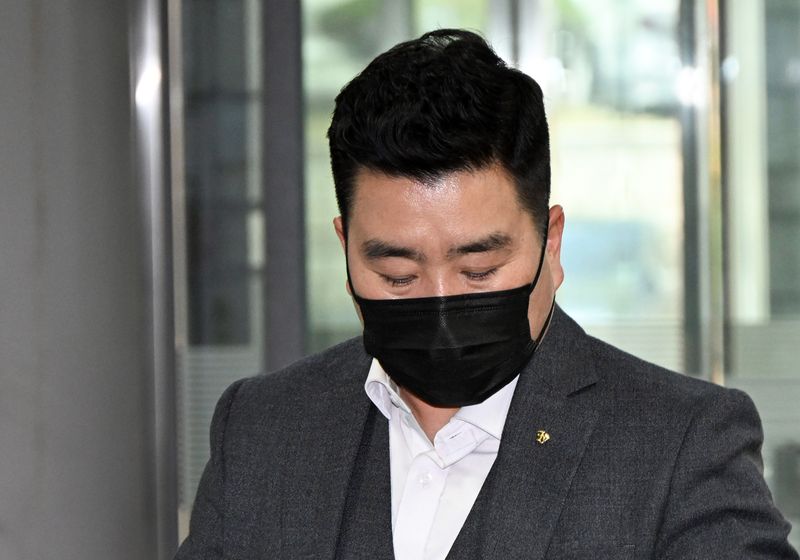
[Financial News] The first formal hearing in the appeal trial of seven former senior military commanders began. They were indicted on charges of involvement in the blockade of the National Assembly of the Republic of Korea, the takeover of the National Election Commission (NEC), and the operation of teams to arrest politicians during the 2024 South Korean martial law crisis. The defense argued that their actions were passive and carried out under orders from superiors, seeking acquittals, while the special counsel asked the court to uphold the guilty verdicts handed down at the first trial.
A three-judge panel of Criminal Division 12-2 of the Seoul High Court (High Court Judges Jo Jin-gu, Kim Mina and Lee Seung-cheol) held the first hearing on the 17th for Kim Hyun-tae, a colonel and former commander of the Republic of Korea Army Special Warfare Command’s 707th Special Mission Group; Lee Sang-hyun, a brigadier general and former commander of the ROK-SWC’s 1st Special Forces Brigade (Airborne); Dae-woo Kim, a brigadier general and former head of the Defense Counterintelligence Command’s Counterintelligence Investigation Group; Go Dong-hee, a colonel and former planning director of South Korea’s Intelligence Command; Kim Bong-gyu, a colonel and former head of the Intelligence Command’s Central Newspaper Group; Jeong Seong-uk, a colonel and former head of the 2nd Task Group of the Intelligence Command’s 100th Brigade; and Park Heon-su, a major general and former chief of the Ministry of National Defense Investigation Headquarters. They were indicted on charges of performing key duties in an insurrection and obstructing another person’s exercise of rights through abuse of authority.
The defendants’ lawyers challenged the legal proceedings. They argued that having a military prosecutor who took part in the investigation and prepared suspect interrogation records be seconded to the special counsel’s office and participate in maintaining the prosecution ran counter to the principle of separating investigation from prosecution. The special counsel responded that military prosecutors are not subject to the Prosecutors’ Office Act and that there was no procedural issue with the secondment. The panel proceeded with the hearing, saying it found that the prosecutor could participate in maintaining the prosecution.
At the first trial, the court found the defendants guilty of involvement in the blockade of the National Assembly and the takeover of the NEC, sentencing former commander Kim Hyun-tae to 12 years in prison, former brigade commander Lee Sang-hyun to 10 years, former commanders Kim Bong-gyu and Jeong Seong-uk to seven years each, and former commander Dae-woo Kim to five years. It acquitted former headquarters chief Park Heon-su and former director Go Dong-hee.
The special counsel argued that the first trial had erred in its findings of fact and interpretation of the law, and sought convictions for the defendants who had been acquitted. It said, “Former headquarters chief Park ordered the dispatch of 100 investigators at the request of former Defense Counterintelligence Command chief Yeo In-hyung, even though the Joint Investigation Headquarters had not been lawfully established and no case had been assigned to it.” It added, “Despite learning through live broadcasts in the Joint Chiefs of Staff’s Combat Control Room about clashes at the National Assembly and signs that arrest teams were operating, he provided personnel. That shows he knew of and accepted the prospect of taking lawmakers into custody.”
The special counsel also stressed that former director Go “knew of the mission to secure the NEC even before martial law was declared, and that controlling its internal operations, including removing night-shift workers and filming the server room, was not mere security but a restriction on a constitutional body’s exercise of its powers.”
For the other five defendants who were convicted, the special counsel challenged the sentences as improper, arguing that “their responsibility should not be reduced simply because they followed orders from superiors.”
The defendants uniformly argued in their defense that they had lacked the “purpose of subverting the constitutional order.” The defense for former commander Dae-woo Kim, who was sentenced to five years in prison at the first trial, argued, “Even after receiving orders from the counterintelligence commander, he prohibited direct arrests and ordered only that people be transported. He withdrew voluntarily immediately after the vote to lift martial law and was the first to disclose the list of 14 people slated for arrest at the National Assembly’s National Defense Committee.” The defense for former brigade commander Lee Sang-hyun, who was sentenced to 10 years, argued that he “mistook the situation for a counterterrorism operation prompted by North Korean provocations and controlled the issuance of blank ammunition.” It added, “He did not even know that the National Assembly had the authority to vote to lift martial law, so he could not have recognized that his actions were unlawful.”
The defenses for former commanders Kim Bong-gyu and Jeong Seong-uk, each sentenced to seven years for their alleged involvement in the takeover of the NEC, countered, “The advance-team commanders who actually entered the NEC building were acquitted, yet the defendants who waited inside their base or called in subordinates received heavy prison sentences. That is contradictory.” The defense for former commander Jeong also argued that the court had misinterpreted the law, saying, “Insurrection is a collective offense, so joint-principal liability cannot be imposed on the premise that the defendants conspired with their superiors.”
The defenses for former headquarters chief Park and former director Go, who were acquitted, asked the court to uphold the first-trial ruling. Park’s defense argued, “He was merely considering a routine deployment under the peacetime martial law implementation plan and knew nothing at all about a purpose to arrest politicians.” Go’s defense stressed, “He understood the NEC to be a nationally important facility near the Gwacheon Government Complex and simply carried out a security mission.”
The panel plans to question witnesses Kim Sang-yong, Choi Seok-il and Kim Young-hwan on December 10, and former Defense Minister Kim Yong-hyun and witnesses Gu Sam-hoe and Bang Jeong-hwan on December 24.
[email protected] Lee Chang-hoon Reporter