“Unable to Find a Buyer...” 3 in 10 Small Business Owners Face Delays in Closing, in Tears
- Input
- 2026-11-17 14:12:09
- Updated
- 2026-11-17 14:12:09
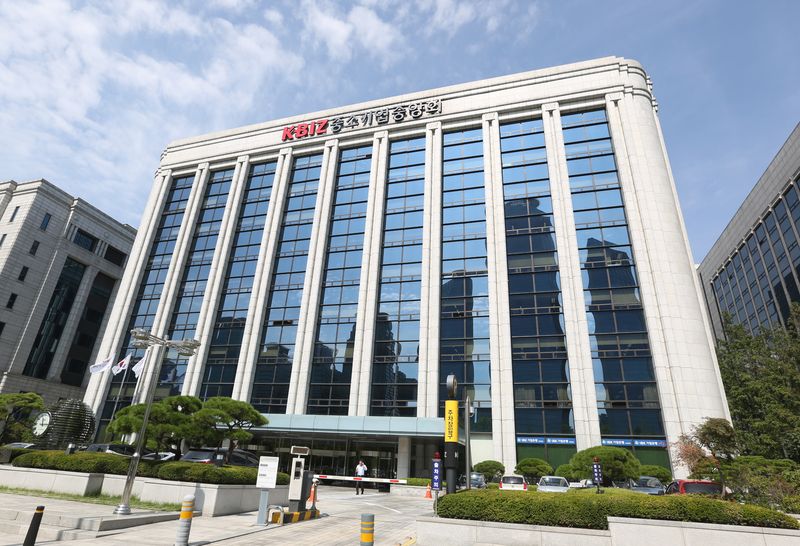
[Financial News]#. Kang, who runs a bedding store in a traditional market in Seoul, was diagnosed with cancer a few months ago. Kang needed to close the shop quickly and focus on their health, but the landlord kept repeating, “You can’t leave until you bring in a buyer.” With about three years remaining on the lease, Kang is trying to find a buyer through several real estate agencies, but finding one in a short time is proving difficult. Kang’s health has now deteriorated, and the shop has been closed for nearly a month.Three in 10 small business owners who decided to close their businesses said they had experienced delays because of difficulties such as finding a buyer. On the 17th, the Korea Federation of SMEs announced the results of its 2026 survey on the business conditions of small business owners who closed their businesses. The survey covered 1,749 small business owners who received business-closure benefits from Yellow Umbrella Mutual Aid.
According to the federation, respondents cited worsening profitability and sluggish sales (76.1%), retirement due to health problems or old age (7.5%), and personal circumstances such as job fit or family (6.1%) as reasons for closing their businesses. They cited a decline in customers due to weak domestic demand (28.4%), rising labor costs (22.2%), the burden of higher raw-material costs due to inflation (13.4%), and rising fixed costs such as rent and maintenance fees (10.1%) as causes of worsening profitability and sluggish sales.
The time from deciding to close a business to canceling its business registration was 12 months at the median and 16.7 months on average. Notably, 28.5% said they had experienced a “delay,” with closure taking longer than originally planned. The most common reasons were searching for a buyer (34.9%), the burden of repaying loans (21.7%), and having no alternative after closing (20.8%).
Among small business owners who experienced delays, the most commonly reported additional costs or losses incurred during the delay were 10 million to 30 million won (28.9%). Another 24.8% reported losses of 30 million won or more. The opportunity costs incurred because the delay prevented them from engaging in other economic activity were 5 million to 10 million won and 20 million won or more, each reported by 20.4%.
The main difficulties encountered during the closure process were loan repayment (26.5%), recovering key money or transferring the business (19.2%), and raising funds for closure costs (11.0%). Debt at the time respondents decided to close their businesses averaged 81.92 million won. Closure costs averaged 13.86 million won, including severance pay for employees (4.46 million won), demolition costs (3.82 million won), restoration costs (3.33 million won), and other expenses (2.26 million won).
Kim Hui-jung, head of the Economic Policy Division at the Korea Federation of SMEs, said, “Closing a business is not a single day when the business registration is canceled; it is a long process that begins the moment the decision to close is made.” He added, “While owners wait for a buyer or put off closing because of the burden of repaying loans, rent and interest continue to pile up.” He also pointed out, “As current closure assistance focuses on covering costs incurred at the time of closure, such as store demolition costs, policy support is needed from the point when owners decide to close. This should also help them assess whether to continue operating or wind down, and provide debt restructuring, so as to reduce the time and costs involved in closing.”
[email protected] Kang Kyung-rae Reporter