[Han Dong-ha’s Herbal Medicine Anecdotes] Fit the Prescription to the Illness, Not the Other Way Around
- Input
- 2026-11-21 06:00:00
- Updated
- 2026-11-21 06:00:03
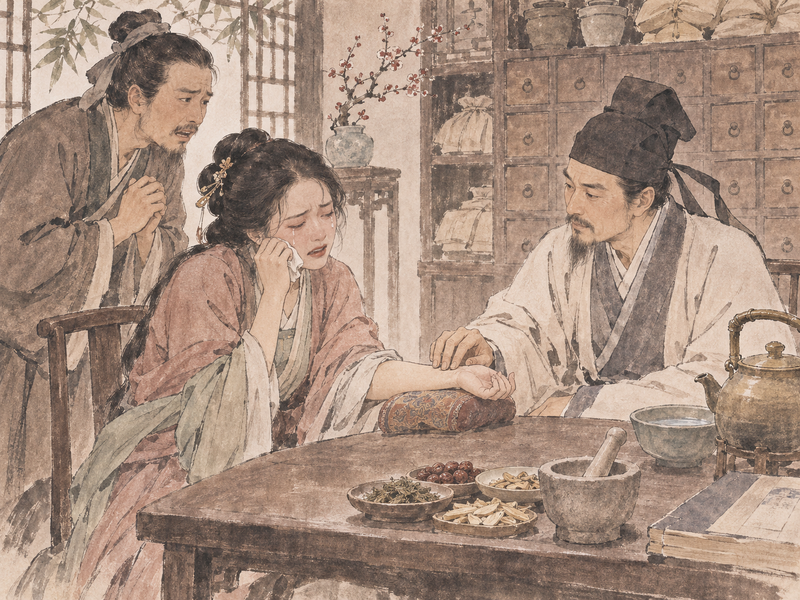
In the late Yuan dynasty in China, there was a renowned physician named Ni Weide (倪維德). His family had been famous for its medical skills for generations. Ni Weide, too, loved learning from a young age before taking up medicine.
At the time, physicians often used prescriptions found in the Heji Jufang (Formulary of the Imperial Pharmacy) to treat illnesses. Compiled during the Song dynasty, the Heji Jufang was an official collection of prescriptions for a range of diseases. Physicians forced patients’ illnesses to fit the prescriptions in the book.
Ni Weide disapproved of the prevailing practice of uncritically following old prescriptions. “No matter how excellent an old prescription may be, what good is it if it doesn’t match the symptoms before us now? We should prescribe according to the illness. Why force the illness to fit the prescription?”
Ni Weide regarded the Huangdi Neijing (Yellow Emperor’s Inner Canon) as the foundation of medicine, while also thoroughly studying the medical texts of Liu Wansu (劉完素), Zhang Congzheng (張從正) and Li Gao (李杲), renowned physicians of the Jin dynasty. The three medical masters each had different approaches to treatment, but Ni Weide did not favor one over the others. Rather than fitting illnesses to prescriptions, he sought prescriptions suited to each illness.
One day, a man named Liu Zizheng (劉子正) came to him and pleaded with him to save his wife. “Doctor, I think my wife is possessed by a ghost. Just a moment ago she was crying bitterly, then suddenly started laughing like a madwoman. Then she burst into tears again. I can’t make sense of it at all.”
At the time, people often believed that someone was possessed by a ghost if they cried or laughed for no reason or behaved strangely. But Ni Weide paid no heed to talk of ghosts. He took the woman by both wrists and felt her pulse.
Both pulses were deep and could be felt only by pressing firmly with a finger—a deep pulse (chen mai, 沈脈). “I can feel a deep pulse in both of your wife’s wrists. This means something has accumulated in the stomach. If so, she must have abdominal pain.”
The man answered in surprise, “That’s right. My wife has often complained of stomach pain. But how did you know that just by feeling her pulse?” Ni Weide replied, “Your wife isn’t possessed by a ghost. She has qi reversal (qi jue, 氣厥). Something has accumulated in her stomach and blocked the flow of qi, clouding her mind as well.”
Ni Weide used raw-and-boiled water (shengshushui, 生熟水) to induce vomiting. This is a mixture of unboiled and boiled water. It was a form of induced emesis (tan tu fa, 探吐法), used to expel pathological matter accumulated in the stomach. In the medical texts of Zhang Congzheng, which Ni Weide had studied closely, emetic therapy (tu fa, 吐法) was also an important way to drive out pathogenic influences. Before long, the woman vomited several sheng (升) of sticky phlegm and saliva (tanxian, 痰涎). Astonishingly, her episodes of crying and laughing disappeared afterward.
The man could hardly hide his astonishment and expressed his thanks. Ni Weide said, “When people see an illness they can’t explain, they look for ghosts first. A physician, however, must find the cause in the patient’s body.”
Some time later, an official named Zhou Wanhou (周萬戶) came to see him with his eight-year-old son. The boy was so dazed that he could not tell whether he was hungry or full, or distinguish cold from heat. He even behaved strangely by putting clods of earth or charcoal into his mouth.
The boy’s father said with a worried look, “I don’t know what has happened to my son, but he can’t seem to function properly as a person. Could he have some kind of illness in his head?” Ni Weide examined the boy and felt his pulse. “This is slow spleen wind (manpi feng, 慢脾風). The spleen is said to store wisdom. When spleen qi becomes weak, the mind grows clouded and wisdom diminishes.”
Ni Weide prescribed medicine to dispel wind-pathogenic influences and strengthen the weakened spleen qi. One prescription used at the time for slow spleen wind was Xingpi San (醒脾散), which was used to support spleen qi and clear the mind. The boy soon recovered after taking the medicine.
As Ni Weide’s medical skills became widely known, patients with difficult-to-treat illnesses who had gone from one physician to another began seeking him out.
Among them was a man named Lin Zhongshi (林仲實), who had suffered from a fever for no less than two years. His illness was truly unusual. His fever began as the sun rose and worsened as the sunlight grew stronger. Conversely, it subsided when the sun set and the night air turned cool, and his symptoms eased on rainy days.
The man said, “Doctor, it feels as if there’s a ball of fire inside me. My fever rises as soon as the sun comes up and eases when the weather turns cool. This has been going on for two years.” Ni Weide asked in detail about how he had been living and what might have strained his body and mind. “Have you overexerted yourself or suffered emotional strain?” The man replied, “Yes. I’ve had a lot of worries because of family matters, and I’ve worked day and night to make a living.”
Ni Weide nodded. “This is internal injury from the seven emotions (qiqing neishang, 七情內傷). Excessive worry and overwork have damaged the qi in your body, so yang qi cannot rise properly and yin fire has gradually flared up. That is why the fever worsens in warm weather and eases when it’s cool.”
Ni Weide prescribed Bojungikki-tang for Li Dongyuan (李東垣, also known as Li Gao). The formula uses astragalus, ginseng, white atractylodes and licorice, among other ingredients, to replenish the weakened qi of the spleen and stomach, while cimicifuga and bupleurum help raise yang qi. Rather than simply bringing down the fever, this treatment replenished weakened vital qi to address the fever caused by internal injury. After taking the formula, Lin Zhongshi recovered from the fever that had tormented him for so long.
Ni Weide was able to treat such a variety of illnesses because he did not insist on using just one method of treatment. He often said, “Liu Wansu and Zhang Congzheng emphasized the attacking method, which combats illness and drives out pathogenic influences, while Li Gao emphasized the tonifying method, which regulates and protects middle qi. But one approach is not right and the other wrong. Treatment must change as the times and the condition change.”
Ni Weide valued what treatment the patient before him needed more than which medical school’s theories to follow. He cared for the sick throughout his life and died at the age of 75.
Ni Weide’s medical philosophy—carefully examining the illness and refusing to be bound by a single theory or prescription—is still worth reflecting on today. “A renowned physician does not fit an illness to a prescription he already knows; he finds the prescription that fits the illness.”
Source for today’s Herbal Medicine Anecdotes story
Biographies of Eminent PhysiciansMing. Ni Weide. According to his biography in the Ming Waishi: Ni Weide, courtesy name Zhongxian, was a native of Wu County. His grandfather was renowned for his medical skills. Ni Weide loved learning from a young age and eventually took up medicine. He regarded the Neijing as his foundation. He was concerned that, from the Daguan era onward, physicians generally used only the Heji Jufang by Pei Zongyuan and Chen Shiwen, so that old prescriptions often did not suit new illnesses. He therefore sought out and read the works of the three Jin dynasty physicians Liu Wansu, Zhang Congzheng and Li Gao. When he went out to treat patients, his treatments invariably worked at once. Zhou Wanhou’s son was eight years old and so dazed that he could not distinguish hunger from fullness or cold from heat; at times, he stuffed clods of earth or charcoal into his mouth. Ni Weide examined him and said, “This is slow spleen wind. The spleen stores wisdom; when the spleen is sluggish, wisdom is diminished.” He promptly gave the boy a medicine to dispel wind and support the spleen, and the boy recovered. Gu Xianqing developed a lump below his right ear, as large as his head and unbearably painful. He consulted dozens of physicians, but none could treat it. Ni Weide said, “The hand and foot Shaoyang channels have been invaded by pathogenic influences.” He had a medicine boiled and given to him, and Gu recovered after more than a month. Liu Zizheng’s wife suffered from qi reversal; she would cry and then laugh, and people thought she was possessed by a ghost. Ni Weide said, “The pulses in both wrists are deep. There must be an accumulation in the stomach, and that accumulation causes pain.” He asked her, and it proved to be true. He used raw-and-boiled water to induce vomiting, and she recovered after bringing up several sheng of phlegm and saliva. Sheng Jiage’s wife had an unusual itch in both shoulders and arms that spread to her head and face and became unbearable. Applying moxa briefly stopped it. Ni Weide found that her left pulse was deep while her right pulse was floating and forceful. He said, “This is caused by eating excessively rich foods.” He gave her a prescription, and the condition soon cleared. Lin Zhongshi developed a fever illness from overwork. His fever rose and fell with the sun: it worsened when the sun was warm and strong, but not when the night air was cool or when it rained. This had continued for two years. Ni Weide said, “This is internal injury from the seven emotions. Yang qi is not rising and yin fire is gradually flaring up, so the fever worsens when it is warm and eases when it is cool.” He gave him a formula for internal injury from Dongyuan, and the illness soon stopped. Many of the other cases he treated were similar. He often said that Liu and Zhang generally favored the attacking method, while Li focused on regulating and protecting middle qi and favored tonification; this was unavoidable as circumstances changed with the times. Thus, he did not adhere to a single theory when prescribing. Concerned that ophthalmology had an assortment of formulas and theories but no comprehensive text, he wrote Yuanji Qiwei and also edited Dongyuan Shixiao Fang, publishing both for circulation. He died in the tenth year of the Hongwu reign, aged 75. (Ming. Ni Weide. According to his biography in the Ming Waishi, Ni Weide, courtesy name Zhongxian, was a native of Wu County. His grandfather was renowned for his medical skills, and Ni Weide loved learning from childhood, eventually taking up medicine. He revered the Neijing. He was concerned that, from the Daguan era onward, physicians used only the Heji Jufang by Pei Zongyuan and Chen Shiwen, so old prescriptions often did not match new illnesses. He therefore sought and read the works of the three Jin physicians Liu Wansu, Zhang Congzheng and Li Gao, and when he treated patients, his treatments invariably worked at once. Zhou Wanhou’s son was eight years old and so dazed that he could not tell whether he was hungry or full, or cold or hot; at times, he stuffed clods of earth or charcoal into his mouth. Ni Weide examined him and said, “This is slow spleen wind. The spleen stores wisdom; when spleen qi is sluggish, wisdom is lacking.” He promptly gave him medicine to dispel wind and support the spleen, and the boy recovered. Gu Xianqing developed a lump below his right ear as large as his head, and the pain was unbearable. He changed physicians dozens of times, but none could treat him. Ni Weide said, “The hand and foot Shaoyang channels have been invaded by pathogenic influences.” He had medicine boiled and given to him, and Gu recovered after more than a month. Liu Zizheng’s wife suffered from qi reversal; she would cry and then laugh, so people thought she was possessed by a ghost. Ni Weide said, “The pulses in both wrists are deep. There must be an accumulation in the stomach, and that causes pain.” He asked her, and it proved true. He used raw-and-boiled water to induce vomiting, and she recovered after bringing up several sheng of phlegm and saliva. Sheng Jiage’s wife had an unusual itch in both shoulders and arms that spread to her head and face and became unbearable; cauterizing the area with moxa briefly stopped it. Ni Weide found that her left pulse was deep and her right pulse floating and forceful. He said, “This is caused by excessively rich foods.” He gave her medicine, and she recovered soon afterward. Lin Zhongshi developed a fever from overwork. His fever rose and fell with the rising and setting of the sun, worsening when the sunlight was strongest but not when the nights were cool or it rained. This had continued for two years. Ni Weide said, “This is internal injury from the seven emotions. Yang qi is not rising and yin fire is gradually flaring up, so the fever worsens when it is warm and eases when it is cool.” He gave him Dongyuan’s formula for internal injury, and the illness soon stopped. Many of the other cases he treated were similar. He often said that Liu Wansu and Zhang Congzheng generally favored the attacking method, while Li Gao favored tonification by regulating and protecting middle qi; this was unavoidable as circumstances changed with the times. Thus, he did not adhere to a single theory when prescribing. Concerned that ophthalmology had a jumble of theories and prescriptions but no comprehensive text, he wrote Yuanji Qiwei and also edited Dongyuan Shixiao Fang, publishing both for circulation. He died in the tenth year of the Hongwu reign, aged 75.)/Director Han Dong-ha, Handong Han Clinic
[email protected] Jeong Myeong-jin, Medical Writer Reporter