Aviation Safety Management System to Change... Dedicated Airport Safety Organization to Be Established
- Input
- 2026-11-17 13:28:42
- Updated
- 2026-11-17 13:28:42
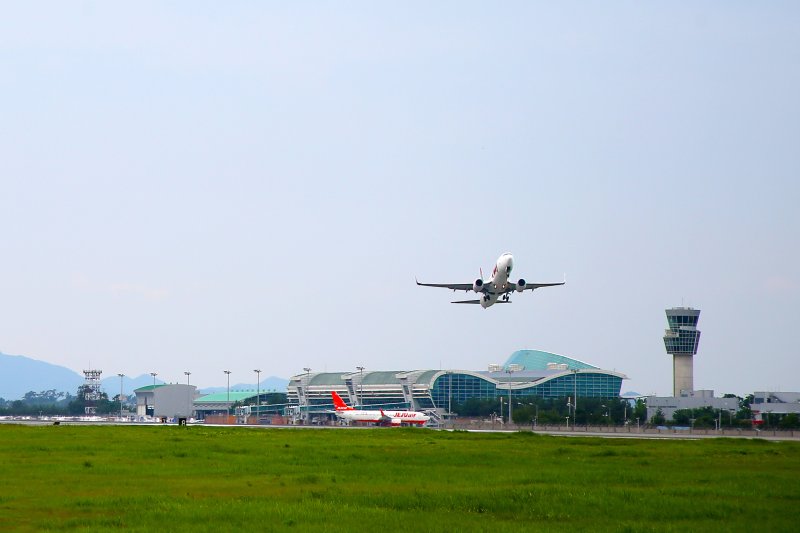
[Financial News] Following the December 29 passenger plane disaster, the government will establish a dedicated airport safety organization and unify the fragmented air traffic control chain of command to strengthen airport safety management. It will add 27 staff dedicated to airport safety and 30 air traffic controllers.
The Ministry of the Interior and Safety (MOIS) and the Ministry of Land, Infrastructure and Transport (MOLIT) said that a proposed partial amendment to the Decree on the Organization of the Ministry of Land, Infrastructure and Transport and Its Affiliated Agencies, which contains these measures, was approved by the State Council of South Korea on the 17th. The revised organizational structure will take effect on the 20th.
This organizational overhaul is a follow-up measure to the “Aviation Safety Innovation Plan,” drawn up in April last year after the December 29 passenger plane disaster. It is also intended to establish a safety management system aligned with international standards in preparation for the International Civil Aviation Organization (ICAO)'s aviation safety assessment of South Korea, the first in 18 years since 2008.
First, MOLIT will establish an Airport Safety Management Group within its Aviation Policy Office, an Airport Safety Bureau at the Seoul and Busan Regional Offices of Aviation, and an Airport Safety Division at the Jeju Regional Office of Aviation. To this end, 27 additional airport safety management staff will be assigned.
The newly established dedicated organizations will be responsible for drawing up airport safety regulations and managing and supervising their proper implementation on the ground. They will assess safety management across airport operations through airport certification and validation inspections, airport management inspections, and other measures.
Air traffic control duties, which had been divided among several agencies, will also be consolidated under the Air Traffic Management Office.
At present, air traffic control duties are shared by the Air Traffic Management Office and three regional offices, including those in Seoul, Busan and Jeju. The government determined that this structure could lead to inefficient staffing and confusion in the chain of command during emergencies. Accordingly, the 366 authorized posts, including those for air traffic controllers at regional offices, along with the related organizations, will be consolidated under the Air Traffic Management Office. Crisis management functions, as well as air traffic control, will also be handled centrally by the office.
The Air Navigation Services Strategy Bureau and the Air Traffic Systems Bureau will also be established within the Air Traffic Management Office. To respond to rising air traffic volumes, the authorized headcount of operational air traffic controllers will be increased by a further 30.
A new regional aviation office will also be established to oversee aviation administration in the Honam region. Currently, airport and aviation affairs in Honam are divided between the Seoul Regional Office of Aviation and the Busan Regional Office of Aviation. The government plans to establish the Honam Regional Office of Aviation so that the relevant work can be handled directly in the region, and will pursue the necessary procedures with the aim of launching it in the first half of 2027.
The government expects this reorganization to make the lines of responsibility for airport safety management and air traffic control even clearer.
Minister of Land, Infrastructure and Transport Hong Ji-seon said, “There is no value more important than the lives of the people,” and added, “A dedicated organization will take responsibility for airport safety, and air traffic control will be run seamlessly under a single chain of command to create air routes that the public can use with peace of mind.”
[email protected] Lee Bomi Reporter