"It Wasn't Because of Salary"... Why Half of Workers Rejected Job Offers
- Input
- 2026-11-17 09:54:25
- Updated
- 2026-11-17 09:54:25
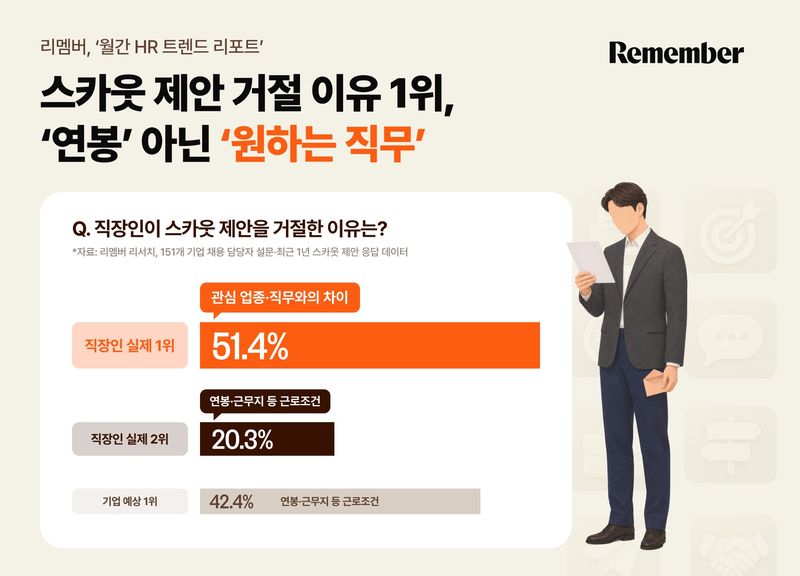
[Financial News] The biggest reason companies' recruiting offers to workers were rejected was found to be a mismatch with the job they wanted. The analysis suggests that, in the competition to secure talent, it is important to offer roles that match individuals' career goals, not just competitive compensation such as salary.
According to industry sources on the 17th, Remember & Company, which operates the business networking service Remember, published its “Monthly HR Trends Report” and presented this analysis.
The report compared actual response data for recruiting offers sent through Remember's recruitment solution over the past year with survey results from recruiters at 151 companies.
The survey found that 42.4% of company recruiters cited working conditions, such as salary and work location, as the biggest reason recruiting offers were rejected. Only 17.9% expected a mismatch with a candidate's preferred industry or job to be the reason.
Workers' actual reasons for turning down offers, however, were the opposite. A mismatch with their preferred industry or job was the most common reason, at 51.4%, followed by working conditions at 20.3%. In effect, the rankings of the reasons companies expected and the reasons workers actually chose were reversed.
The analysis suggests this is because companies and workers view job-change offers by different criteria. Companies look for suitable candidates based on applicants' previous experience and existing skills, while workers decide whether to accept an offer by considering the work they want to do and the direction they want their careers to take.
Among the criteria recruiters actually prioritized when searching for talent, job fit ranked first at 57.6%, followed by years of experience (56.3%) and skills or qualifications (51.7%). All are criteria that assess applicants based on the work they have done and the experience they have gained in the past.
Companies were also found to spend considerable time writing recruiting messages. Some 52.3% of recruiters said they spent at least 15 minutes writing a single offer message.
The aspect they devoted the most effort to was presenting working conditions, such as salary (43.7%). But actual response data showed that offers specifying a salary did not have a higher acceptance rate than those that did not.
Remember's analysis found that rather than emphasizing compensation, companies should first understand what work a candidate is doing now and what industries and roles they want to move into in the future.
It also suggested that recording the reasons offers are rejected by category and taking them into account in future offers could help improve the efficiency of talent acquisition.
Joo Dae-woong, head of Remember's Market Data Business Division, said, “The first deciding factor in a recruiting offer is whether you propose the work that person wants,” adding, “Even companies that find it difficult to compete on working conditions such as salary may be able to compete if they accurately offer candidates the work they want.”
[email protected] Jang Min-kwon Reporter