Jeju School Founding History Reconstructed Through Records of Donations from Jeju People in Japan and Local Residents
- Input
- 2026-11-17 09:38:48
- Updated
- 2026-11-17 09:38:48
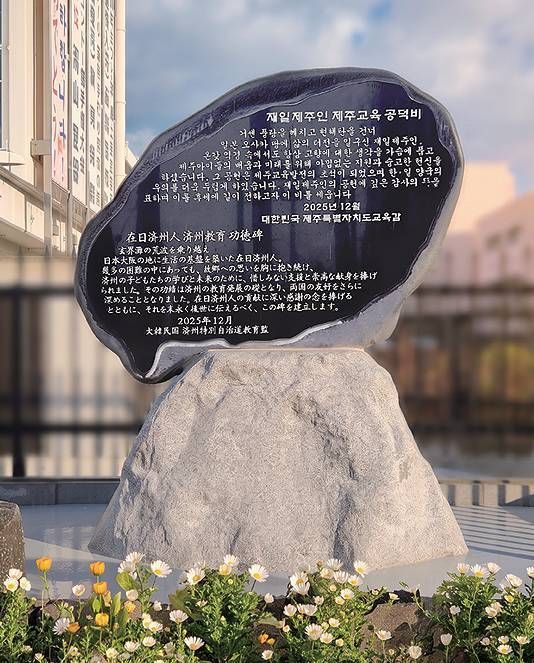
【Financial News Jeju=Reporter Jeong Yong-bok】 Findings from efforts to reconstruct, through field research and oral histories, the records of residents and Jeju people in Japan who contributed to the founding and development of 96 schools in Jeju will be unveiled. The people who shaped modern and contemporary education in Jeju will be brought into focus, from philanthropists who donated their personal funds to Jeju people in Japan who sent donations from Japan and villagers who jointly established schools.
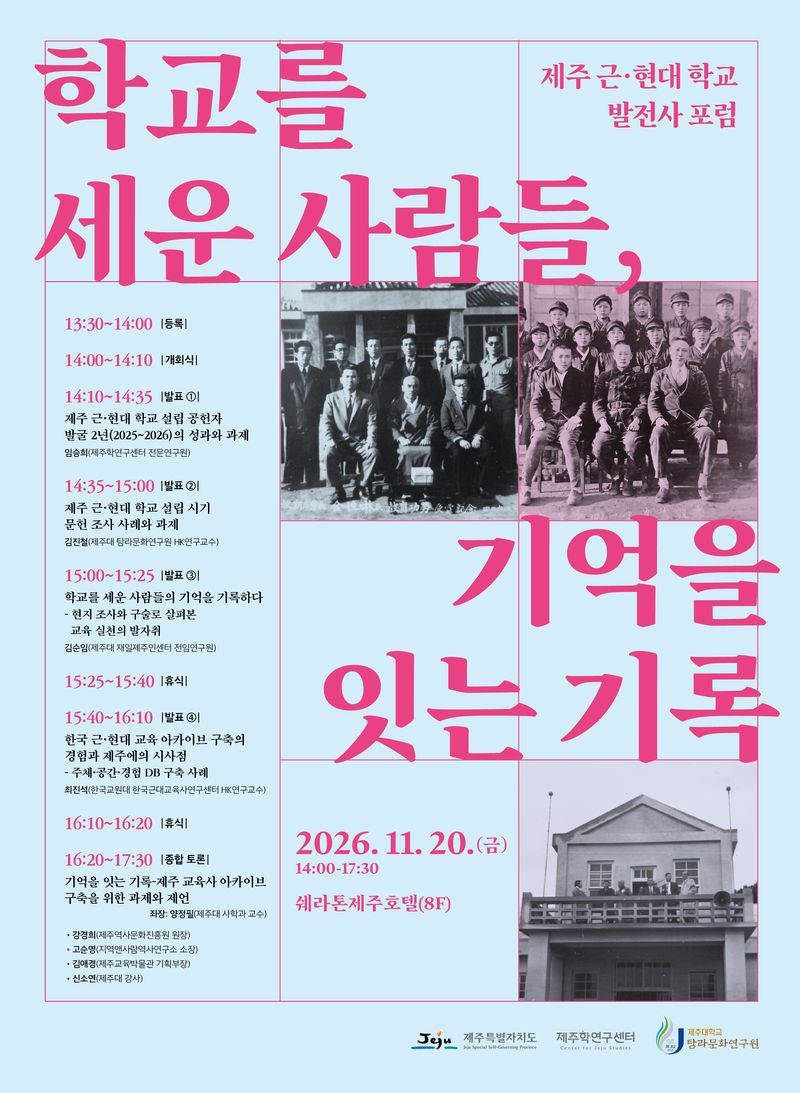
According to the Jeju Studies Center, whose director is Kim Wan-byeong, a forum on the history of modern and contemporary school development in Jeju will be held at 2 p.m. on the 20th on the eighth floor of the Sheraton Jeju Hotel. Its theme is “People Who Built Schools, Records That Carry Their Memories Forward.”
The forum was organized to present findings from research conducted in 2025–2026 as part of the Jeju Education Development Special Zone's “Reexamining History to Foster Pride among Jeju People” project, and to discuss ways to systematically preserve records of those who contributed to the founding of schools.
Last year, the Jeju Studies Center published two volumes—a foundational survey sourcebook and a collection of oral-history materials—summarizing school founding histories and lists of contributors based on historical documents, monuments honoring contributors, newspaper articles and other sources. This year, it conducted field research and recorded oral histories at 96 schools.
The research documented the contributions of philanthropists who donated school land and construction costs, Jeju people in Japan who sent donations to schools in their hometowns from Japan, and villagers who jointly established educational facilities.
The activities of those who contributed to school founding shed light on educational conditions in modern and contemporary Jeju society and the role of local communities. The records show how donations and cooperation by residents and Jeju people in Japan helped establish schools at a time when education funding from the national and local governments was insufficient.
A key task of this research is to connect documented facts about school founding with the memories of those involved and their descendants, and to preserve as records testimonies that could otherwise disappear over time.
Four research findings will be presented at the forum. Im Seung-hee, a senior researcher at the Jeju Studies Center, will present the achievements and challenges of two years of work identifying contributors to school founding. Kim Jin-cheol, an HK research professor at JNU's Tamla Culture Research Institute, will introduce cases in which historical documents were used to confirm when schools were founded.
Kim Sun-im, a full-time researcher at JNU's Center for Jeju People in Japan, will examine the educational practices of those who took part in founding schools, drawing on field research and oral histories. Choi Jin-seok, an HK research professor at the Center for Research on the History of Modern Korean Education at Korea National University of Education (KNUE), will share experience building databases of modern and contemporary educational records in Korea and propose ways to apply that experience to Jeju's educational history.
Kim Jin-seon, an HK academic professor at JNU's Tamla Culture Research Institute, will moderate the presentations. The panel discussion will then be chaired by Yang Jeong-pil, a professor in JNU's Department of History, with Kang Gyeong-hui, director of the Jeju History and Culture Promotion Agency; Ko Sun-yeong, head of the Local and People History Research Institute; Kim Ae-gyeong, planning department head at the Jeju Education Museum; and Shin So-yeon, a lecturer at JNU, taking part.
The discussion will consider ways to systematically collect and preserve scattered materials, including oral histories, documents and photographs from those who contributed to school founding, and to use them in education and research. An educational-history archive is a system for systematically accumulating documents, photographs, testimonies and other records about the founding and development of schools, and making them searchable and accessible for use.
Im Seung-hee, the lead researcher, said, “The memories of the people who built the schools are records that can no longer be heard once their generation has passed.” She added, “I hope this forum will be an opportunity to review together the findings uncovered and recorded over the past two years, and to explore ways to carry them forward into an archive of Jeju's educational history.”
The event is jointly organized by Jeju Special Self-Governing Province, the Jeju Studies Center and JNU's Tamla Culture Research Institute. Anyone living in the province who is interested in Jeju's educational history may attend, including descendants of those who contributed to school founding.
[email protected] Jeong Yong-bok Reporter